

Grammar – ugh! Every student’s least favorite subject. And many a teacher’s too. This is not a surprise because it’s often boring, tedious, and confusing to teach. But despite your misgivings, teaching grammar is still important in 2025 because it contributes to student success in a variety of subject areas.
With the rise of technology and a series of digital aids that make perfecting writing easier than getting everyone logged into their Chromebooks, it would be easy to dismiss teaching grammar as no longer important.
Autocorrect fixes most errors before you even see them. Spell check highlights the rest, and editing programs like ProWritingAid and Grammarly identify grammatical errors and make suggestions for improvement. And, of course, we can’t forget the role that AI plays in creating content today.
It almost seems like knowing grammar rules is superfluous. Why, you may wonder, with all these tools, is teaching grammar still important today? I’ll tell you.
5 Reasons Why Teaching Grammar Is Important Today:
1. Grammar builds strong communication skills
Grammar is like the skeleton of language. It holds every sentence, paragraph, and paper together. Without this solid foundation to support communication, messages become weak, wobbly, and fall apart.
Explicitly teaching grammar ensures students have the foundational skills necessary to communicate effectively. When students follow and apply conventional grammar rules, they can communicate their thoughts and ideas more clearly. This makes it easier to convey important information in both written and spoken form.
Teaching grammar isn’t just about following rules. It’s not about being right or wrong. It’s about making sure students can make their ideas heard and understood. In addition, good grammar increases credibility, making people more likely to respect you and your message.

2. Grammar improves reading comprehension
Letters come together to form words, words come together to form sentences, and sentences come together to form paragraphs. These components are not thrown together randomly. Being familiar with the grammar rules that govern these combinations improves reading comprehension.

Is Your TPT Wishlist Getting Too Long?
Teaching grammar helps students develop an understanding of syntax, the way that words and phrases are combined to form sentences. Students learn that sentences have a subject and predicate and that nouns make up the subject and verbs make up the predicate. An understanding of these basic grammar rules helps students read more accurately.
Reading accurately is important for comprehension. Even if students can’t verbalize the rules, when they understand basic grammar rules, they can self-correct mistakes they find in their reading, which leads to improved reading comprehension.
3. Grammar fosters digital literacy
Let’s talk for a minute about Grammarly, spellcheck, and autocorrect. These tools are great. But they are just that–tools that help us to communicate. They can’t communicate for us. That’s why teaching grammar is crucial to using these tools properly.
A solid grasp of grammar is essential for getting the most out of digital tools. In most cases, the tools aren’t going to create the content. Students need to have a basic understanding of grammar before they can even begin using these tools. The tools can only work if the information they are fed makes sense. While it is true that AI can create content, AI doesn’t always have a firm grasp of conventional grammar rules either. And if you want the content that AI spits out to make sense, you need to be able to assess it.
It’s also not unusual for these tools to get it wrong. How often do you dismiss a suggestion or have to go back and change something that autocorrect “fixed’ for you? Teaching grammar ensures that students know the right rules so they can correct the computer’s mistakes.
4. Grammar supports language development
Grammar is the foundation of language. Teaching grammar helps students to understand how language is built. This not only helps them understand English and communicate more effectively, but it also prepares them for learning a second language.

When students understand how grammar rules work in English, they can apply them to a new language. In a global community, fluency in multiple languages is becoming increasingly important.
5. Grammar supports academic and career success
You know that grammar is included in your state standards and assessed on standardized tests. And regardless of what you think of testing, you know you need to teach it to ensure students’ academic success.
But beyond test scores, teaching grammar equips students with the tools they need to communicate effectively. This is crucial for every step of academic success–from creating a story and writing a research report to giving a presentation and writing a college essay.
Furthermore, the need for clear and effective communication does not end when a student graduates. Communication skills are some of the most important for employees. Writing emails, drafting proposals, creating pitch decks, compiling reports, giving speeches, onboarding new employees–clear communication is required for just about every facet of work.
Teaching grammar today ensures that students have the skills they need for career success in the future.
A bonus reason to teach grammar today
Lastly, when you emphasize the importance of good grammar, you help students learn to pay attention to details.
Grammar rules are precise. Does the comma go inside or outside of the quotation marks? Do I need a semicolon or a period? Teaching grammar helps students notice small details.
This is important not only because of where you place a comma but because being focused on small details leads to sharper, more thoughtful students. These skills carry over into math, problem-solving, reading, and more.
Teaching grammar doesn’t just help kids develop better grammar skills but also helps them be more focused, careful, and deliberate in their work.
Easy-to-Use Grammar Lessons
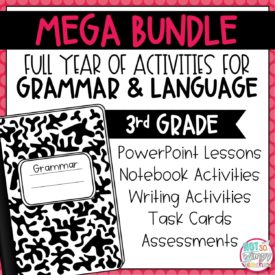
Now that you know how important teaching grammar is, I want to help you make teaching grammar easier than ever. My new and improved year-long grammar bundles for grades 2-5 contain a year’s worth of done-for-you grammar lessons and activities that you can teach in 10 minutes a day.

Each week follows the same routine and includes:
- a ready-to-use PowerPoint mini lesson
- an interactive notebook activity with simple cuts
- a grammar writing prompt to put those new skills to the test
- task cards
- an assessment – both printable and self-checking digital options

Shop This Post



There you have it . . . 5 reasons why teaching grammar today is still important. And done-for-you resources to make this important subject a piece of cake to teach.

Have a Not So Wimpy Day,






 FREE Fall Activities for grades 2-5!
The skeleton of language is grammar. Every document, paragraph, and sentence is held together by it. In the absence of this strong basis for communication, communications become feeble, shaky, and disintegrated.
Really enjoyed this. I discussed a complementary approach at AI Photo Editor that your readers might find useful.
Really enjoyed this article, thanks for sharing! Check out nano banana 2 too.
Your point about students needing grammar knowledge to judge AI suggestions stood out to me. One useful classroom activity is to pair the same image with two captions that differ in tense, punctuation, or sentence structure, then ask students how each version changes the meaning. I use Img2Img AI to create visual variations from one reference image, while students still handle the writing and editing themselves. It makes grammar choices easier to see without treating technology as a substitute for understanding.
Such a great and fantastic blog!
Grammar forms the skeleton of language. It binds every document, paragraph, and sentence. Without this solid foundation for communication, interactions weaken, become unstable, and fall apart.
Great read! By the way, if anyone needs AI video tools, check out https://saro2.ai – it’s pretty impressive. Appreciate the effort put into this post!
I have all the bundles for grades 3, 4 and 5! I love them so much, but I might love Lesson Genie more than anything else! Do you happen to have Pre-Assessments for each grade level so I can find out if my kiddos are on grade level, below or above at the beginning of the year? I teach 5th grade and last year I differentiated using all three grade levels based on what I learned over the first few weeks, but a handy pre-assessment would be super valuable. Thank you!
Thanks for this post! I agree that grammar can be boring, but your point about it helping students succeed in other subjects is so true. It’s great to see why it still matters in 2025 with all the tech around.
brainrot games: Thanks for this post!
The skeleton of language is grammar. Every document, paragraph, and sentence is held together by it. In the absence of this strong basis for communication, communications become feeble, shaky, and disintegrated.
I am overjoyed to introduce you to Space Waves. My love of science fiction and my desire to make something unique have come together in this game. I wish you the same delight on your journey that I had in creating it.
This article makes a compelling case for grammar as the foundation of digital literacy. Students must understand the rules to effectively use or evaluate AI-generated content. For engaging practice, consider gamified learning. A resource like PokemonTD, a strategy game, can indirectly hone logical thinking and precision—skills transferable to language mastery.
In the classic game run 3, you have to run to the finish line by weaving through space. This fast-paced platform game has hundreds of unique levels to explore.
This is so relatable! It’s true grammar can be boring to teach. I found it interesting how you acknowledge technology makes it easy to dismiss its importance. I’m eager to read your 5 reasons why it’s still crucial for student success across subjects in 2025!
Great post! I agree that grammar can be tough to teach, but your point about it helping students succeed in other subjects is so true. It’s easy to rely on tech, but learning the basics still matters.
Web-based Pokepath experience, play anytime on any device
This is so relatable! It’s true grammar can be boring to teach. I found it interesting how you acknowledge technology makes it easy to dismiss its importance. I’m eager to read your 5 reasons why it’s still crucial for student success across subjects in 2025!
Hey! I totally get the ‘grammar – ugh!’ sentiment. It’s often tough to teach and learn. But your point about technology making it easy to dismiss grammar, while it’s still crucial for student success, really resonated with me. Looking forward to reading the 5 reasons!
Such a great and fantastic blog!
Such an important topic! Grammar is the foundation of clear communication and critical thinking. I completely agree that teaching grammar explicitly helps students become better writers and readers. Great points about why it still matters!
Great read on why grammar remains essential in education! As someone who struggled with grammar rules myself, I completely agree that understanding structure opens doors to clearer thinking and communication. What struck me most was the point about grammar building confidence in expression.
That’s exactly what MindLens aims to do — help people see questions from multiple angles when they feel stuck or uncertain. Whether it’s clarifying confusion about language rules or any other challenge, our approach offers fresh perspectives you might not have considered before.
Have you found particular grammar concepts harder to teach than others? Would love to hear your experiences!
Great points on teaching grammar! For educators creating visual content with AI tools, NanoPrompts (https://nanoprompts.org) has a free library of 400 prompts for AI image generation — useful for making classroom visuals and illustrations quickly.
Great article on teaching grammar! As an educator, I find this very helpful. Clever AI Humanizer helps me create better educational content for my teaching blog. Thanks!
I completely agree that AI tools don’t replace the need for foundational knowledge – they actually make understanding the basics even more important so you can effectively guide and evaluate the output. I’ve been exploring AI Miniature (https://ai-miniatur.org/) for creating visual content, and I’ve noticed the same principle applies: even with AI generating images, you still need to understand composition, color theory, and design fundamentals to get quality results and know what to ask for. Do you find that students who understand grammar rules are better at prompting and editing AI-generated text?
I completely agree with your point that grammar serves as the skeleton of language – what a perfect analogy! Even with all the AI writing tools available now, students still need that foundational knowledge to recognize whether the suggestions these tools make are actually correct or appropriate for their writing. It reminds me of how photo editing tools have become so advanced, but you still need to understand composition and basics to use them effectively – I always point my students to background remover when discussing how even automated tools require human judgment. Your argument that grammar builds credibility is especially important in an era where so much communication happens digitally.
Grammar truly is the skeleton of language, and your point about digital literacy is spot on—students need to understand the rules to use AI tools effectively. I’ve been exploring how veo3.1 video generation can help create engaging grammar lessons that capture students’ attention. Thanks for sharing these practical insights!
Grammar truly is the skeleton of language, and your point about digital literacy is spot on—students need to understand the rules to use AI tools effectively. I’ve been exploring how veo3.1 video generation can help create engaging grammar lessons that capture students’ attention. Thanks for sharing these practical insights!
Grammar truly is the skeleton of language, and your point about digital literacy is spot on—students need to understand the rules to use AI tools effectively. I’ve been exploring how veo3.1 video generation can help create engaging grammar lessons that capture students’ attention. Thanks for sharing these practical insights!
Grammar truly is the foundation of clear communication, and your point about it supporting both academic and career success really resonates with me. In a world where digital tools are everywhere, having that solid understanding of language structure helps students use technology more effectively rather than relying on it blindly. By the way, if you’re looking for a unique way to celebrate student achievements or teacher milestones, Personalised Song creates custom songs that could make for a memorable classroom gift.
Your point about grammar being the skeleton of language really resonates with me. Just as a strong foundation helps students communicate clearly, a personalized touch can make learning moments more memorable. Teachers who go the extra mile to celebrate student achievements often see incredible engagement. If you’re looking for a unique way to recognize your students’ hard work, Personalised Song creates custom songs that could make for a truly special classroom gift.
Solid insights in this piece. I learned something new from your workflow.
try kling motion control free
I found this perspective on 5 Reasons Why Teaching Grammar Is Still Important really insightful. The points about practical applications particularly resonated with my own experience in this area.
Great article! I love making crafts…
Admitting that grammar isn’t thrilling for teachers or students makes your case for teaching it anyway much more credible. I particularly agree that in 2025, with all these digital aids handling corrections, understanding the underlying rules has become even more crucial for cross-curricular success.
I completely agree that teaching grammar remains essential even in 2025. While digital aids and AI tools are becoming more prevalent, they can’t replace the foundational understanding of how language works. When students grasp grammar, it boosts their confidence in writing and improves their overall reading comprehension. It’s not just about following rules; it’s about clear communication and critical thinking. I love how you highlighted that these skills translate across all subject areas. This is a great reminder that technology should support, not replace, these core linguistic building blocks in the classroom. Thank you for sharing these insights!
I’ve been using Aifoto, a free AI tool that creates amazing images.
I completely agree that grammar remains essential in language learning—understanding structure truly unlocks communication confidence. As a teacher, I’m always looking for ways to make my classroom more engaging from day one. That’s why I love having tools like this icebreaker collection at hand. It offers 50+ games perfect for breaking the ice in classrooms, meetings, or team events. The variety helps create comfortable environments where students feel ready to participate, which ultimately supports language learning too. Whether you’re planning a new semester kickoff or just need fresh activities, having go-to resources makes a real difference. What’s your favorite way to start a new class or meeting?
I agree that grammar is still crucial. I’ve noticed that even with autocorrect, students sometimes struggle to understand why a sentence doesn’t “sound right,” and it often comes down to basic grammar rules.
It’s interesting how understanding grammar can also impact vocabulary building. When you grasp how words function, it’s easier to decipher their meanings in different contexts. Speaking of deciphering, I sometimes use https://cluesbysamanswer.com/ when I’m totally stumped by a crossword clue or word puzzle. It’s just a quick way to jog my memory!
Thanks for sharing this post about 5 Reasons Why Teaching Grammar Is Still Important in 2025 – Not So Wimpy Teacher. I found the perspective on “Save hours of time every week with Lesson Genie. Yes, Please!” useful. I will reference this next time I polish assets in Gemini AI Photo Editor (https://geminiaiphotoeditor.com).
lip sync ai is useful for quick experimentation with AI-generated lip sync visuals.
lip sync video supports short-form AI lip sync video generation workflows.
This is such a timely and well-argued post! I especially appreciate your point about grammar being the ‘skeleton’ of language—it perfectly captures why foundational skills matter, even with all our digital tools. As someone who values clear communication in tech and design at artiflux.pro, I see daily how precise language prevents misunderstandings and builds credibility. Thanks for championing this essential skill for 2025 and beyond!
Unlock your creativity with zzo.ai, the comprehensive AI platform for all your visual needs. Whether you are a marketer, designer, or content creator, zzo.ai helps you:
1. AI Image Generator: Turn text into high-quality images instantly.
2. Magic Editor: Modify details and fix images effortlessly.
3.Background Remover: Clean up product photos or portraits with one click. Streamline your workflow and save hours of editing time. Try it now at zzo.ai.
Thank you for this insightful post! It’s true that teaching grammar can feel overwhelming for both teachers and students, but its importance cannot be overstated. Understanding grammar not only enhances writing skills but also boosts critical thinking and comprehension across subjects. In a world where communication is often digital and instant, clear and effective language is essential. I particularly appreciate your point about grammar’s role in improving student success in a variety of areas. As technology continues to evolve, integrating tools and resources that simplify grammar instruction can make a big difference. On a related note, my website, RemoveVideo, discusses various educational strategies, including the use of interactive media to enhance learning. Keep up the great work in promoting grammar education!
Thank you for this insightful post! It’s true that teaching grammar can feel overwhelming for both teachers and students, but its importance cannot be overstated. Understanding grammar not only enhances writing skills but also boosts critical thinking and comprehension across subjects. In a world where communication is often digital and instant, clear and effective language is essential. I particularly appreciate your point about grammar’s role in improving student success in a variety of areas. As technology continues to evolve, integrating tools and resources that simplify grammar instruction can make a big difference. On a related note, my website, RemoveVideo, discusses various educational strategies, including the use of interactive media to enhance learning. Keep up the great work in promoting grammar education!
Great insights on grammar instruction! I especially appreciate how you connected grammar to digital literacy and AI awareness. At kuakua.app, I’ve seen similar connections between language structure and cognitive processing in our psychology experiments. Understanding how the mind processes patterns (whether in grammar or problem-solving) really reinforces why explicit instruction matters. Thanks for sharing these practical reasons!
Great article on the importance of grammar! I especially appreciate your point about grammar being the “skeleton of language” – it really does hold everything together. As someone interested in cognitive development, I find the connection between grammar and critical thinking fascinating. Understanding language structure helps students develop analytical skills that transfer to other areas. If you’re curious about how our brains process language and rules, you might find these cognitive experiments interesting: https://kuakua.app/test?utm_source=blog-comment&utm_medium=notsowimpyteacher&utm_campaign=phase13&utm_content=grammar-teaching – they explore how we learn patterns and apply rules, which connects to what you’re teaching. Thanks for making grammar accessible!
I really enjoyed this article about why grammar teaching still matters. As someone who loves language, I believe understanding the mechanics of how we communicate is foundational to everything else we learn. Your points about grammar building critical thinking skills really resonated with me.
This made me think about how understanding ourselves works similarly – we need to understand our own “grammar” too. That’s why I found humandesignchart.org so fascinating. It offers a free chart that reveals your unique energetic blueprint, showing your type, strategy, and authority. It’s a different kind of grammar – one that helps you understand how you naturally make decisions and interact with the world. Have you ever explored what your personal energy pattern might teach you about learning and communication?
Great article! As someone who struggled with grammar myself, I completely agree that teaching grammar remains fundamental—it builds the foundation for clear communication in any language. Your points about grammar enhancing writing skills and critical thinking are spot on.
For educators creating content or presentations, tools like Blinkly AI can be incredibly useful. It helps transform static lesson materials into engaging visuals and videos, making grammar concepts more accessible and fun for students. Has anyone tried using AI visual tools to support their language teaching?
Great to see you providing resources to learn grammars! They are super useful.
There was a time I poured myself day in day out learning English grammars. Even thought I barely remember them nowadays. But they helped me build mental muscle to the language so that I can speak it in different ways to express different ideas.
I remembered a time I poured in every minute that I had to learn grammars. Everyone around me was like: why is it useful to learn grammars? do you learn grammars when you were a kid? Well guess what? I ended up speaking fluent English and they couldn’t even open their mouths to speak.
Can’t agree more that learning grammars is important.
Great to see you are making grammar resources. Super useful!
BTW, if you need image upscaling need, check out https://simpleimageupscaler.com/
I totally agree that grammar can feel like a chore, but it’s such a foundational skill, especially with how much we communicate online now. I’ve noticed that even with all the auto-correct features out there, students still need that logical backbone to express themselves clearly.
Lately, I’ve been using a few AI-driven writing assistants to help my older students catch their own patterns. I actually found some really helpful ones through ShipGrowth—it’s a directory that lets you compare different AI tools. It’s been a lifesaver for finding tech that actually supports the lesson rather than just replacing the thinking!
Totally agree with you on the importance of teaching grammar! I remember in school, I thought I could just wing it with spell check—but my essays always ended up a mess. 😂 Anyone else have a moment where they realized grammar was more than just a set of rules? Check this out for a fun distraction: https://fnfspaghetti.net/
I really enjoyed this article about why grammar teaching still matters. As someone who struggled with grammar in school, I appreciate that you highlighted how it builds critical thinking skills. Your point about grammar being the foundation for clear communication really resonated with me.
On a related note, I recently discovered Gratis Dog (gratis.dog) – it’s a handy resource for finding free online tools and software. Whether you need a VPN, PDF editor, or AI tools, they’ve compiled a nice collection of genuinely useful free resources. It’s been helpful for both my teaching preparation and personal projects.
Do you have any favorite free tools you use for creating teaching materials? I’d love to hear your recommendations!
I hadn’t thought about grammar as the skeleton of language before, but that’s a really helpful analogy! It makes sense that a stronger understanding of grammar would improve reading comprehension too. I especially agree that digital tools are helpful, but they can’t replace actual knowledge of grammar rules.
You make such a good point about the tech tools we have now. I definitely rely on Grammarly and autocorrect constantly, but I’ve noticed my students who actually understand grammar rules write SO much better than those who just depend on the software to catch everything. It’s like knowing the “why” behind the rules gives them confidence to take more risks with their writing in other subjects too. The tools are helpful, but they’re not a replacement for actually teaching kids how language works.
Really enjoyed reading 5 Reasons Why Teaching Grammar Is Still Important in 2025 – Not So Wimpy Teacher. The part about Save hours of time every week with Lesson Genie. Yes, Please! The Not So WImpy Teacher creates resources for busy teache was practical and easy to follow. Thanks for sharing this, liangzaiai will apply these ideas and report back with results. I also shared a related note here: https://animeaistudio.com/
The point about understanding WHY something is wrong — not just that it’s wrong — is what catches the limits of autocorrect. Students who grasp the grammar see the error; students who don’t just accept the suggestion.
Couldn’t agree more about the importance of grammar instruction. In an era of autocorrect and AI writing tools, understanding the fundamentals of language structure is more important than ever. Great points throughout.
You make such a good point about the tech tools we have now. I’ve definitely relied on Grammarly and ProWritingAid myself, and while they’re super helpful, I’ve noticed my students who understand *why* the grammar rules exist actually write better overall. They catch things the tools miss and can make intentional choices about their writing instead of just following suggestions. It’s kind of like the difference between knowing how to use a calculator versus actually understanding math—both have their place, but one makes you actually competent.
This article makes such a crucial point! It’s true that grammar can often feel tedious to teach and learn, but your emphasis on how it directly contributes to student success across various subjects is so important. Even with all the advancements in digital tools, a strong grasp of grammar remains a foundational skill that can’t be overlooked. Thanks for highlighting why it’s still so vital in 2025!
I completely agree that grammar teaching is still essential! Creativity and structure go hand in hand. I recently found AI Character Generator which students can use to create characters for creative writing assignments.
I completely agree that teaching grammar remains essential—it builds the foundation for clear communication in every subject. As teachers, we sometimes forget that our own stress levels can impact how effectively we deliver these lessons. I’ve found that taking short breathing breaks between classes helps me stay calm and present for my students. The box breathing technique has been particularly helpful for managing classroom anxiety and maintaining focus during long teaching days. It’s a simple practice I recommend to fellow educators. How do you balance teaching grammar concepts with managing your own classroom stress throughout the day?
The connection you make between grammar and career skills is so real—emails and reports need just as much polish as essays.
Your point about grammar building detail-oriented thinking beyond ELA (like in math and problem-solving) is super powerful.
Such an important reminder about why grammar still matters! Clear communication is essential in every aspect of life, from professional writing to something as simple as crafting the perfect birthday party invitation. Birthday Invitation AI actually helps with that by generating beautifully worded invitations. Thanks for advocating for grammar education!
This is really exciting research. 5 Reasons Why Teaching Grammar Is Still Important addresses some key bottlenecks in current systems. Thanks for the thorough analysis.
This article highlights 5 reasons why teaching grammar is still important in 2025, emphasizing its role in communication, reading, digital literacy, language development, and career success. For enhancing educational materials or images related to grammar lessons, tools like https://www.hdphotoconverter.io can help improve image quality and resolution.
I especially agree with the point about grammar contributing to success across different subjects. Good grammar skills definitely help students understand complex texts and express their ideas more clearly in writing, no matter the subject. On a related note, TryOnR has some great tools that can help students practice and improve their writing skills: https://tryonr.com
This is fantastic! I also recommend an awesome all-in-one generative AI tool I know — GPTProto (https://gptproto.com/). It offers a unified API to access top AI models for text, image, video and audio generation, with unbeatable stability, lightning-fast response speeds and the most competitive pricing, no need to manage multiple API keys or platforms at all! It’s still evolving, and I’m keen to hear how others handle multi-model workflows.
Great article! As someone who spends hours preparing grammar lessons, I really appreciate this reminder of why grammar instruction matters. Teachers often juggle multiple windows while researching, creating materials, and grading – it can get overwhelming! That’s where SnapWind comes in handy. It’s a lightweight window manager that helps organize your desktop instantly, so you can focus on what matters most: teaching. Whether you’re toggling between grammar resources or organizing your lesson plans, SnapWind makes your workflow much smoother. Would love to hear how other teachers stay organized during grammar lessons!
Nice post! I shared this with my friends, they loved it too.
Great article! The piece titled ‘5 Reasons Why Teaching Grammar Is Still Important in 2025’ really convinced me that foundational skills still matter, even with AI tools. I especially liked the point about critical thinking through sentence analysis. Save hours of time every week with Lesson Genie. Yes, Please! If you’re curious about integrating tech into language learning, you might also explore resources at https://couple-ai.com/. Thanks for the thoughtful insights; they’ll definitely shape my curriculum planning.
Great article! I really appreciated the way you broke down the 5 Reasons Why Teaching Grammar Is Still Important in 2025, especially the point about critical thinking. As a language teacher, I see how explicit grammar instruction supports writing confidence and digital communication skills. I’ve started using Lesson Genie in my classroom – Save hours of time every week with Lesson Genie. Yes, Please! – and it’s been a game‑changer for lesson planning. For anyone looking for AI‑powered support, check out https://couple-ai.com/ as well. Thanks for sharing!
I really appreciated the article “5 Reasons Why Teaching Grammar Is Still Important in 2025.”
Nice post! I
Nice post!
Great read, this was genuinely useful. Thanks for sharing your perspective. — Ava pc74
Nice post! I shared this with my friends, they loved it too.
Thanks for the practical grammar examples. The cross-subject rationale and concrete classroom framing are very useful. https://dlook.app
Teaching grammar as the “skeleton of language” is such an apt metaphor. I especially appreciate the point about digital literacy — understanding grammar rules isn’t made obsolete by AI tools; it’s actually what allows students to critically evaluate the output those tools produce. That’s a perspective worth emphasizing more in modern classrooms.
I love how you emphasized that teaching grammar is essential for strong communication skills! It’s great to see its value in a tech-driven world. Also, I found https://musid.ai/ to be a useful tool for enhancing writing!
I really appreciate this perspective! You’re right that it’s easy to think grammar doesn’t matter anymore when Grammarly and AI can catch our mistakes for us, but I’ve noticed that students who actually understand *why* grammar rules exist tend to write more clearly overall. They’re not just relying on their tools to fix things—they’re making intentional choices. Plus, I think there’s something about understanding grammar that helps with critical thinking in other subjects too, not just English class.
I love that you framed this as 5 reasons—it gives me language I can share with parents. To drive it home, I’ve been whipping up style‑consistent anchor images for comma usage and sentence types with Leonardo AI, and kids actually reference them during revision. Do you have a go-to example that shows how a single comma changes the meaning of a sentence?
That line about how autocorrect and Grammarly can’t replace explicit grammar really resonated. I’ve been running a 10-minute warm-up where students caption a single image and then revise for commas and subject-verb agreement—seeing the scene makes the rules click for my reluctant writers. It’s also an easy way to spiral in mini-lessons without another worksheet. Have you tried image-based prompts for quick comma or dialogue practice, or do you prefer traditional sentence drops?
Really useful content — bookmarked! I’m behind Manga Colorizer (we use AI to colorize manga and translate it into 15+ languages), and posts like this remind me why great content matters. Great work!
I really appreciate this perspective! You’re right that it’s easy to think grammar doesn’t matter anymore when Grammarly and AI can catch our mistakes for us, but I’ve noticed that students who actually understand *why* grammar rules exist tend to write more clearly overall.
This was exactly what I needed to read today. Thank you!
I agree that grammar builds strong communication skills, it’s the skeleton of language! Even with tools like Grammarly and AI, understanding grammar is key. Speaking of AI, have you seen what AI Banana can do with image generation? It’s amazing!
This was such a timely read! I often find myself wondering if grammar is still as crucial with all the amazing tech we have, so your point about how “AI doesn’t always have a firm grasp of conventional grammar rules” really hit home. It’s so true that we still need that foundational understanding to assess and correct what the tools give us, rather than blindly trusting them. And the part about grammar helping students pay attention to details is a great bonus I hadn’t explicitly thought about. Definitely agree on its importance for academic and career success too.
Btw, for anyone working with more visual content creation that still requires precision, you might want to check out SkyReels V4: https://skyreels-v4.net/
Excellent article on why teaching grammar is still important! As a student, I completely agree that having a strong foundation in grammar is crucial for effective communication. When I need help with my physics homework, I turn to Physics AI – it’s an amazing tool for solving physics problems and understanding complex concepts. If you’re a student struggling with physics, Physics AI is perfect! https://physicsai.chat/
I totally agree that grammar is still important, even with all the tech we have now. It’s like, AI can help, but you still need to know the basics to make sure it’s actually saying what you want. Speaking of AI, I’ve been using banana prompts for generating images, and even that makes me appreciate good grammar more!
I totally agree that grammar is still important, even with all the tech we have now. It’s kinda like having a good foundation. Speaking of foundations, I’ve been using squarefacegenerator to make avatars for my students’ writing projects. It’s a fun way to get them engaged and express themselves!
I totally agree that grammar is still important. It’s easy to rely on tools to correct everything, but understanding the rules makes you a better communicator overall. Speaking of looking professional, I recently used HeadshotBook to update my LinkedIn profile pic, and it made a huge difference – first impressions matter!
I totally agree that grammar is still important, even with all the tech we have now! It’s the foundation. Speaking of tech, I recently used HeadshotBook to update my LinkedIn profile pic, and it’s amazing how AI can help you present yourself professionally these days.
I totally agree that teaching grammar is still super important! It’s so easy to rely on digital tools, but having a solid understanding makes a huge difference. It’s like with AI art – you can use banana prompts to generate cool stuff, but knowing how to write a good prompt in the first place will give you way better results.
Grammar is honestly so crucial. Helping my child with their writing has really highlighted how many gaps I have. It’s time to buckle down and get back to the basics. Thanks a million for your analysis!
I agree that grammar is still important, even with all the tech we have. It’s easy to rely on digital tools, but understanding grammar rules helps students succeed in more than just English class, just like the article says.
33lisa
I totally agree that teaching grammar is still super important, even with all the tech we have now. It’s like, you can have the best tools, but if you don’t understand the basics, it’s not gonna work, right? Speaking of tools, I’ve been using HeadshotBook to update my LinkedIn profile, and it’s so easy to get a professional look without a photoshoot. Good grammar and a good headshot, gotta love it!
I totally agree that grammar is still important! It’s so easy to rely on tech, but a solid grammar base is key. Speaking of which, I’ve been using squarefacegenerator lately for a fun retro avatar — it’s amazing how even a simple pixel image benefits from understanding composition and visual grammar!
You make such a good point about how easy it is to rely on tools like Grammarly and Autocorrect to do the heavy lifting for us. I definitely catch myself doing this with my own writing! But I think you’re right that understanding grammar fundamentals is still crucial—when students actually know *why* something is grammatically correct, they’re better equipped to catch errors those tools might miss and to express themselves more effectively across all their classes. It’s the difference between just fixing a problem and actually understanding the language.
Great tips! Connecting with nature really helps balance out all that screen time.
Check it out here: Reference to Video.
Excellent content! This kind of information is exactly what the community needs.
Appreciate the effort put into this article. Very well explained and easy to understand.
Honestly, I was just looking for some inspiration for my next trip to Italy and stumbled on this. Most guides are so generic but I really love the specific spots you mentioned here. I spend way too much time behind a screen building web tools, so I’m really looking forward to finally closing my laptop and seeing these views in person. Thanks for putting this together, it’s super helpful!
This is a great perspective! I agree that grammar can be tough to teach, but the article’s point about its continued importance, even with tech’s help, is spot on. It’s interesting how the ease of digital writing tools might actually *increase* the need for strong grammar foundations. Looking forward to reading the 5 reasons!
This post is a great reminder! I especially agree with the idea that grammar is still important even with all the tech. It’s easy to see why students (and teachers!) might find it boring, but highlighting how it helps with success in other subjects is a smart approach.
This is a fantastic article about the importance of teaching grammar! As someone working in the tech industry with Snapwear (an AI virtual try-on platform), I completely agree that understanding grammar fundamentals is crucial even in our digital age.
Your point about grammar being the ‘skeleton of language’ resonates deeply. At Snapwear, we see how clear communication and precise language are essential for creating effective AI tools and user interfaces. Students who master grammar develop the critical thinking skills needed to evaluate AI-generated content and use digital tools effectively.
Just as grammar provides structure for language, our AI clothes changer helps creators structure their visual content by allowing them to test outfit variations quickly. Both require understanding foundational principles to achieve quality results.
Thanks for highlighting why grammar remains essential in 2025 and beyond!
I totally agree! Grammar gets a bad rap, but it’s so essential for clear communication. I’ve found that making it interactive, like using games, really helps students engage and see the value. Thanks for the reminder that teaching grammar is still super relevant, even with all the tech we have now!
t’s so easy to rely on digital tools, but having a solid understanding makes a huge difference.
Great points about grammar’s importance! It reminds me how creativity in writing can be enhanced with tools like a graffiti logo generator, blending art and language skills in fun ways for students.
I totally agree with this post! I’ve seen firsthand how shaky grammar can really hurt a student’s confidence when they’re trying to express complex ideas – it’s so frustrating for them. Focusing on foundational skills like subject-verb agreement, as you mentioned, really does build a stronger base for everything else they’ll learn. I actually build some data visualization tools for financial analysis, so I appreciate a solid understanding of clear communication in any field.
Yeah, grammar might seem boring, but it’s super essential for communication. Without it, everything falls apart. Tools like AI Song Generator can’t replace the need to know the basics.
You make such a good point about technology making us complacent about grammar instruction. I definitely catch myself relying way too much on Grammarly to fix my mistakes instead of actually understanding *why* something is wrong. But I think there’s real value in what you’re saying—when students actually understand grammar rules, they become better writers overall, not just people who know how to use spell check. It’s the difference between knowing how to write and just knowing how to use tools to write for you.
You make such a good point about the tech tools we have now. I’ll admit, I’ve relied heavily on Grammarly and ProWritingAid to catch my mistakes, so I never really thought about why grammar instruction still matters. But reading your article, I realize that understanding the “why” behind grammar rules probably helps students use these tools more intelligently instead of just blindly accepting whatever correction pops up. It’s kind of like the difference between knowing how to use a calculator versus actually understanding math, I think?
I totally agree! Grammar can feel like a drag, but seeing how it helps students communicate more effectively is so rewarding. Especially with technology playing such a huge role in how we communicate now, understanding grammar is crucial for clear and impactful writing. Thanks for sharing these insights!
Shop birthday dress for girls online for dresses, gowns, sets & more for your baby, toddler or child. Make her look smashing on her Birthday or an occasion or just everyday. birthday dress for girls
I totally agree! Grammar gets a bad rap, but it’s so crucial for clear communication. I think students often struggle because it’s taught in isolation, not connected to their writing. Finding ways to make it relevant, like through fun games or real-world examples, can make a huge difference. Thanks for sharing these points!
You make such a good point about tools like Grammarly and AI making it tempting to just skip grammar instruction altogether. I’ve definitely caught myself thinking “why bother when spell check exists?” But your article really hit home for me – understanding *why* the rules exist actually makes students better writers overall, not just people who rely on autocorrect. My kid’s teacher explained that grammar isn’t just about avoiding red squiggly lines; it’s about clarity and precision in every subject from science reports to college essays. Thanks for the reminder that we can’t just outsource this to technology.
Thanks for sharing this. The practical details are helpful, especially for anyone planning a smoother visit.
As a fellow teacher, I couldn’t agree more with every single point here. Grammar instruction has been pushed aside in so many curricula, and the impact on students’ writing is really noticeable — especially when they reach higher grades and struggle to express complex ideas clearly.
Point #3 about critical thinking really stood out to me. Understanding grammar isn’t about rigid rules; it’s about giving students the tools to make deliberate choices about how they communicate. That’s a form of empowerment.
There’s also a modern angle worth considering: with AI writing tools becoming ubiquitous, understanding language mechanics is more important than ever. Students who can’t distinguish well-structured writing from AI-generated text will be at a real disadvantage. I’ve been exploring this issue — the flood of generic AI content that all sounds the same — over at [your AI slop bores me](https://youraislopboresme.ai/). Grammar education might actually be one of our best defenses against AI-driven content homogenization.
Thank you for advocating for this!
Great article about teaching grammar! As a teacher, I completely agree that grammar is still important. My students struggle with scientific writing, so I recommend they use https://chemistryai.chat/ for chemistry homework help. The step-by-step explanations really help them understand scientific concepts better. Thanks for sharing these insights!
Really well explained. I’ll be bookmarking this for future reference!
Excellent work! Your content is always top-notch and helpful.
Really useful content — bookmarked! I recently discovered Manga Colorizer (AI manga colorization & translation tool), and posts like this remind me why great creative content matters. Great work!
You’ve hit on something I’ve been thinking about a lot lately! My students definitely rely way too heavily on Grammarly and autocorrect, which means they’re not actually *learning* the rules—they’re just letting the tools fix things for them. The scary part is when those tools fail or when they’re writing something in a format where the software isn’t available. I’m glad you’re pointing out that grammar skills still matter because understanding the “why” behind good writing is what separates someone who can communicate effectively from someone who just hopes their spell checker catches everything.
Thanks for sharing this post about 5 Reasons Why Teaching Grammar is Still Important. I enjoyed the ideas here.
Great points on grammar. It really aids writing clarity, much like using sora watermark remover | GPTProto for editing media.
I never realized how much grammar actslike the skeleton of language until I read that part about sentences falling apart without it. It makes me want to pay more attention to commas in my own writing.
Great points on grammar. It really helps with ai api | GPTProto for clear writing. Essential for modern kids.
Your point about digital literacy really resonated with me — I teach 4th grade and I’ve noticed that students who have a solid grammar foundation actually use tools like spellcheck and AI more critically. They catch errors the tools miss, especially with homophones and comma placement. I’ve also started having students compare AI-generated sentences with their own writing to identify grammar differences, and it’s been a fantastic exercise for reinforcing the rules while building that attention to detail you mentioned.
Great points on grammar. Clear writing is vital, even with tools like google veo 2 | GPTProto aiding modern communication.
I totally agree that grammar is crucial. Even with all those tech tools, knowing grammar rules still helps us communicate better.
This is such an insightful article about teaching grammar! You’ve articulated something I’ve always believed but never quite expressed this well. Really appreciated the thoughtful perspective here. Found through nemotron3.online!
You make such a good point about the tech tools we have now – I’ll admit I’ve definitely relied on Grammarly more than I should! But you’re right that just because autocorrect and AI can fix our mistakes doesn’t mean we shouldn’t actually understand *why* something is wrong. My kids seem to think spell check means they don’t need to learn anything, and it worries me that they’re missing out on the fundamentals. I think your article really captures why grammar still matters even in 2025, despite how easy it is to just let the tools do the work for us.
You make such a good point about the tech tools we have now. I totally get why teachers feel like grammar instruction is becoming obsolete when Grammarly and AI can basically do the heavy lifting, but I think you’re right that there’s still value in understanding the “why” behind the rules. My kids rely so heavily on autocorrect that they don’t even realize when something sounds off, and I worry that skipping grammar instruction means they won’t catch errors those tools miss or understand how to write with intention across different contexts.
I totally agree! Grammar can be a tough sell. I appreciate you pointing out that even with all the tech tools we have, understanding grammar is still essential for students to truly succeed, especially with writing.
Great points on grammar. Clarity drives better communication, which relates to claude mythos | GPTProto in modern writing.
Great post on grammar. Strong skills build better writers, and claude capybara | GPTProto helps students learn.
You make such a good point about how easy it is to rely on Grammarly and autocorrect these days—I definitely catch myself doing that! But I think you’re right that this is exactly why we can’t let grammar instruction slide. My kids use these tools constantly, but when they actually understand *why* something is wrong, they make better writing choices overall. It’s like the difference between a spell checker catching your typo and actually learning how to spell the word. Plus, these programs aren’t always right, especially with more complex sentences, so students really do need that foundation.
Really enjoyed reading this. Keep it up!
Great points on grammar. Clear writing helps students think, much like using whisk ai | GPTProto for better clarity.
Great points! Precise writing is vital for future skills. Try raphael ai | GPTProto for modern editing help.
Great points on clarity. Writing well is essential, and magic light ai | GPTProto makes grading so much easier.
Great insights on grammar. Clear writing is vital for using lovart ai | GPTProto effectively in modern education.
Thanks for sharing this! Really useful perspective.
Teaching grammar contributes to student success in various subject areas, even with the rise of technology.
Practical and to the point. Thanks!
This article provides a compelling and timely defense of grammar instruction, effectively illustrating how foundational language skills remain the “skeleton” of clear communication even in an era dominated by AI and digital shortcuts. By the way, this is a gameplay guide for the Roblox horror survival game Bite by Night.
I appreciate the point about grammar contributing to student success across subjects, not just English. It’s a good reminder that even with tools like Grammarly, understanding the rules helps students communicate more effectively in all areas.
Igniting the Developer Community: How One Project Earned 6k+ Stars in Months
We are living in a golden age of large models, a time of incredible proliferation. But for developers, this can be a double-edged sword. The power of Gemini, the sophistication of Claude, the specialization of Qwen—each is compelling, yet each comes with its own set of APIs, limitations, and adaptation costs. We have to ask: is there a way to elegantly harness this flood of innovation, rather than be swept away by it?
The open-source community has provided a direct answer. That answer is the AIClient-2-API project.
The vitality of a project that truly solves a pain point is immediately evident in its community reception. Since its inception, AIClient-2-API has seen its GitHub star count climb steadily, earning the endorsement of over 6k developers in just a few short months. This isn’t just a number; it’s a reflection of over 6k moments of “great minds think alike.” Behind this momentum are nearly 100 code commits—a testament to contributors iterating day and night, collectively forging the project’s robustness and vitality.
When an open-source project achieves this breadth of acclaim and depth of development, we must examine its core value. AIClient-2-API performs a task of elegant simplicity: it acts as a sophisticated translator. It converts powerful models, once locked within specific clients like Gemini CLI, Qwen Code, and Kiro Claude, into the standard, OpenAI-compatible APIs that developers know and love. This means that whether you’re building complex AI applications or integrating the latest models into existing tools, the friction of API discrepancies vanishes. It truly delivers on the promise to “configure once, switch models at will.”
More importantly, this project showcases the most captivating aspect of the open-source spirit: it originates from a universal need, grows through collective wisdom, and ultimately gives back to every participant. Those 6k stars are both a validation and an invitation.
If you have ever grappled with the complexity of disparate model APIs, if you long for a unified, efficient, and flexible AI development experience, then AIClient-2-API is more than just a project worthy of your star. It is an ecosystem waiting for you to join and build upon. Go check it out. Perhaps you’ll be its next contributor.
Click the link below to get amazing tools.
[https://github.com/justlovemaki/AIClient-2-API](https://github.com/justlovemaki/AIClient-2-API)
I appreciate the point about how grammar skills transfer to other subjects – it’s easy to forget that clear communication matters in science reports and history essays too, not just English class. This makes me want to find more engaging ways to teach these fundamentals.
Very practical content – bookmarked, exactly what I need
Photos To Photos provides fast generation of professional ID photos and personalized avatar services.
Photos To Photos
Such a well-argued case for grammar instruction! Clear communication really is a foundational skill, and it’s encouraging to see teachers champion it. Precision in language matters as much in game design as in writing — I’ve been crafting a detailed guide for Esoteric Ebb (https://esotericebb-guide.sbs/), a narrative RPG where every word in the dialogue counts. Excellent article!
This is such a timely post! Even with autocorrect and AI tools, understanding grammar is essential for students to communicate effectively. I love how you explain that grammar is the skeleton of language. For educators looking to enhance their visual presentations, an ai hairstyle changer can help create engaging classroom materials.
It’s so true that grammar builds strong communication skills. I’ve seen firsthand how much clearer messages become when someone has a solid grasp of grammar.
Love how you broke this down step by step.
Beyond an out-of-the-box pure front-end image-to-video converter, it integrates cutting-edge AI visual generation engines, making it the ultimate productivity tool for independent creators.
Such a great reminder of why teaching grammar is still so important! Visual projects like turning photos into videos can really help students engage with language concepts in a fresh way. Thanks for sharing these practical ideas!
It’s so true that grammar builds strong communication skills; without it, messages just fall apart. It reminds me how important it is to Calculate cpm for effective ad communication, too.
It’s so true that grammar is the foundation for clear communication, even with all the tech out there. Knowing the rules helps you actually use tools like an ai kitchen designer effectively, not just blindly follow suggestions.
Nice post, thanks for sharing. Been looking for something fun to play during breaks and found this stealth puzzle game where you sneak through a teacher’s house setting up pranks. Simple controls, no install needed, just play in the browser. Check out Scary Teacher if anyone wants to give it a shot.
This post is solid, learned a lot from it. By the way, I’ve been playing around with an AI Tarot platform lately, it can design custom decks and do readings, pretty fun stuff. Check out TarotAI if anyone’s curious. Anyway, good read, keep it up.
Grammar really is the backbone of clear communication. I teach my students that understanding sentence structure helps them not just in writing, but in reading comprehension too. These five reasons are spot on — especially the point about grammar supporting critical thinking skills. Thanks for sharing this!
Such a thoughtful article! As someone who works in language technology, I see firsthand how a solid grasp of grammar transforms the way people express themselves. The connection between grammar knowledge and writing confidence is something that often gets overlooked. Great read!
For beginners, get an OBD2 scanner that reads and clears codes and shows freeze frame data. That snapshot of engine conditions when the code set is gold. Avoid super cheap no-name ones—often slow and unreliable. Stick with known brands.
Nice post, thanks for sharing. Really enjoyed this post, you explained the topic clearly and it was easy to follow. webharmonium
It’s so true that grammar can feel boring and tedious to teach, so I really appreciate you tackling that head-on. It’s encouraging to remember how much it truly contributes to student success in so many areas!
Totally agree! Grammar is like the secret code that helps our ideas get out of our heads and into someone else’s. Even with cool tech tools, kids still gotta be the boss of their own sentences. Play pokepath tower defense Online for free
Totally agree! Kids need to know the rules so they can be the boss of the tools, not the other way around. The skeleton analogy is perfect for explaining it to my class. Play Steal Brainrot Online
Totally agree! Kids need to know the “rules of the road” for language, even with cool tech helpers. It’s like learning to build with blocks before you can make a huge, awesome castle. Play Minesweeper Plus
totally agree! my kid tried using a grammar checker and it made his story super weird. he still needs to know the rules to tell the computer what he actually means. Use Image to Image
Totally agree! Kids need to know the “rules of the road” for language, even with cool tech helpers. It’s like learning to build with blocks before you can make a huge, awesome castle. Play Orbit Kick
Totally agree! Kids need to know the “rules of the road” for language, even with cool tech helpers. It’s like learning to build with blocks before you can make a huge, awesome castle. Use Swipe Ready
Totally agree! My kid tried to use a grammar checker for his essay, but it suggested some wacky stuff he knew was wrong. He needed the basics to even tell the tool “no, that’s silly.” It’s like having a map so you know if the GPS is leading you off a cliff. Play Peggy’s Post
Totally agree! Kids need to know the “rules of the road” for language, even with cool tech helpers. It’s like learning to build a sturdy treehouse before you can decorate it. Use Novatools
Totally agree! Kids need to know the “rules of the road” for language, even with cool tech helpers. It’s like learning to build with blocks before you can make a whole awesome castle. Use Home Design AI
Totally agree! My kid tried using just a spell checker and his story was so confusing, lol. Knowing the rules helps him be the boss of his own awesome ideas. Ginny And Georgia Test
Totally agree! My kid tried to use a grammar checker for his story, but it made the sentences sound so weird and robotic. It’s like teaching them the rules gives them the superpower to fix it themselves and make it sound like *them*. Play X Trench Run Online
Totally agree! Kids need to know the “rules of the road” for language, even with cool tech helpers. It’s like building a strong lego tower—without the right structure, the whole idea can topple over! Play Pokemon Overlord Online
Totally agree! My kid uses those grammar apps, but they don’t explain *why* a sentence is wrong. It’s like having a robot fix your bike without learning how the wheels turn. They need that skeleton to build their own ideas! Play Finn’s Fishing Bonanza Online
totally agree! my kid tried using just a spell checker for his essay and it was a mess—the computer didn’t know he meant “there” instead of “their.” gotta know the rules to tell the tools what to do. Play Impossible Chess
Totally agree! Kids need to know the “rules of the road” for language, even with cool tech helpers. It’s like building a sturdy treehouse – the tools help, but you gotta know how to put the pieces together so it doesn’t fall down! Play A Fly In The Array
Totally agree! Kids need that grammar skeleton so their awesome ideas don’t just turn into a wobbly word-jumble. Tech tools are helpers, not brain replacements. Play Her Trees
Totally agree! My kid tried using just a spell checker and his story was a mess—the computer didn’t know he meant “there” not “their.” The skeleton idea makes so much sense, it holds the meaning together! Play Splunko Drip
Totally agree! My kid uses those grammar apps, but they don’t explain *why* a sentence is wrong. It’s like having a robot fix your bike without learning how the wheels turn. They need to understand the skeleton to build strong ideas themselves. Play Scritchy Scratchy
Totally agree! Kids need to know the “rules of the game” so they can be the boss of their own ideas, not just rely on the computer. That skeleton analogy is perfect for them to get it. Play Potus 2024
Totally agree! My kid tried to use a grammar checker for his essay last week, and it gave him some wild suggestions. It’s like teaching them the rules gives them their own internal toolbox to fix things themselves. Use Picool
Totally agree! Kids still need to know the “rules of the road” for language, even with cool tech helpers. It’s like learning to build with blocks before you can make a huge, awesome castle. Use Liquid Glass
I agree with this. Grammar still matters because students need to understand why a sentence works, not just rely on autocorrect or AI tools. I’ve seen the same thing with writing: students who know the basics usually express themselves much more clearly.
I agree with this Spell check can catch some mistakes, but students still need to understand why a sentence works That foundation really shows up in their writing across subjects
Great content! I really enjoyed reading this. Thanks for sharing! Check out: https://anynavs.github.io/website/
I agree, teaching grammar remains crucial even in 2025. It makes me think of tools like ZeroGPT Plus, which can help us identify AI-generated content and improve student learning in this area.
I agree, teaching grammar remains crucial even in 2025. It makes me think of tools like ZeroGPT Plus, which can help us identify AI-generated content and improve student learning in this area.
Spot on! Grammar is truly the skeleton of language. Once my students grasped these foundational rules, their writing confidence and reading comprehension skyrocketed!
I completely agree that grammar is still crucial, even with all the tech tools available! It’s so important for building strong communication skills, as you mentioned. Thanks for highlighting these important reasons!
Anime Overload Wiki
I agree that grammar is still important, even with all the technology available! It’s crucial for building strong communication skills, just like understanding the rules of a game like Sailor Piece helps you play effectively. Thanks for sharing these reasons!
I totally agree that grammar is still important, even with all the tech we have! The part about it helping in other subjects really resonated with me. It’s easy to overlook, but solid grammar skills are crucial for overall academic success.
Grammar matters but I also think how you teach it should depend on your students. Some learn better through rules and structure, others through creative writing and play. Knowing their personality types really helps tailor the approach.
Reason #2 — grammar improving reading comprehension — is the one I think gets the least attention in the “is grammar still important?” debate. Students who understand sentence structure don’t just write better, they parse complex texts more efficiently too. I see this directly with ESL learners on Read in Levels, where students who grasp basic grammar patterns move through our graded news articles (A1 to C1) noticeably faster than those who skip that foundation. For grades 2-5 teachers, the investment in explicit grammar instruction absolutely pays compound interest.
Reason #2 — grammar improving reading comprehension — is the one I think gets the least attention in the “is grammar still important?” debate. Students who understand sentence structure don’t just write better, they parse complex texts more efficiently too. I see this directly with ESL learners on Read in Levels, where students who grasp basic grammar patterns move through our graded news articles (A1 to C1) noticeably faster than those who skip that foundation. For grades 2-5 teachers, the investment in explicit grammar instruction absolutely pays compound interest.
I agree that grammar is important even with all the new technology. It’s easy to rely on digital aids, but understanding the underlying rules is crucial for critical thinking and effective communication in different subjects.
Happy-horseai
I agree that grammar is still important, even if it isn’t the most exciting subject! The point about grammar contributing to success in other subject areas really resonated with me.
Pixversec1
I really appreciated your point about grammar being the skeleton of language, holding everything together. It’s such a clear way to visualize its importance beyond just “rules.” I’ve noticed with my own students that the ones who grasp basic sentence structure tend to write much more coherently, even if their vocab isn’t huge yet. Do you find that explicitly teaching parts of speech early on makes a significant difference for their later comprehension, or is it more about the practical application?
I agree, teaching grammar can be tough, but it’s super important! It’s like building blocks for all other subjects. Speaking of important things, I needed a passport photo maker recently for a trip. It made things so much easier than I thought!
I agree that grammar is still important even with all the new technology. It’s true that understanding grammar helps students succeed in other subjects as well, not just writing.
lie783
Excellent write-up on 5 reasons why teaching grammar is still important in 2025! I’ve bookmarked this for future reference. On a related note, I recently came across kirkify and think it’s worth mentioning.
This is a great reminder of why grammar matters! It’s so easy to rely on technology these days. Speaking of which, if you’re looking for something fun and educational, especially for younger kids, my kids love creating stories on https://lyra.kids. It’s amazing how much they learn about language and storytelling while building their own adventures.
Reading this reminded me that grammar isn’t just about rules — it’s the quiet backbone behind every clear thought I’ve ever managed to put into words.
I totally agree! Grammar can be a tough sell, but you’re right, it’s still super important. I especially liked your point about how it helps students succeed in different subjects, not just English. Makes a lot of sense!
This is such a clear reminder that grammar supports confidence and communication, not just test scores. I especially liked the practical classroom perspective in your examples.
I really agreed with the point that grammar still matters even with Grammarly, autocorrect, and AI everywhere, because kids still need enough understanding to judge when the tool is wrong. The link you made between grammar, reading comprehension, and long-term career success felt especially real to me. Honestly, Escape Road 3 is fun, but this is the kind of practical reminder teachers actually carry into Monday morning.
Dealing with grammar already feels like removing watermarks from your brain, right? If only you could make it as fast as using clean materials, no sign-up to clean up your class materials! Seriously, time saver.
This is such a helpful reminder why we can’t skip grammar lessons! Number 3 about digital literacy really resonated with me. I’ve been looking for ways to make grammar more interactive. If any other teachers are searching for fun side activities, check out check out Codigos Roblox — they update Roblox codes daily and it’s a great way for students to practice reading instructions and communicating in English while playing.
This article is well-structured and insightful. It offers clear ideas and deep thoughts, making it really worth reading.Lovely Kiss
I totally agree! Grammar gets a bad rap, but it’s so important. I especially appreciate you pointing out how it helps students succeed in other subjects beyond just writing. It’s easy to forget that connection sometimes!
I really appreciated your point about grammar being the skeleton of language – that visual perfectly sums up why it’s so fundamental, even with all the tech available. I’ve seen firsthand how much clearer students’ writing becomes when they grasp those basic structures. Do you find that teachers sometimes hesitate to dedicate time to grammar because they feel pressured to cover other curriculum points? And what’s your go-to strategy for making grammar lessons feel less “ugh” for both students and teachers?
Really enjoyed reading on notsowimpyteacher.com. The practical tips are easy to apply and genuinely useful. I am working on a related project and this perspective helped me frame things more clearly. Would love to hear what methods have worked best for others here.
As a hardcore pure front-end tool collection, it not only offers over 30 text conversion and development utility features but also ensures all data processing is done locally, guaranteeing absolute user privacy.https://transchar.com
As someone who designs interactive experiences, I appreciate how you connect grammar to broader communication skills. Even in digital spaces where informal language thrives, clear structure remains crucial for effective collaboration and avoiding misunderstandings. Your point about grammar supporting success across subjects resonates with how foundational skills enhance all types of interactions.
Such a needed reminder. From working with English language learners, I’ve seen exactly what you describe: grammar is the skeleton, but vocabulary and authentic listening are the muscle that brings it to life. Pairing explicit grammar lessons with real input, like short clips, mini-stories, and conversations, is where it really clicks for kids. Saving this to share with the homeschool moms in my circle. Thank you!
Absolutely agree that grammar instruction is still essential! Strong grammar skills form the foundation of clear communication, both written and spoken. These five reasons make a compelling case for educators who might be questioning whether to prioritize grammar in their curriculum.
I agree that grammar can be tedious, but the point about it impacting success in other subjects really resonates with me. It’s easy to forget how foundational it is.
https://gpt-image2.art
5 reasons nailed it! Grammar teaching thrives in 2025 tech boom. Roast dull visuals: craft charts with Gemini AI, erase those watermarks for spotless lesson materials. Free, fast, engages kids instantly!
Totally agree! While tools like Grammarly are great safety nets, they don’t teach the why behind the rules, so students can’t edit effectively when the tech fails. Focusing on grammar fundamentals actually gives kids the confidence to communicate clearly in any situation.
Well written and informative. Thanks for putting this together.
Nano Banana
Engineering Tools – Great article about teaching grammar! I share similar educational content on my site.
Excellent points about the importance of grammar instruction! As an educator, I completely agree that grammar provides the foundation for clear communication and strong writing skills.
For more educational resources and teaching tips, visit Sleeper Cells.
Thank you for sharing these valuable insights!
I found your insights on the importance of teaching grammar in 2025 quite compelling, especially with the rise of top 3ds games and digital aids. How do you think the integration of technology can enhance grammar instruction without overshadowing its core principles?
top 3ds games
Such a needed reminder. Grammar is the skeleton, but vocabulary and lived input are what bring it alive for kids — same way a story skeleton needs a whole world built on top of it. I work in visual storytelling and I see exactly this with young writers: the ones who were given grammar plus expressive tools (drawing, panels, comics) end up with sharper, more confident sentences. Saving this for my homeschool circle!
Grammar instruction often gets dismissed as dry or outdated, but the research consistently shows that explicit teaching of grammar rules gives students a framework for understanding language structure that purely immersive approaches cannot replicate. The point about writing clarity is particularly important – students who understand sentence construction make stronger arguments. Glad to see grammar getting a thoughtful defence here.
As a teacher, I completely agree that grammar instruction still matters in today digital age. I have been exploring creative ways to make grammar lessons more engaging for my students, and I recently started using GPT Image 2 to generate visual illustrations and story scenes that help explain grammar concepts. My students love seeing custom images that bring abstract rules to life. Visual storytelling combined with solid grammar instruction is such a powerful combo. Thank you for advocating for this!
Your point about grammar fostering digital literacy really resonated with me. I create short video grammar lessons for my students and often need to extract the audio for independent listening practice. Just like students need to understand the rules behind autocorrect, having reliable tools for content creation makes teaching so much more efficient. Thanks for sharing these thoughtful reasons!
Quality content right here. Appreciate it.
Through detailed categorization and curated collections, the website allows creators and professionals to easily uncover top-tier tools to significantly supercharge their daily productivity.
Love the “skeleton of language” analogy! Just as grammar gives structure to our words, sometimes we need a little clarity when facing tough choices. I’ve found https://www.tarotyesno.net/ surprisingly helpful for those moments when you just need a straightforward yes or no — kind of like how good grammar cuts through the noise!
Online Pokémon Games — Wishing You Good Day
online pokemongame, hope you are happy every day.
This was a solid read. I like how you got straight to the point but still left me with something to think about. Feels rare to come across a blog post that’s simple and thoughtful at the same time. Thanks for putting this out there. cartomind
Thanks for sharing this. I’ve been looking into archive review lately, and Connections Coach tool seems like a practical option. Appreciate you sharing it.
Amazing content! Very insightful and helpful. I appreciate you sharing this. https://sbti-test-7f52e1.gitlab.io/
What a valuable post — the kind of honest, experience-driven breakdown that’s genuinely hard to come by in a space this noisy. Really appreciate the time and thought that clearly went into putting this together.
While we’re on the topic of tools worth knowing about, ChatGPT Image 2 has been one of the more pleasant surprises in my workflow lately — the text rendering accuracy inside generated images is far ahead of most alternatives I’ve tried, and it’s completely free to get started with. If that’s something you’ve struggled with before, it’s well worth a look!
Great post! I agree that grammar still matters because technology can help, but students still need the skills to understand and judge language clearly. It also reminds me how AI can make reading across languages easier. For manga and webtoon readers, https://mangatranslator.me/
is a helpful tool for translating pages while preserving the original layout.
Great post! I agree that grammar still matters because technology can help, but students still need the skills to understand and judge language clearly.
This article makes a strong case for grammar’s enduring relevance. Clear communication, regardless of the medium, truly hinges on a solid grasp of its fundamentals.
I agree that grammar can be tedious to teach, but you’re right, it’s still important for student success in other subjects. It’s a good reminder that even in 2025, the fundamentals still matter.
https://gptimg.app
The discussion around “5 Reasons Why Teaching Grammar Is Still Important in 2025” made me think about how much trust matters in visual AI tools too. I have been testing ai photo editor at https://ai-image-editor.io, powered by ChatGPT Image 2, for prompt-based cleanup and image edits where predictable previews matter. The best AI workflows still need to keep people in control of the final result.
This matches what I found after a lot of trial and error. Good to see it written out so clearly.
This article makes a compelling case for the continued importance of teaching grammar, even with the advent of advanced technology. It highlights how grammar serves as the fundamental structure for clear communication and comprehension, which are essential skills regardless of the tools available.
I completely disagree that teaching grammar is superfluous with all the digital tools available today. As the author pointed out, grammar is like the skeleton of language, and explicitly teaching it ensures students have the foundational skills necessary to communicate effectively. I especially appreciate how the author connected good grammar to increased credibility, making people more likely to respect you and your message. This is particularly relevant in a world where a lot of communication is done online, and a well-crafted message can make all the difference – almost as much as a well-acted charades performance, which requires clear communication and expression, just like good grammar does.
I completely agree with the author that teaching grammar is still crucial in 2025, not just for writing, but also for effective communication. I found the analogy of grammar being like the “skeleton of language” particularly insightful – it highlights how grammar provides the structure that holds our messages together, making them stronger and more coherent. I’ve seen this in action when students who struggle with grammar often struggle to convey their ideas clearly, and it’s refreshing to see teachers prioritizing this essential skill.
This really resonates—grammar is the backbone of clear writing, and I don’t think autocorrect or AI tools can fully replace that foundational understanding. I’d also add that strong communication today often means pairing well-structured writing with visuals that hold attention. For the visual side, I’ve been using Maker AI to quickly turn product photos into short video clips for social posts, which saves a lot of time compared to manual editing or repeated shoots.
This article brilliantly highlights why grammar remains crucial, especially with the rise of AI. Even as AI tools assist in content creation, a solid understanding of grammar ensures we can guide them effectively and refine their output. It’s fascinating to see how foundational skills like grammar empower us to leverage new technologies. For those interested in exploring various AI tools that can complement teaching and learning, AI Hubs offers a comprehensive directory.
Love how Setlist.fm handled the traffic spike! Reminds me of when I discovered Your Name in Landsat—a fun NASA-style name generator that turns names into satellite images. Great for a quick creative break.
I totally agree that grammar is still important in 2025. Even with all the tech tools, knowing how to write correctly helps in every subject. Thanks for the reminder!
Really enjoyed this read, thanks for putting it together. On a slightly related note, I recently came across
ElfNameGenerator (https://elfnamegenerator.art) when I was looking for a quick creative tool, and it’s been a fun little discovery. Worth a peek if you ever need a
name for a character or pet project.
I really enjoyed this perspective on grammar. As someone who teaches writing, I’ve found that understanding sentence structure actually helps students think more critically—not just in English, but in problem-solving across subjects. By the way, if you’re looking for a fun way to break up a grammar-heavy lesson, I’ve been using https://sbtitest.cafe/ as a quick icebreaker. It’s a silly MBTI parody that gets students laughing and talking about personality types, which surprisingly leads into discussions about tone and word choice in writing.
honestly, i’ve been on the fence about teaching grammar too, but after seeing how even small mistakes in my reports get caught by autocorrect, i realize students still need that foundation. btw, when i have to check two versions of a spreadsheet, i use excel data comparison — saves a ton of time and catches formatting errors too.
honestly, i’ve been on the fence about teaching grammar too, but after seeing how even small mistakes in my reports get caught by autocorrect, i realize students still need that foundation. btw, when i have to check two versions of a spreadsheet, i use excel data comparison — saves a ton of time and catches formatting errors too.
Wow, I never thought (Video2prompt) I’d see grammar teaching defended so strongly in 2025! The points about communication and digital literacy, especially how it helps us use tools like Grammarly, really hit home.
This is a thoughtful take on 5 reasons why teaching grammar is still important in 2025. The practical examples really help illustrate the concepts.
shu27823
I found your article on the importance of teaching grammar in 2025 to be quite insightful, Not So Wimpy Teacher. It’s fascinating to see how grammar’s significance remains, even with the advancements in technology like girigo. How do you think the integration of such tools can enhance the teaching of grammar in classrooms?
girigo
Great post! I agree that grammar still matters even with all the tech tools. The point about it helping in other subjects really stood out to me. Thanks for sharing this!
Seeing grammar as the skeleton of language while scrolling in the subway is such a mood, (and branded content.) especially since AI still fails at nuance and branded content. I feel like we definitely need these basics to fix those annoying autocorrect fails?
This post totally hits home! I was just debating scaling back grammar lessons this semester because my students keep pointing to spell check, Grammarly, and AI tools that fix most of their writing mistakes. I recently found Girigo, a chill little app with anonymous wish walls and camera-based wish sharing—no accounts required, no data stored, just a quiet, weirdly nice space for that stuff. Thought other teachers might want to check it out when they have a minute.
“Grammar is like the skeleton of language” really resonated with me – it’s such a perfect analogy for how foundational it truly is. I’ve seen firsthand how much clearer students’ writing becomes once they grasp those basic structures, even if they don’t love learning them. Do you find that showing students how digital tools *misinterpret* meaning without human grammar understanding is a good motivator? And have you noticed any specific grammar concepts that students struggle with the most, even with those digital aids?
Bookmarked. This is exactly the kind of reference I needed — practical and easy to follow.
Reading about how grammar is like the skeleton of language makes so much sense while I am sipping coffee, (perfect for creators looking to bring their ideas to life quickly and easily.) and having a firm grasp of syntax is perfect for creators looking to bring their ideas to life quickly and easily. I actually doubt we can trust autocorrect and AI to fix every mistake on our phones without knowing the rules ourselves.
I agree that grammar is still important even with all the tech we have now. It’s good to be reminded that it contributes to success in multiple subjects, not just English class.
w2332
It’s interesting how the article highlights that despite tools like Grammarly, teaching grammar still plays a crucial role in building strong communication skills beyond just correcting mistakes. api ley
I agree that grammar can be tedious to teach, but you’re right, it really does help students succeed in other subjects when they have a solid foundation. It’s a worthwhile investment of time, even if it’s not the most exciting topic.
dragonsweeper
This article provides such a clear and compelling argument for the continued importance of grammar education. I particularly appreciate the points about how grammar builds strong communication skills and fosters digital literacy. It’s easy to overlook the fundamentals in our fast-paced digital world, but this piece is a great reminder of their lasting value. Excellent insights for educators!
I completely agree that grammar instruction still matters in 2025. As someone who taught third grade for six years, I noticed a huge difference in my students’ writing when I dedicated time to explicit grammar lessons rather than just hoping they’d absorb it through reading alone. The whole idea that kids will naturally pick up proper sentence structure is such a myth. I actually found a lot of success using a similar approach to what do math for me suggests, where grammar is taught in short, focused bursts rather than long boring drills. It really helped my kids actually apply the rules to their own writing. We need to stop treating grammar like a dirty word in education circles.
The point about short, focused grammar lessons makes a lot of sense. I use pokemon roulette for quick random picks, and simple structure helps there too.
I completely agree that grammar instruction still matters in 2025, especially for our second through fifth graders who are just figuring out how to structure their thoughts. When I shifted from isolated worksheets to actually applying grammar rules in their writing workshops, I saw a huge difference. I actually started using this mentor sentences routine AI Room Design that ties directly into the books we are already reading for literacy. The kids barely realize we are doing grammar because it feels like a natural part of dissecting the story. It takes more planning upfront, but watching them finally self-correct their run-on sentences during independent writing time makes it completely worth the effort.
Omni AI Video Maker delivers high-fidelity output that works well for marketing clips, storytelling, and product demos.
https://omniaivideo.com/
I completely agree that grammar instruction still matters, especially in grades 2-5 where students are building their foundational writing skills. I noticed a huge difference in my fourth graders’ sentence structure once I started dedicating explicit time to grammar instead of just hoping they’d absorb it through reading alone. I actually use a similar approach to what’s described here attractiveness AI and it has cut my planning time down significantly while keeping the kids engaged. The whole idea that teaching grammar stifles creativity is such a myth. When kids know the rules, they can actually play with language more confidently instead of guessing.
Grammar matters! On a completely different note — teachers deserve a shoutout for showing up looking put together every day. Having a reliable outfit rotation for the school week is honestly one of the best teacher life hacks.
As someone who loves both teaching and tech, I appreciated the thoughtful approach to grammar education. It’s clear that effective communication still matters a lot. I recently came across <a href= I also found cat gatekeeper relevant to this point.
I’ve gotta admit, I was totally relying on Grammarly, but you make a really good point about the “skeleton of language” thing. I hadn’t thought about it like that before – maybe I’ll actually try to be more explicit about grammar next semester!
Okay, I’ve been meaning to try the coconut aminos instead of soy sauce – I always forget when I’m at the store! I’ll definitely grab some next time, and maybe the chickpea pasta too; I’ve heard mixed reviews, so it’s good to know which brand you recommend. Thanks for the tips!
This article perfectly articulates why grammar remains a cornerstone of effective communication and academic success. I particularly appreciate the point about digital literacy; it’s so true that tools like Grammarly are enhanced, not replaced, by a solid understanding of grammar. A truly insightful read for any educator!
I agree that grammar is still important, even with all the technology we have. It’s true that it can be tedious to teach, but as the article mentions, it really does contribute to student success across different subjects.
shye3783
This is a great defense of grammar! Even in 2025, with all the tech we have, understanding the ‘why’ behind the language is what truly allows for clear and nuanced communication. It’s the foundation that everything else is built upon. I find that when my brain is tired from focusing on technical rules or the ‘daily grind,’ I need a different kind of challenge to unwind. My go-to remedy is a quick session of Arrow Puzzle.
I agree that grammar can be tedious to teach, but you’re right, it really does impact student success across different subjects. I hadn’t thought about it that way before!
shuu38738
The article’s point about grammar being the skeleton of language really struck a chord with me, as I’ve seen how explicitly teaching grammar rules has helped my students communicate more effectively. I’ve found that emphasizing the importance of syntax, as mentioned in the article, has been particularly helpful in improving reading comprehension. I’ve also been using tools like ProWritingAid to help students identify and correct grammatical errors, which has been a valuable supplement to our grammar lessons.
I never thought about grammar being like the “skeleton of language,” that’s a really helpful analogy! I’ve honestly been wondering how much emphasis to put on it with all the AI tools available to students now, but you’ve given me some food for thought.
I’ve always wondered if the reliance on autocorrect is actually hurting students in the long run! I hadn’t thought about grammar as the “skeleton” of writing, but that makes total sense, and I can definitely see how that would build stronger communication skills overall. Maybe I need to rethink how I approach grammar in my class…
The line that struck me most was ‘without this strong basis for communication, communications become feeble’ – it’s so true that grammar isn’t just about rules, but about building clarity and connection. Even in 2025, when digital aids do a lot of the heavy lifting, understanding the structure helps us communicate more intentionally.
DanceAI.Art is a free AI dance video generator that transforms any photo into a smooth, viral-ready dance video in seconds. With 8,000+ trending templates including TikTok challenges and K-pop routines, it requires no animation skills — just upload a photo, pick a motion, and share.
Thanks for acknowledging that grammar can be ‘boring, tedious, and confusing’ for students AND teachers! That’s so relatable. I’m especially interested in how you’ll argue it’s still important for student success across subjects, despite digital aids making writing ‘easier than getting everyone logged into their Chromebooks’!
Thanks for the great post. Recently I have been playing Kick a Lucky Block on Roblox, and I found a website so helpful for me to understand how to hit a higher score. Please visit Kick a Lucky Block Wiki for more information.
This post really resonated! I was just planning to cut back on grammar lessons this school year because between autocorrect, Grammarly, and AI writing tools, it felt unnecessary. Your breakdown of why grammar still matters for student success across all subjects totally changed my mind. I recently found a neat English UGC site for music adventure game guides with tons of helpful player tips.
I actually hadn’t thought about grammar being like the skeleton of language – that’s a really great analogy! I’ve been wondering if I should incorporate more direct grammar instruction since the digital tools are so prevalent, but you’ve convinced me it’s still crucial for foundational communication.
I definitely agree about grammar being like the skeleton of language! I’ve noticed how much clearer my students’ writing becomes when they actually understand how to structure their sentences. It’s still a struggle to make it engaging though, I’ll admit.
I appreciated the practical details on “5 Reasons Why Teaching Grammar Is Still Important in 2025 – Not So Wimpy Teacher”. The discussion is useful for readers who want a clearer reference point. soccer_zero_coces keeps Summarizes the codes for Soccer Zero’s games on Rolbox in one place, which may help people compare the information after reading.
Really appreciated this post — gave me something to think about. On a totally different note,
a friend of mine put together FarFarWestGuide (https://farfarwestguide.com) and I’ve been finding it genuinely useful, so I figured I’d mention
it in case anyone here is into that sort of thing.
Great points about grammar teaching! Still very relevant in digital age.
important to know why these rules matter
Glad I came across this article. I’ve been looking into source confidence lately, and SailorPieceCodes.org seems like a practical option. Glad to have found this.
Great points about grammar teaching! Still very relevant in digital age. [verification-1]
This was a great reminder that grammar is still about clear thinking and communication, not just memorizing rules. I especially liked the point about helping students use digital tools more thoughtfully. Whisper Web could also be useful for speech-to-text notes, letting teachers or students quickly turn spoken ideas into written drafts for practice.
Good points in 5 Reasons Why Teaching Grammar Is Still Important in 2025 – Not So Wimpy Teacher. For those interested, https://slime-rng.net/ covers the practical side.
I’ll admit, I used to downplay grammar in my classroom because it felt outdated with all the tech tools kids have now. But I’ve noticed that students who understand the basics actually write with more confidence and clarity, especially when they’re trying to express complex ideas. It’s not about perfection—it’s about giving them the tools to communicate effectively, and that still matters.
Solid breakdown here. I’ve been looking into items needing in-game verification lately, and Mixtape Game Guide seems like a practical option. Thanks again for putting this together.
I totally agree! It’s tempting to think grammar is obsolete with all the tech tools available, but you’ve nailed it. Strong communication is key, and grammar provides that framework. I especially appreciate your point about grammar building a solid foundation – that skeleton analogy is perfect! It’s a great reminder of why we need to keep grammar instruction relevant and engaging, even in 2025. Thanks for sharing!
Grammar is essential for building clear communication and strong reading skills, even in a world full of digital tools.
I agree that grammar tools like Grammarly are helpful, but relying solely on them feels risky—what if tech fails? Speaking of storytelling, this horror visual novel proves how precise language shapes immersion and tension.
I really appreciated your point about grammar being the “skeleton of language.” That analogy perfectly captures how fundamental it is, even with all the digital tools available. I’ve found that students who grasp grammar basics seem to navigate even complex texts with much more confidence. Do you think there’s a particular age where introducing more advanced grammar concepts, beyond the basics, really starts to click for students? I’m always looking for ways to make understanding sentence structure more engaging, maybe even with some language learning games.
The point about making practice feel active really resonated with me. I build Toon Tone, a small browser game for practicing cartoon color memory, and I keep seeing how much better short, focused repetition works when it feels playful instead of like a worksheet.
Your point about not letting autocorrect, spell check, or tools like Grammarly/ProWritingAid replace explicit instruction really hit home. I’ve had success showing a 45–60 second video clip to spotlight fragments or dialogue punctuation, then giving students the transcript to fix—especially helpful on days when getting everyone logged into Chromebooks takes forever; I also download the clip ahead of time to avoid ads and spotty Wi‑Fi. Do you have go‑to types of short videos (news clips, read‑alouds, movie scenes) that lend themselves best to quick grammar mini‑lessons?
I completely agree that grammar can feel like ‘every student’s least favorite subject,’ and even tedious to teach sometimes! However, your points about its importance for overall student success, even with the rise of digital aids, truly resonate. It’s a foundational skill that technology can enhance, but never fully replace, which is why it’s still crucial for 2025 and beyond.
That line about getting students logged into Chromebooks is so painfully accurate—sometimes the tech setup takes longer than the actual lesson! But even with tools like Grammarly and autocorrect constantly fixing errors, kids still need to understand the foundation of *why* those corrections are being made. Relying solely on AI to polish writing doesn’t help them build real, independent communication skills in the long run.
Great points on why grammar still matters in 2025! As someone who writes guides for Survive Zombie Arena, I see firsthand how clear communication helps players understand strategies for roles like Necromancer or Bastion. Grammar is like the ultimate buff—it boosts your credibility and ensures your message hits hard. For those diving into gaming guides, mastering grammar is as crucial as knowing the best loot spots. Check out more tips on Survive Zombie Arena to level up both your grammar and gameplay!
The discussion about 5 reasons why teaching grammar is still important in 2025 raises some really valid points. This perspective is refreshing.
syeu7383
Great article on teaching grammar! You are right that despite all the digital tools, understanding grammar fundamentals is still essential. For gaming fans, here is a helpful resource: Subnautica 2 Guide — https://subnautica2guides.com
I couldn’t agree more with your take on this. It is so easy for grammar to feel like a relic of the past, especially with spellcheck and AI tools doing so much of the heavy lifting for students today. However, you make a great point about it being a foundational skill for overall communication and clarity. When students understand the “why” behind sentence structure, they become much more intentional writers. I’ve been exploring how modern technology can actually support these foundational lessons rather than replace them; you can find more on that balance over at Omni Flash AI. It’s definitely a challenge to keep these lessons engaging, but shifting the focus to how grammar impacts their actual voice makes a world of difference. Thanks for the refreshing perspective; it’s a much-needed reminder for educators navigating this digital age!
The discussion about 5 reasons why teaching grammar is still important in 2025 raises some really valid points. This perspective is refreshing.
serrr43
This is a great post! I completely agree that grammar is still vital, even with all the amazing tools we have available now. Your point about grammar being the skeleton of language is spot on. It’s so important for students to have that foundation to build their communication skills. Thanks for the reminder of why we should keep grammar instruction a priority!
This is a useful explanation of how grammar supports reading comprehension and digital literacy. Understanding sentence structure makes it easier to read clearly, write better, and use online tools more effectively.
The point about grammar supporting clearer thinking is important. Students often need repeated feedback loops, not just rules, before the patterns become usable in their own writing and discussions.
Great list of grammar resources! I run ShotEdit, a free online image editor for quick screenshot beautification – works in browser with no install needed. Perfect for teachers preparing visual materials!
Great grammar resources! I run ShotEdit, a free online image editor for quick screenshot beautification – works in browser with no install needed. Perfect for teachers!
Great points! I especially agree that grammar fosters digital literacy—tools like Grammarly are helpful, but students still need foundational skills to use them effectively. This reminds me of how subnautica2map organizes complex game data clearly; similarly, grammar structures language for better understanding. Keep fighting the good grammar fight!
Great points about grammar supporting digital literacy. For teachers creating visual aids like grammar posters or anchor charts, tools like GPTIMG2 AI can generate clean, text-heavy images with proper rendering, making it easier to produce high-quality classroom materials that reinforce grammar rules visually.
Great tips! If you enjoy voxel games check out voxel game – fun resource.
Totally agree that grammar can be a drag! I found it really interesting how you address the rise of technology and digital aids, yet still stress grammar’s vital role for student success across *all* subject areas in 2025. Great perspective!
Grammar instruction definitely still matters for building strong writers. I appreciate the point about how explicit grammar teaching helps students transfer skills to their own writing rather than just recognizing errors on worksheets. Have you found certain grammar concepts easier for students to apply authentically than others?
The mention of January 2, 2025, caught my eye when browsing the site during my coffee break. The fact that grammar is still seen as crucial despite technological aids reminds me of how HSK 1 prep emphasizes foundational skills-it’s all about building up from basics. Who knew teaching grammar would be so instrumental even with tools like Grammarly around?
Grammar can be tedious, but imagine if it were as engaging as poppy playtime chapter 5! Teachers could make learning rules fun like this visual novel does. Learning grammar would be less of a chore with creative approaches!
Grammar can be tedious, but imagine if it were as engaging as poppy playtime chapter 5 (https://creepydates.org/)! Teachers could make learning rules fun like this visual novel does. Learning grammar would be less of a chore with creative approaches!
Tinly is an AI-powered language learning app that builds personalized lesson plans tailored to your goals, level, and interests. Covering vocabulary, grammar, speaking, and more, Tinly helps you master any language — at your own pace, on your own terms.
Dr. Arun Reddy Mallu is regarded as one of the Best Orthopedic Surgeons in Hyderabad, offering advanced robotic knee replacement and sports injury treatments with excellent patient care. Looking for a trusted sports injury specialist in Hyderabad? Dr. Arun Reddy Mallu is highly experienced in ACL Reconstruction surgery, shoulder arthroscopy, and robotic joint replacement procedures.
https://drarunreddymallu.com/
I love how you mention helping students in grades 2-5 build strong foundations – that kind of targeted support makes such a difference! If you’re ever planning an educational field trip or looking for cultural experiences for your students, feel free to contact us for destination insights.
This is such a great breakdown of the topic! I really appreciated your insights on [specific point from article]. If you’re looking for a fun way to unwind, you might find something interesting at kickaluckyblock.
Really enjoyed this take on why grammar still matters in 2025. Clear writing and clear visuals both play a huge role in communication — a tool like AI Picture Editor helps students translate ideas into polished images just as grammar helps them structure polished sentences. It all comes back to the same core skill: expressing yourself with intention and clarity.
Great points about grammar remaining relevant in the digital age! As a teacher myself, I find that gamification works wonders for student engagement. My students love playing logocolorquiz.com during brain breaks — it is a brand color guessing game that sneaks in critical thinking while being fun. It is amazing how much they remember about brand logos and colors!
Really interesting read. I like posts that connect practical decisions with the bigger picture instead of just giving a quick checklist. I’m working on https://teamfightmanager2.com/, a guide site for Teamfight Manager 2, and this gave me a few ideas for explaining strategy and decision-making more clearly. Thanks for sharing.
This is such a helpful breakdown! I completely agree that grammar is the foundation of clear communication. One thing I’d add is that when students understand grammar well, they gain confidence not just in academic writing but in personal expression too — being able to craft a sentence that truly says what they mean is a skill that serves them for life. It’s why I love tools like Lettra (lettra.org) that give people a meaningful space to apply those writing skills by composing thoughtful, well-structured personal messages. Thanks for keeping this conversation going!
This article really hit home for me — I used to dread grammar lessons too, but once I started connecting them to real writing contexts, my students actually started to care. The point about grammar supporting clear communication is so underrated. On a totally different note, I’ve been winding down after long school days with some low-key evening games I stumbled across — funny how both grammar and games are things people assume kids don’t need anymore, but they really do!
Great points about grammar being foundational even with AI tools. It reminds me that whether we’re writing or recording, clarity and quality still come down to the human touch — tools like Audio Enhancer Ai can clean up background noise, but they can’t fix a poorly structured sentence. Grammar really is the bedrock of all communication.
What a timely and insightful post! I’m so grateful for these excellent reasons to keep grammar a priority. It’s truly a foundational skill. Thank you!
5 Reasons Why Teaching Grammar Is Still Important in 2025 is a genuinely interesting subject, and you covered it with real clarity. I’ve started using Whisper Web to turn related podcast episodes into searchable notes. Appreciate the write-up.
Thank you for this powerful reminder! It’s so easy to overlook grammar’s foundational role, and your points really resonated with me. I appreciate you articulating why it remains so crucial for effective communication.
The non-surgical hair growth procedures developed by Dr. Stuti Khare Shukla are genuinely groundbreaking. The success stories and thorough explanations of FDA-approved Hair Growth Booster® treatment pleased me. Her accomplishments, such as winning the ‘ET Inspiring Woman of India’ award and being designated the ‘Youngest Dermatologist of India,’ speak for themselves. I strongly advise anyone searching for cutting-edge dermatological remedies to visit her official website.
https://drstutikhareshukla.com/
Appreciate the clear write-up here. I’ve been comparing a few options around up to five reference images per request, and Img2Gen tool feels more focused than most. Appreciate you sharing it.
Okay, interesting points about grammar still mattering in the classroom. I definitely see the value in helping kids learn to communicate clearly and precisely, especially when so much of their communication, *especially* online, is so…cursory. I worry though that sometimes we get bogged down in rules for rules’ sake and lose sight of the bigger picture – sparking a love of language. It’s a fine line. My own seventh graders sometimes seem more concerned with racking up likes on their social media than crafting a well-written sentence. It’s almost like they need grammar lessons *just* to understand the arguments they’re having in the comments! I wonder if helping them analyze influencer writing – maybe even using an Instagram Follower Tracker to see *who’s* doing what, and *why*, could be an engaging way to tie grammar to their real-world experiences. Anyway, good food for thought.
This is a thoughtful take on 5 reasons why teaching grammar is still important in 2025. The practical examples really help illustrate the concepts.
photocleaner
The discussion about 5 reasons why teaching grammar is still important in 2025 raises some really valid points. This perspective is refreshing.
ww34
Grammar still matters—it builds clarity, confidence, and strong writing skills. This post makes a solid case for keeping it in the classroom. Short, practical, and convincing.
Grammar really does matter—it builds strong writers and clear thinkers. This post outlines five solid reasons without overcomplicating things. A helpful read for any teacher wondering if grammar still has a place.
The discussion about 5 reasons why teaching grammar is still important in 2025 raises some really valid points. This perspective is refreshing.
whiskai
This article makes a clear case that grammar still matters even in an age of autocorrect and AI writing tools. It reminds readers that strong grammar skills support better communication, confidence, and student success.
I really appreciated your point about how grammar instruction builds the foundation for clear communication—it’s something I think about a lot when helping educators find resources they can actually use. Do you find that students respond better when grammar is taught through authentic texts rather than isolated drills? I came across a free tool called Video Downloader that some teachers use to pull authentic video clips for grammar lessons, which might tie into your approach.
Discover slow travel, remote work, and tropical living across Southeast Asia. Real stories, honest guides, and a slower way to explore the world.
I thoroughly enjoyed this article on the importance of teaching grammar. It’s true that while technology offers many shortcuts, the foundational understanding of grammar is irreplaceable for effective communication. The points made about grammar supporting reading comprehension and fostering language development truly resonated with me, as these skills are critical in our ever-globalizing world. On a related note, when it comes to enhancing photos for clarity in presentation, I’ve been using ai obejct remover online free to remove unwanted objects from images, which has been quite helpful.
This article does a great job of highlighting the often overlooked importance of grammar in modern education. I especially appreciate the point about how understanding grammar can improve both reading comprehension and digital literacy. I’m curious, though, how do you suggest keeping grammar lessons engaging for students who find the subject dull?
Thank you for this insightful article! I completely agree that grammar is fundamental to effective communication and supports various aspects of education and career development. I’m curious about your thoughts on how we can make grammar lessons more engaging for students who find it tedious. Any tips for sparking interest in such an essential subject?
This article really resonated with me. I used to think that with all the advanced digital tools available, teaching grammar might become obsolete. However, your points about grammar being essential for strong communication skills and reading comprehension really hit home. It’s true that even with tools like Grammarly and spellcheck, having a solid understanding of grammar is irreplaceable for ensuring clarity and credibility in both written and spoken communication. On a related note, as AI continues to evolve, platforms like AI image generator provide intriguing ways to explore AI’s role in content creation, though they also underline the importance of foundational language skills. Thanks for the insightful read!
This article really emphasizes how foundational grammar is to effective communication and understanding language. I never realized how much grammar can influence not just writing but also reading comprehension and even digital literacy. It’s a compelling reminder that even as technology advances, some skills maintain their importance. Speaking of technology, if you’re dealing with images and need to remove unwanted people from them, I’ve been using Remove People from Photo online free to handle exactly this, and it complements my digital projects very well.
This article really hits home for me as an educator. Grammar often gets a bad rap for being tedious, but it truly forms the backbone of effective communication and is crucial for both academic and professional success, as highlighted in your reasons. I particularly resonate with the point on digital literacy; understanding grammar is essential for effectively using tools like Grammarly. On that note, for those who might be looking to refine their communication skills even further by editing images without complex software, I’ve been using edit words in pictures to handle exactly this and it saved me a ton of time. Teaching grammar and refining communication are skills that definitely go hand in hand.
This article provides a compelling reminder of why teaching grammar remains crucial despite the advent of technology. I particularly resonate with the emphasis on grammar as the backbone of communication. In an age where digital tools are prevalent, it’s easy to overlook foundational skills, but as pointed out, these tools are only as effective as the user’s understanding of the basics. It’s the same with AI technology, where stunning video generator can help integrate multiple models effortlessly, enhancing the development experience while still relying on a solid grasp of fundamental principles. Overall, the article underscores the importance of balancing tech-assisted solutions with core educational skills.
The article really highlights the enduring significance of teaching grammar, even in 2025. I completely resonate with the idea that grammar is foundational to effective communication and critical thinking. While technology offers great tools like spellcheck and AI writing aids, the ability to understand and apply grammar rules is what truly empowers students to use these tools effectively and critically. Speaking of tools, when it comes to creative content, I’ve been using Seamless Photo Face Swap Online Free to seamlessly swap faces in photos, which illustrates just how much technology can complement our skills when we understand the basics.
This article is a great reminder of the foundational role grammar plays in both education and professional success. Despite the convenience of digital tools like spellcheckers and AI, the ability to effectively communicate and understand language structure remains irreplaceable. Grammar not only enhances communication skills but also fosters cognitive development and attention to detail. As a developer, I find this particularly relevant since clear communication is vital when collaborating on coding projects or writing documentation. On a related note, to optimize content visibility in AI-driven search engines, I’ve been using AI search visibility audit to conduct SEO audits, which has been quite beneficial.
This article beautifully highlights the timeless importance of teaching grammar, despite the digital age offering numerous tools to aid writing. I completely agree that a solid understanding of grammar lays the foundation for effective communication, not just in school but in professional life as well. It’s intriguing how grammar builds critical thinking skills that transcend into other areas like problem-solving. I’ve seen how essential it is for students to grasp these basics to fully leverage modern tools and even integrate advanced technologies seamlessly. Speaking of which, I’ve been using backend for AI builders to handle exactly this and it saved me a ton of time, as it supports easy integration with AI projects without the need for cumbersome database migrations.
These reasons still resonate in 2025, especially the point about communication skills carrying into the workplace. As a teacher who also creates short video lessons, I use video2x to clean up older clips so my students can clearly see on-screen grammar examples. It is a nice example of AI helpers supporting teachers without replacing the actual instruction. Thanks for keeping this conversation going!
Nextpart.AI is an unrestricted NSFW AI chat platform allowing users to interact with AI characters, each having customized appearances and personalities. It supports voice responses, image generation, and multilingual conversations without NSFW Chatbot filters.
It is so refreshing to read a reminder about why foundational skills like grammar remain essential for clear communication. If you want a quick break between lessons, you can explore some fun character comparisons on pokelike.
Thanks for putting this together. Really interesting perspective.
Great perspective on this — I’ve found that hands-on visual tools really help engagement alongside solid grammar foundations. Recently experimented with using SAM 3D to build 3D classroom props from photos for interactive lessons. Students responded really well to the visual dimension.
This is a thoughtful take on 5 reasons why teaching grammar is still important in 2025. The practical examples really help illustrate the concepts.
perplexityimage
This article really puts things into a clear perspective. It is nice to see such a thoughtful breakdown of these concepts, and if you want to test your own logic, you can explore agentskill.
This is such a timely post! It’s tempting for educators to rely entirely on digital tools and AI to fix writing mistakes. However, your point about grammar being the skeleton of communication really resonates. Without that underlying structure, students will struggle to articulate complex, sensitive, or meaningful ideas. It’s so important that we keep teaching these foundational skills to help them express themselves clearly!
I really appreciated how this post made the case that grammar isn’t just about old rules, but about helping students think clearly across all subjects.
Five well-grounded reasons why grammar instruction still matters even in communicative approaches to language teaching — the point about grammar as a confidence builder for students who want to write formally is particularly important. I’ve been creating grammar teaching visual aids and used GetImgAI to generate illustrative examples for the worksheets.
The discussion about 5 reasons why teaching grammar is still important in 2025 raises some really valid points. This perspective is refreshing.
suue3833
Really insightful piece — appreciate how clearly you laid this out. Bookmarking this for later, thanks for sharing!
This post perfectly captures why foundational grammar skills are still essential for effective communication. If you are looking for more ways to keep your focus sharp during the day, check out seteazero.
Great reminder that grammar is not just a set of classroom rules. The section on digital literacy stood out to me because spellcheck, autocorrect, and AI can help, but readers still need clear sentences and structure to understand directions. I work on guide-style content, and this made me think more carefully about keeping instructions precise and easy to follow.
Great points! Grammar is indeed the foundation of all language learning.
Great points! Even with autocorrect and AI, students still need to understand grammar rules to revise effectively when those tools miss context or nuance. Knowing the “why” behind corrections builds stronger writers, not just better editors.
Really impressive deep dive! Your ability to explain technical concepts clearly is remarkable. The comparisons and benchmarks you included are especially helpful.
It’s interesting to consider how grammar serves as the foundation of effective communication, especially in a digital age where tools like grammar checkers are ubiquitous. While these technologies assist us, they can’t replace the understanding of grammar that enables students to express their thoughts clearly and confidently. I’ve noticed that when students grasp these rules, their writing not only improves but also their ability to engage in discussions. Ensuring that grammar remains a focus in the curriculum seems essential for fostering genuine communication skills. I also found Tomodachi Life Guide useful as a related resource.
Love how you broke this down step by step. I kept Ryter Pro open while comparing notes.
This is such a refreshing and spot-on take! Grammar gives students the tools to express themselves clearly and confidently. Thank you for championing this essential skill in the classroom.
Great article with solid insights! Convert video to URL online for free. Upload MP4, MOV, AVI, WebM, and MKV files up to 100MB and get permanent shareable video links instantly.
This is a thoughtful take on 5 reasons why teaching grammar is still important in 2025. The practical examples really help illustrate the concepts.
maiimage2
Great reminder that grammar is still the foundation of clear communication, especially when students use digital tools. I also like using a simple morse code translator to show how language, symbols, and accuracy all connect.
I completely agree with the points made in this article about the importance of teaching grammar in today’s tech-driven world. Grammar is indeed the backbone of effective communication, and as the article highlights, it supports not only language development but also boosts reading comprehension and digital literacy. In a time where we’re so reliant on digital tools like Grammarly and spellcheck, having a foundational understanding of grammar ensures that students can use these aids effectively and not just blindly rely on them. Speaking of tools that complement our tech-savvy ways, I’ve been using Edit text in poster to edit text in posters without any hassle, which shows how technology can be a great ally if we have the basic skills down.
I’ve always felt that grammar forms the backbone of effective communication, much like you’ve described in this insightful article. It’s reassuring to see such a comprehensive explanation of why grammar remains crucial in 2025 despite the plethora of digital tools we have at our disposal. You make a compelling case that understanding grammar enhances not only our communication accuracy but also our reading comprehension and digital literacy. Speaking of digital tools, I’ve been using unblur images to 4K to unblur and upscale old photos, making them clear and sharp, which reminds me of how essential precise grammar can be to enhancing the clarity of our communication.
This article makes a compelling case for why grammar education remains essential even in the age of digital tools and AI. It’s fascinating to see how grammar underpins not just language skills but also broader competencies like attention to detail and confidence in communication. As someone who frequently interacts with digital content, I can attest to the fact that while tools like Grammarly are beneficial, they are not infallible and require a solid understanding of grammar to use effectively. Speaking of tools that help refine digital content, I’ve found remove watermark from photo particularly useful for removing unwanted elements like watermarks from photos, ensuring that the visuals I use match the quality of the written content.
I really appreciate the emphasis on the importance of teaching grammar even in an age where digital aids abound. The article makes a compelling case for how foundational grammar is to effective communication and understanding, not just within English, but across multiple languages. It’s fascinating to see how grammar underpins so many facets of education and career readiness. On a related note, as someone who frequently deals with content creation, I’ve been using Stuning photo generator to handle exactly this and it saved me a ton of time while ensuring the content remains coherent and well-structured.
I completely agree with the importance of teaching grammar even in this digital age. The article makes a compelling case for how grammar underpins effective communication and reading comprehension. It’s interesting to see how technology can support these skills, but as mentioned, tools like Grammarly and spellcheck are only as good as the foundational grammar knowledge of the user. This reminds me of how important it is to have clean, distraction-free visuals, whether it’s in writing or imagery. For instance, I’ve been using AI text remover to handle exactly this and it saved me a ton of time by removing unwanted text from images, which can definitely enhance the clarity and focus of any presentation or visual content.
This article beautifully highlights the underlying importance of grammar in communication and learning, reminding us that even in the age of digital convenience, foundational skills remain crucial. I especially resonate with the point that grammar not only aids in reading comprehension but also plays a critical role in digital literacy. It’s interesting to note how a strong command over grammar can enhance one’s ability to effectively utilize modern digital tools. In the same vein, I’ve been using restore old videos to improve the clarity and quality of videos, which parallels the way good grammar sharpens language use.
I completely agree with the importance of teaching grammar, especially in today’s technology-driven world. The article does a fantastic job of highlighting how grammar is foundational to effective communication and enhances reading comprehension. It’s true that while tools like Grammarly and autocorrect are helpful, they can’t replace a fundamental understanding of language structure. This reminds me of how I found a tool for seamless photo face swaps that’s really easy to use, ai image face swapper, which shows how technology can complement our skills without replacing the core understanding. Understanding grammar, like mastering any tool, is essential for leveraging these aids effectively.
This article makes a compelling case for why teaching grammar remains crucial, even in an age where digital tools are ubiquitous. The points about grammar building strong communication skills and improving reading comprehension, in particular, resonate with me. It’s true that while tools like Grammarly and autocorrect can aid in writing, they cannot replace the foundational understanding of language that grammar provides. Moreover, teaching grammar enhances digital literacy, which is essential in our tech-driven world. Speaking of tech, for developers looking to optimize their content’s visibility, I’ve been using free GEO audit tool to help with GEO/SEO audits, and it complements the need for clarity and precision in communication beautifully.
This article brings back memories of how grammar was often a dreaded part of school, yet its importance cannot be overstated. As the backbone of effective communication, understanding grammar empowers students to express their ideas clearly, which is crucial not just academically but also in future careers. The point about fostering digital literacy resonates deeply, especially as we rely more on tools like Grammarly for assistance. However, these tools are only as effective as the user’s grasp of grammar itself. Speaking of technology aiding us, I’ve found database and storage backend particularly useful for managing data storage without the usual platform complications. It’s great to see resources that emphasize foundational skills like grammar, ensuring we’re well-equipped for both digital and real-world communication challenges.
I appreciate this perspective—I’ve been teaching writing for years and sometimes feel pressured to prioritize creativity over grammar. However, I’ve found that students who understand sentence structure actually produce stronger, more expressive work. Do you have any tips for introducing grammar rules without making lessons feel too rigid?
Thanks for sharing! This post is really helpful. also can enjoy the game at
https://accelerationcity.cc/
This is such a timely reminder! Even with all the amazing tech tools, true clarity in communication really does come back to solid grammar. It’s the foundation for expressing ourselves meaningfully.
Teaching grammar contributes to student success in various subject areas, making it still important in 2025.
Useful reminder. Good rules and clear examples help people make better choices without overthinking every move.
Clear examples matter a lot. Whether it is grammar or games, people learn faster when the rules are concrete.
Good reminder. Clear rules and examples make word work feel less abstract, especially for people who learn by trying patterns.
I love how you framed grammar as the skeleton holding up the whole language body—makes me want to invite commas and semicolons to my next party! With autocorrect playing the fool sometimes, I totally agree that teaching grammar isn’t just about rules but about giving students the power to boss around those digital tools like Grammarly. Plus, who knew comma placement could make me a sharper thinker? Grammar might be boring, but it’s definitely the secret sauce for communication superpowers!
good reminder that it’s not just about rules
Great points about grammar’s role in 2025! I particularly agree that grammar understanding helps with digital communication clarity. It’s interesting how you linked grammar to overall writing quality despite grammar checkers.
This itinerary perfectly captures the essence of Iceland’s breathtaking landscapes! The mention of the Snæfellsnes Peninsula really resonates with me, as its dramatic scenery is something I dream of exploring. I recently got into planning trips that combine adventure with scenic beauty, so your tips will definitely help me in organizing my next getaway. Also, if you’re looking for a fun way to connect with travel buddies, I’ve been using resources like Tomodachi Life Guide to spark conversations about our dream destinations!voekiln ign sfiogrh ntsew otnr anTg otmroadvaeclhi e
This is a genuinely useful read on 5 Reasons Why Teaching Grammar Is Still Important in 2025. The breakdown of strategies is very practical and I can see how it directly addresses common student struggles. Solid pedagogy backed by real classroom insight. Interestingly, when I was working on some visual content for a project like this, ImageGPT helped me generate matching images quite quickly.
These five reasons really nail why grammar still matters even with AI tools like Grammarly everywhere. I especially agree grammar strengthens both reading and writing — that is exactly why I rely on a sharp tool to clean up the occasional shaky classroom video before sharing it with parents. If any other teachers deal with blurry recordings, I have had good luck with Unblur Video to restore clarity frame by frame.
The point in “5 Reasons Why Teaching Grammar Is Still Important in 2025” about choosing more intentional habits really landed for me. I have been trying to replace reflexive scrolling with small offline resets, and it helps to make the better option visible. I left a free brainrot/screen-time tool in the website field for anyone thinking about that same reset.
Great points on why grammar still matters. Even with autocorrect, Grammarly, and AI tools helping in the background, knowing the rules builds the kind of communication and reading skills students will lean on for life. There is an interesting piece on Bernini AI that touches on how AI is reshaping how we write and learn, which fits nicely with your thoughts on digital literacy and academic success.
Appreciate the detailed breakdown here.
This article makes a good point about why grammar still matters, even with tools like Grammarly, AI, and auto-correction. Technology can help fix mistakes, but students still need real grammar knowledge to write clearly and confidently.
This is a helpful reminder that grammar is not just a checklist, it shapes how clearly students can explain ideas. I see the same thing when writing ChatGPT Photo Editing Prompts: small wording choices can completely change the result, so practicing precise language still matters.
Thanks for sharing this perspective on 5 Reasons Why Teaching Grammar Is Still Important in 2025. The details were clear and gave me something useful to think about. I also found 17-0 relevant to this point.
This is a thoughtful take on 5 reasons why teaching grammar is still important in 2025. The practical examples really help illustrate the concepts.
geminiphoto
This resonates with me—especially the point about grammar building confidence in communication. I’ve been thinking about how video content can supplement grammar instruction. Platforms like TikTok and YouTube expose students to authentic language use, which can make abstract grammar concepts more tangible. Being able to download relevant clips for classroom use without worrying about connectivity issues seems like it could be a practical teaching aid. Would love to hear how other educators are using short-form video to reinforce grammar lessons!
This really resonates with me. I’ve seen firsthand how much clearer students’ writing becomes when they grasp those foundational grammar concepts. It’s not just about correct punctuation; it’s about building sentences that convey meaning precisely, and that understanding is crucial for everything from academic essays to everyday communication. It reminds me of the way we try to build engaging narratives on Tricky Story, where every word and sentence structure has to serve the story’s purpose. If the underlying mechanics aren’t solid, the whole thing can fall apart. Thanks for breaking down these essential points.
This really resonates with me. I’ve seen firsthand how much clearer students’ writing becomes when they grasp those foundational grammar concepts. It’s not just about correct punctuation; it’s about building sentences that convey meaning precisely, and that understanding is crucial for everything from academic essays to everyday communication. It reminds me of the way we try to build engaging narratives on Tricky Story, where every word and sentence structure has to serve the story’s purpose. If the underlying mechanics aren’t solid, the whole thing can fall apart. Thanks for breaking down these essential points.
Well explained. ChatGPT Images 2.0 is my go-to when the brief calls for the same subject from slightly different angles.
Grammar really is the skeleton of every clear message, and your point about lifelong communication skills hits home for anyone preparing students for the modern workplace. Tools that reinforce the rules (autocorrect, Grammarly, AI editors) only help when students already understand the structure behind them. I have been using Bernini Video to draft short lessons that model proper grammar in context, and it has been a great fit for visual learners in my classroom.
Great article! Really informative and well-written. Thanks for sharing this.
So, grammar is still important? I guess my extensive use of emojis in texts has been a gateway to chaos all along.
Reading this makes me feel slightly less guilty about judging people’s comma splices. It’s not me being pedantic, it’s just… science?
Excellent points on why teaching grammar still matters in 2025 — very relevant for elementary teachers! For anyone who also enjoys daily word puzzles as a mental warm-up, I recommend Puzzle Nudge — they publish full NYT Strands spoilers every day: spangram, theme words, and step-by-step guides.
Great article on why grammar instruction still matters in 2025! For anyone who also enjoys daily word puzzles as a mental warm-up, I recommend Puzzle Nudge — they publish full NYT Strands spoilers every day: spangram, theme words, and step-by-step guides.
Thanks for sharing this perspective on 5 Reasons Why Teaching Grammar Is Still Important in 2025. The details were clear and gave me something useful to think about. I also found 17-0 relevant to this point.
Popular mods include Spotify, Minecraft, Stumble Guys, and many more. The app verifies mods through user ratings and comments, so you know what works. HappyMod also lets you download original APKs and older versions.
5 Reasons Why Teaching Grammar Is Still Important”… I’m sensing a fellow traveler on the quest for clarity in a world that increasingly communicates in TikTok sounds.
This article makes a compelling case, and honestly, I’m here for it. My inner pedant is doing a little happy dance right now.
I appreciate the reminder that proper grammar isn’t just about rules, but about making our thoughts understandable. Sometimes I think we all need a little refresh, myself included, before we accidentally invent a new language.
I really appreciated the point about autocorrect and Grammarly—so true that those tools often introduce errors and you need to know the rules to catch them. I’ve had autocorrect change perfectly fine words into nonsense more times than I can count.
The point about grammar being the foundation for all other learning really resonates with me. Without those building blocks, even the most engaging content falls flat. By the way, if you ever need to save educational videos from YouTube or TikTok for classroom use, I’ve found Muka Saver App helpful for quick downloads without any hassle.
Great points! I agree grammar still matters even with all the tech tools. The way you broke down why it’s important for student success was super helpful. Thanks for the reminder!
I especially appreciated the point about grammar supporting cross-subject success—not just in writing, but in interpreting complex instructions in science or math. As someone who works with learners on self-awareness and communication styles, I’ve seen how sentence-level clarity directly impacts how confidently students articulate ideas across disciplines. It’s reassuring to see this grounded in real classroom relevance.
Grammar really is the skeleton. Ragdoll Hit needs structure too!
Grammar instruction really does get unfairly maligned sometimes — the argument that real reading and writing replaces explicit teaching ignores how many students need structured scaffolding to internalize the patterns. The point about grammar as a tool for communication clarity rather than rigid rule-following is exactly the reframe teachers need. I’ve noticed that students who create visual narratives using AI Cartoon Generator tend to write more varied sentences to match the complexity of their animated scenes.
Honestly, reading about these five reasons while sipping my morning coffee made me realize that even with AI Birthday Video https://birthdayvideo.ai/ generators becoming popular, basic grammar knowledge is still the foundation students can’t skip.
Ontem eu estava procurando uma forma de baixar video instagram para assistir depois sem precisar abrir o aplicativo toda vez. Pesquisei por “baixar video do instagram” no Google e acabei testando algumas opções online. Uma das ferramentas que encontrei funcionou diretamente no navegador, então não precisei instalar nada no celular ou computador. Achei prático para salvar alguns vídeos e rever mais tarde quando estivesse sem internet.
Great reminder that grammar fundamentals still matter! I’ve noticed students struggle more with writing when they skip the basics. Do you find that teaching grammar through interactive games (like you mentioned) works better than traditional methods? Would love to know which strategies you’ve seen stick with elementary students best.
This was a practical read about why grammar remains important today. Good grammar helps ideas feel more reliable, organized, and easier for readers to understand.
The discussion about 5 reasons why teaching grammar is still important in 2025 raises some really valid points. This perspective is refreshing.
gemini music
I liked the point that grammar gives students a structure they can use across subjects. With AI and spell-check tools around, it feels even more important to help students explain why a sentence works instead of only accepting a suggestion. Quick revision conversations can make those grammar skills feel much more practical.
It’s so true that getting kids logged into Chromebooks can feel like half the battle, and tools like Grammarly definitely make you question if grammar lessons are still necessary. But relying entirely on autocorrect and AI to fix errors doesn’t actually teach students how to structure their thoughts. They still need those foundational grammar skills to succeed across different subjects, even in 2025.
This is a timely reminder of why grammar remains a cornerstone of education. While digital aids like autocorrect are helpful, they can’t replace the critical thinking skills developed through understanding language rules. It’s great to see strategies that move away from boring drills and toward more engaging methods for the elementary level. Strengthening these skills definitely helps students express themselves more clearly in every subject area, even as technology continues to evolve.
The point about grammar supporting reading comprehension is a strong one, especially for upper elementary students who are moving into longer passages. I also like the framing that grammar is not just about being right or wrong, but about helping students make their ideas clearer and more credible.
Great point about how grammar builds the foundation for all other skills. At Muka Downloader, we see this too — clear structure and precise wording matter whether someone’s writing a sentence or organizing a video library. Thanks for sharing practical ways to keep grammar relevant in the classroom.
Loved your post “5 Reasons Why Teaching Grammar Is Still Important in 2025 – Not So Wimpy Teacher”. We referenced it while building your resource: https://carbcycling.org
I completely agree—grammar is the backbone of clear thinking and writing. Even with AI, understanding structure helps students express themselves confidently across all subjects. Great points!
Really glad this post exists — the level of practical insight and the confidence of the recommendations make it immediately actionable rather than just interesting to read. The honesty throughout is what makes it genuinely trustworthy. Thank you for this!
What it’s reminded me of is how much the creative workflow has evolved — image generation is powerful on its own but pairing it with image-to-video takes everything to a completely different level. The ability to take a stunning AI-generated image and breathe life into it as smooth, compelling video is one of those capabilities that genuinely changes what’s possible for creators and marketers alike. Seedance 2.5 has been the standout tool for that in my experience — realistic, consistent, and fits naturally into any existing image generation workflow. Highly recommend giving it a shot!
I’ve been teaching grammar for years, and I completely agree with the article—structured language skills really do support clearer thinking. It reminds me how much we rely on visual aids, too, especially for younger students. Lately, I’ve been experimenting with simple low-poly 3D models to create engaging grammar diagrams and story scenes. It’s surprisingly easy to turn a short prompt into a game-ready object and preview it right in the browser—no steep learning curve. Has anyone else used 3D visuals to reinforce grammar concepts? I’d love to hear what tools you’ve found helpful.
This is a really insightful post. Strong grammar is so crucial for clear communication, whether you’re giving a presentation or just writing an email. It definitely impacts how your message is received.
Headcanon Generator is an AI-powered creative tool designed for fanfiction writers, roleplayers, and fandom enthusiasts. It allows users to instantly generate tailored, character-accurate headcanons by simply entering a character’s name. The tool features advanced customization options,
This line really resonated with me: ‘With the rise of technology… it would be easy to dismiss teaching grammar.’ It captures a key tension in modern education. Instead of letting tools replace understanding, we should use them to reinforce grammar’s role in clear communication.
Great points—grammar may not be the most exciting topic, but it’s clearly still essential for clear communication in 2025. If you’re looking for fun ways to make your writing stand out, you might also enjoy experimenting with different styles using a font generator to add a creative touch.
Great points! It’s so easy to rely on technology, but nothing beats actually understanding the “why” behind grammar rules. Thanks for the reminder that these skills still matter in 2025!
Teaching grammar remains essential because it gives students the tools to communicate clearly. I appreciate how you frame it as a foundation for both writing and reading comprehension. These skills truly stay with learners throughout their lives.
Great article — the point about grammar being more than just “rules” really resonates. In 2025, with AI tools and autocorrect everywhere, it’s easy to assume grammar instruction is less necessary, but strong grammar still builds clearer communication, better reading comprehension, and more confidence in writing. I also liked the emphasis on digital literacy; students still need to understand the “why” behind the tools they use. For a fun creative break that also supports language skills, I’d recommend checking out AI Art Colorizer — it’s a simple way to spark engagement and creativity alongside literacy learning.
Really impressive deep dive! Your ability to explain technical concepts clearly is remarkable. On the tools front, https://blurphoto.net/ is a great example of modern browser-based image editing done right. Well worth checking out!
Great read. I’ve always believed that grammar gives students the tools to express themselves clearly—especially when tone and structure can change the entire meaning of a sentence. Funny enough, I’ve noticed communication breakdowns tend to spike around certain calendar periods too. I’ve been using a resource that breaks down the actual timing and energetic themes of Mercury retrograde, which has helped me stay more grounded when emails and plans go sideways. Do you find that your students’ writing gets sloppier around certain times of the year?
I actually tried letting Grammarly do all the heavy lifting last semester, and my students’ writing got worse—not better. That skeleton analogy really hit home for me, because without understanding the rules, they couldn’t tell when the tool was wrong. Totally convinced now that explicit grammar instruction is still non-negotiable.
I’ve been using Grammarly for years, but your article made me think about how much I rely on it without understanding the grammar behind it. The skeleton analogy is spot on—without that structure, writing just doesn’t hold up.
I love how the November newsletter highlights all the new DeepTech moves—so exciting! Speaking of cool tech, I just tried a fun game with the meccha chameleon roblox hack that lets you paint and hide. It’s a great way to unwind after a long day of reading about finance!
I love how the November newsletter highlights all the new DeepTech moves—so exciting! Speaking of cool tech, I just tried a fun game with the meccha chameleon roblox hack that lets you paint and hide. It’s a great way to unwind after a long day of reading about finance!
I totally get why grammar feels like a drag—just like when you’re stuck on a tough Pokémon quiz! Teaching the rules can actually spark interest, especially if you tie it to something cool, like using pokemon favorites to compare moves and build teams. Fun and learning win!
This was a refreshing read! I’ve always felt that grammar gives students a kind of “map” for expressing complex ideas—your point about clarity in writing really resonated with me. It’s interesting how much of language structure ties back to patterns we might not even notice consciously.
On a slightly different note, I’ve been exploring how the placement of planets at birth can influence communication styles. For instance, your Venus sign might shape how you prefer to be taught or how you express ideas. Have you ever looked into that connection between grammar learning and astrological influences?
The article makes an important point about digital literacy—knowing grammar isn’t obsolete just because tools like autocorrect and AI checkers exist. I’d push back a little on the idea that these tools “can’t communicate for us,” though. In practice, a student who doesn’t understand why a comma changes meaning won’t know when a grammar checker’s suggestion actually breaks their sentence. That’s where foundational knowledge matters.
Teaching grammar in 2025 builds communication, reading, digital literacy, and career skills. It sharpens focus and helps students use AI tools wisely—essential for success. 📝✨ play Temple of the Jackal
The context point is especially important. Grammar sticks better when students can see how a sentence changes after a small edit, then discuss why the second version reads more clearly.
The point about grammar improving clarity across every subject really resonates. Students often understand a rule better when they can see it applied in their own writing instead of completing isolated worksheets. Recording a quick model lesson and sharing a private video link with absent students can also make the practice more accessible.
The point about grammar being the skeleton of language really resonates with me. Without a solid understanding of grammar, students may struggle to convey their thoughts clearly, especially in a professional context. This is crucial not just for academic success but also for future career opportunities. With tools like autocorrect and grammar checkers, it’s easy to overlook the basics, but they can only enhance what we already know. I often think about how creative projects, like using an emoji mosaic generator to tell a story, still require a foundation in language to be effective. For more on visual storytelling, photo from emoji could be interesting.
I actually forgot about _The Assassination of Jesse James_ until this list reminded me—that train robbery scene still gives me chills, and his quiet menace is so underrated. I’ve been meaning to rewatch _Manchester by the Sea_ but honestly don’t know if I’m ready to cry that hard again. Do you think his shift toward directing will ever click the way Ben’s did, or is he just better in front of the camera?
I found your point about grammar supporting digital literacy particularly striking. With so many tools available, like Grammarly, it’s easy to assume that grammar knowledge is unnecessary. However, as you mentioned, these tools work best when users understand grammar basics to evaluate suggestions accurately. As educators, we should emphasize this relationship to help students become not just consumers of technology but also effective communicators. For anyone interested in enhancing their teaching methods, resources like GWYF Guide can provide additional insights.
One key takeaway from your article is how teaching grammar fosters digital literacy. With technology at the forefront of communication, students must understand grammar to use tools like Grammarly effectively. This knowledge not only helps them correct mistakes but also enables them to communicate their ideas clearly. As a teacher, I find that emphasizing grammar not only enriches writing skills but also enhances overall comprehension. For example, using a significant figures calculator can be an excellent way to practice precision in math, which complements the attention to detail that good grammar promotes. This skill set is invaluable in both academics and future careers. Significant Figures Calculator
The article’s emphasis on grammar as the foundation for effective communication is crucial, especially in an era dominated by technology. Understanding grammar not only enhances writing clarity but also fosters critical thinking skills. As educators, recognizing this link can guide curriculum planning and improve student outcomes. Incorporating tools like AI Miniature Generator may also help students visualize language structure, making grammar lessons more engaging.
The point about grammar improving reading comprehension really resonates. Understanding syntax is key for students to decode text accurately, which ultimately enhances their overall learning experience. I often notice that my engagement with content deepens when I’m aware of the grammatical structures at play. For anyone keen on exploring more about effective communication strategies, WizardAlchemy offers great insights on developing detailed approaches in various contexts.
The article highlights how grammar serves as the foundation for effective communication, which is crucial in both academic and professional settings. Understanding grammar not only aids students in conveying their ideas clearly but also prepares them for the demands of the workplace. As someone who creates engaging content and understands the importance of clarity, I see the value in equipping students with strong grammar skills. This is especially relevant when integrating creative tools like AI for writing, where grammar knowledge can enhance the generated content. For those interested in capturing the essence of pets in creative ways, PetPortraitHub can offer a unique perspective on communication through art.
The point about grammar fostering digital literacy really resonates. Understanding grammar helps students effectively use tools like Grammarly and spellcheck, ensuring their communication remains clear despite relying on technology. It’s crucial for students to grasp these rules, especially as they navigate an increasingly digital world. As someone who values strong communication skills, I believe this foundation is vital for future success and relates to how we connect socially, like discovering our Social Battery type at SBTI Match.
It’s fascinating how grammar still plays a
The point about grammar being the skeleton of language really resonates with me. It’s so true that without a solid understanding of grammar, our communication can easily fall apart, especially in a world where clarity is key. I’ve noticed this in my own writing and how it impacts my ability to express ideas effectively. It’s fascinating how teaching grammar not only aids in academic success but also prepares students for the demands of the workplace. This makes me think about resources that can help in this area, like those available on Tomodachi Life Guide, which could support both teachers and students in mastering those essential grammar skills.
It’s so true that grammar is the backbone of effective communication! I never realized how much my understanding of grammar helped me in reading and writing until I started using digital tools. They’re handy, but without a solid grasp of the rules, it can be a mess. Teaching grammar not only aids academic success but also prepares students for real-world communication, which is crucial in any career. If you’re interested in enhancing language skills, you might find Apostate Verity helpful for some additional insights.
Your point about grammar being the skeleton of language resonates deeply. Without a solid understanding of grammar, students may struggle not just in writing, but also in accurately interpreting what they read. This foundational knowledge is crucial for effective communication, especially in academic and professional settings. As someone who often guides learners in digital environments, I find that clarity in rules enhances their ability to use tools like Grammarly effectively. It’s interesting how a strong grasp of grammar can even influence their success in games and strategic planning, as seen in platforms like GWYF Guide.
It’s interesting how you emphasized that grammar is the backbone of effective communication. Teaching students the rules helps them express their ideas clearly. Plus, in a digital age full of tools like Grammarly, it’s essential they know the basics to use these aids effectively. On a side note, I often play games like Scooby Doo Creepy Run, and good communication skills definitely help when collaborating with friends online. Scooby Doo Creepy Run
The emphasis on grammar as a foundational skill is crucial, especially in today’s digital age. I appreciate the point about how understanding grammar enhances reading comprehension, as it really does help in making sense of complex texts. Personally, I’ve found that having a solid grasp of grammar has improved my ability to create clear messages, even when using tools like autocorrect. It’s interesting to think about how teaching grammar today can shape future communication skills and even lead to better use of tools like those found at photo from emoji.
Seedream 6.0 AI sounds like a dream for image creators, promising polished visuals from your wildest prompts. It’s the kind of tool that could genuinely make complex image editing feel a lot less daunting. Seedream 6.0 AI
Your point about grammar supporting student success across subjects really resonates—it’s the foundation for clear thinking, not just writing. Thanks for making learning it feel less tedious!
I love that they pointed out how even Grammarly and AI can mess up grammar—students still need to know the basics to catch those errors.
Great breakdown! It’s such a relevant reminder that despite autocorrect and AI handling the easy parts, truly understanding grammar remains essential for real-world communication and digital literacy. The grade 2-5 bundles sound like an absolute lifesaver for busy educators trying to fit daily practice into a packed schedule. And honestly, when lesson planning and grading start feeling overwhelming, I always take a quick mental reset by scrolling through a few cursed images before diving back into curriculum prep. Thanks for the practical tips and solid perspective!
Really enjoyed reading this. Keep it up! I added Ace Humanizer to my notes as well.
Well said! Grammar isn’t just rules; it’s the backbone of effective communication and critical thinking that technology can’t replace. from Minecraft Circle Generator
As a teacher who’s constantly juggling lesson prep and student needs, I love how this post cuts through the “grammar is dead” noise with clear, research-informed reasoning—especially the point about grammar fueling digital literacy *beyond* just leaning on Grammarly or AI. It’s a timely reminder that foundational language skills empower students to use tech *critically*, not just passively. For fellow educators looking to make grammar engaging (not exhausting), don’t miss the FREE grammar games mentioned—simple, grade 2–5 friendly, and classroom-tested. And if you’re craving more time-saving, standards-aligned support, check out Lesson Genie—it’s been a game-changer for my planning routine. Read the full post here
Love this post! Grammar really is the foundation of clear communication, and I appreciate the reminder that it’s still vital even with all the digital tools we have today. For anyone looking for a fun, low-pressure way to keep those logic and deduction skills sharp—perfect for a quick brain break during lesson planning—I’ve been enjoying
Meowdoku Online. It’s a relaxing puzzle game that runs right in the browser, no download needed. Great for unwinding while still engaging the mind!
I totally agree—grammar might feel tedious, but it’s the backbone of clear writing and critical thinking across subjects. Thanks for reminding us why it still matters in 2025!
The article’s second point—that grammar improves reading comprehension because students learn how syntax works—is something I hadn’t fully connected before. Tools like spellcheck and Grammarly help with surface-level errors, but they can’t teach a student why a misplaced clause changes meaning. That’s where strong grammar instruction earns its place, much like how a tool such as Purupuru Maker adds specific motion to emphasize an idea rather than just relying on static text. Knowing the rules means knowing when a suggestion from software actually weakens a sentence.
The discussion about 5 reasons why teaching grammar is still important in 2025 raises some really valid points. This perspective is refreshing.
Seedance 2.5
Solid content. Will definitely come back for more.
The section on digital literacy makes an important distinction: tools can assist, but students still need judgment. The same applies to preparing digital classroom materials—teachers should keep readable text and alt descriptions, then resize and compress preview images so slides and LMS uploads open reliably on school networks. Technical polish should support the lesson, not replace it.
Grammar becomes tedious when students mainly label isolated sentences and rarely use the concept to solve a communication problem. A short routine can make instruction more purposeful: notice a feature in authentic text, explain what meaning it creates, imitate the construction, and revise a sentence using it. For example, instead of memorizing a definition of conjunctions, students can compare two versions of a paragraph and decide which connection makes the reasoning clearer. Frequent low-stakes retrieval also works better than one long unit followed by silence. This approach treats grammar as a tool for reading and writing choices, while still giving students the precise vocabulary needed to discuss those choices.
I love how you acknowledge that grammar instruction can feel tedious, but make such a strong case for its importance across subjects. It’s definitely something that builds foundational skills. Speaking of taking a thoughtful break from intensive writing or editing, I sometimes use takeabreakbutton.com for a quick reset before diving back into my lesson plans. Your point about grammar helping students in other subjects really resonates with my own teaching experience.
This is a thoughtful take on 5 reasons why teaching grammar is still important in 2025. The practical examples really help illustrate the concepts.
wan27.org
Great insights on why grammar instruction remains vital—especially as students navigate AI-driven writing tools and digital communication. That said, foundational technical precision matters just as much in engineering contexts: whether you’re designing machinery or selecting components, exact specifications ensure safety and performance. For high-precision mechanical needs—like stainless steel, ceramic, or miniature bearings—trust matters. BearingMaker delivers consistent quality, expert application support, and custom solutions for industrial and commercial use. If reliability and precision are non-negotiable in your projects, explore their full range:
bearingmaker.com
Really enjoyed the detail you put into this. I’ve tried similar projects before but always ran into trouble around the middle steps. Your tips on handling those tricky parts are super helpful.
This is a really insightful take on grammar instruction. It’s so true that clear communication, whether in a recipe or an essay, hinges on understanding those fundamental rules. I appreciate the practical perspective.
The article makes a solid point about grammar being the skeleton of language—structure that holds meaning together.
When Grammarly or autocorrect suggests a change to a student’s sentence, how can they tell whether that fix actually improves meaning or just shifts the error? That judgment relies on the exact grammar knowledge the article describes as foundational—without it, digital aids become crutches, not short cuts. Having that internal rulebook is equally useful when generating visual assets, because an AI tool can churn out poses or scenes, but knowing the criteria for a consistent look is what lets you vet its output instead of blindly accepting mismatched results; ConsistentCharacterAI removes that guesswork from one side of the equation.
Great post! As a teacher, I totally agree that grammar skills are foundational even with all the digital helpers. One thing that makes grammar practice more engaging is using creative visuals — sometimes a fun custom icon or avatar can help students associate rules with memorable characters. I recently found that works great for classroom projects and digital profiles without any signup. It’s a small way to add some personality to grammar exercises. Thanks for sharing these important reasons — I’ll definitely be reinforcing grammar in my 4th grade class this year.
As a teacher always looking for practical ways to justify grammar instruction, I found this post incredibly validating. The point about digital literacy really clicked—tools like Grammarly only work when students understand the underlying rules. I’ve been using the free grammar games from this site and they genuinely make practice fun without feeling like busywork. If you’re still on the fence about teaching grammar in 2025, I highly recommend reading for solid evidence and actionable tips. The communication skills argument alone convinced me to double down on explicit instruction.
I completely agree that grammar instruction still matters in 2025, even if it feels tedious at times. The way clear writing forces us to think about structure and rules actually reminds me of the oddly satisfying precision needed in some simple browser games like boringgameshub.com where you try to draw a perfect circle. It’s a small, repetitive challenge that somehow sharpens your focus, much like diagramming a sentence.
You make a great point about how grammar builds foundational skills that carry over into other subjects. It reminds me of the precision needed in my own work measuring reaction times — small details like timing calibration can make or break the results. For anyone curious about testing their own reflexes with that same attention to detail, I found reactiontimetestonline.com helpful for getting consistent, millisecond-accurate scores.
I really appreciate you making the case for grammar in 2025 — it’s easy to overlook its importance when so much focus is on digital communication. This reminds me of how precision in timing matters, just like on reactiontimetestonline.com where accurate milliseconds are crucial for meaningful results. Your point about grammar contributing to success across subjects is spot on, much like how consistent reaction time testing can reveal so much about cognitive performance.
As a teacher who’s constantly juggling curriculum demands, I truly appreciate how this post reframes grammar not as a chore—but as a vital, cross-curricular skill. The five reasons are research-informed, practical, and refreshingly honest about both the challenges *and* the payoff. I especially love how it addresses digital literacy: knowing *why* Grammarly suggests a change matters more than blindly accepting it. For fellow 2–5 teachers looking for no-prep, high-engagement grammar support, don’t miss the free grammar games mentioned—simple, standards-aligned, and classroom-tested. Grab yours here:
Not So Wimpy Teacher
Thanks for the practical article. The points were helpful for readers comparing options and planning the next step. Ref zy1581.
This post is spot on! As a former educator, I completely agree that grammar is so much more than just a set of arbitrary rules, it is the baseline for clear communication and critical thinking. For business owners looking to make a great first impression with clean, professional branding on their storefronts, working with an experienced team like Atlantic Sign Company ensures your visual message stands out loud and clear. Thank you for sharing such an important reminder of why foundational writing skills still matter so much!
I totally agree that grammar can be a tough sell to students, but it’s foundational for clear communication. Even in 2025, knowing the rules helps us express ideas properly, especially when writing professionally.
I totally agree that grammar can feel tedious to teach, but it’s still so essential for clear communication today. Skipping it entirely just leads to messy writing later on!
Gemini Music is an all-in-one AI music generator that transforms text or lyrics into studio-quality songs,complete with AI vocals,royalty-free licensing,and optional music video creation-all from your browser.https://geminimusic.studio
Great insights on why grammar remains essential—especially with so much AI-generated content flooding our classrooms! That said, understanding planetary influences on learning styles or communication patterns can add a fascinating psychological layer to how students engage with language. For teachers curious about the deeper rhythms behind focus, expression, and cognitive flow, try exploring real astronomy–based astrology tools—no sign-up, no fluff. Check out free birth charts, daily transits, and Saturn return timing at AstrologyWiki. It’s grounded, practical, and surprisingly relevant for reflective educators.
The StripeM-Inner deep dive was surprisingly clear—especially that bit about tweaking the inner API call parameters. I’m gonna give those config tweaks a try later when I’m not swamped. It’s cool to see someone break it down without all the jargon.
This post nails why grammar still matters—even with all the AI writing tools flooding classrooms today. As someone who uses Flux 3 Video to storyboard and previsualize lesson concepts, I’ve seen how strong language foundations translate into clearer visual storytelling: knowing *how* sentences work helps students plan *what* to show, say, and emphasize. Grammar isn’t just about correctness—it’s about intentionality in communication, whether written, spoken, or cinematic. If you’re looking for ways to make grammar feel dynamic and purposeful (beyond worksheets), tools that let students *create* with language—and image—can reinforce those skills meaningfully.
Seedream 5.0 lets you turn random text ideas into crisp 2K images and surprisingly cinematic AI videos without breaking a sweat. It’s basically a pocket film crew for anyone who can type a sentence — perfect for lazy creatives or late-night brainstorming sessions.
This is a very informative article about why grammar still matters in today’s digital world. I agree that technology tools can help, but students still need a strong grammar foundation to communicate clearly and confidently. Teaching grammar in simple and engaging ways can make a big difference in learning.
Wan 2.7 is an AI video workflow tool that’s currently offering a solid 30% off, so your wallet gets a break while your content gets a glow-up. It’s perfect for churning out crisp, structured video guides without losing your mind in the editing timeline.
Really thoughtful perspective here. The connection between foundational skills and long-term outcomes is something that often gets overlooked in modern curriculum discussions. On a related note, I recently tried Nano Banana 3 for some AI photo editing and was impressed by how naturally it handles complex edits.
Strong case for keeping grammar instruction — especially the point about helping students understand why certain structures work, not just memorizing rules. For educational content creation, I’ve been adding AI-generated background music from Lyria 4 to make grammar explainer videos feel less dry and more engaging for students.
Strong case for keeping grammar instruction relevant in 2025. These five reasons are exactly what educators need to articulate when defending grammar curricula. I transcribed a grammar workshop recording with Whisper AI recently — it produced a clean, searchable document that was great for follow-up notes.
Really appreciate this pushback against the idea that grammar instruction is old-fashioned — explicit grammar knowledge genuinely helps students write with more precision and confidence. When creating visual worksheets and grammar anchor charts for my classroom last semester, I found GetImgAI helpful for generating quick custom illustrations. Strong writing skills still start with understanding the structure underneath.
Great article! Last updated on January 2, 2025 by Not So Wimpy Teacher 5 Reasons Why Teaching Grammar Is Still Important in 2025 Grammar – ugh. Thanks for sharing these insights — I found the perspective really useful.
Great article! Last updated on January 2, 2025 by Not So Wimpy Teacher 5 Reasons Why Teaching Grammar Is Still Important in 2025 Grammar – ugh. Thanks for sharing these insights — I found the perspective really useful.
Teaching grammar without it becoming a chore is the real challenge. I find students tune out the second you mention rules. The practical examples approach here is the way to go.
So true! Grammar can definitely feel tedious to teach, but students really need those solid writing foundations, especially with how much digital communication we use today.
This post really nails why explicit grammar instruction still matters in 2025 — the point about grammar being the skeleton of language is exactly how I explain it to my own students. Tools like Grammarly are great, but they assume you already understand sentence structure. I have found that once kids can identify subjects and predicates, their reading comprehension jumps noticeably. Thanks for laying out the case so clearly!
Reading your argument against dismissing grammar instruction really resonated. I especially appreciated the point about ProWritingAid and Grammarly assuming the writer already understands syntax — that is such an important distinction. Tools can refine what we produce, but they cannot teach us how to construct clear sentences in the first place. This is one of those posts I plan to share with my department!
This post really captures why structured language instruction still matters today. Teachers frequently prepare digital handouts and need reliable tools to adjust media files quickly. When I work on classroom materials, I use https://avifjpg.co/ to convert images directly in my browser. It processes files locally so nothing gets uploaded, which keeps everything fast and secure. Appreciate you highlighting the lasting value of clear writing fundamentals.
Excelente artigo! A gramática continua sendo uma parte essencial da aprendizagem, pois ajuda os alunos a melhorar a escrita, a comunicação e a confiança ao expressar suas ideias. Ótima reflexão sobre a importância de ensinar gramática nos dias atuais.
The case for teaching grammar explicitly rather than hoping students absorb it through reading alone is well made here. Sentence combining exercises as a grammar tool is an underused technique that directly builds writing fluency. I’ve been creating audio grammar lessons using Eleven AI — the expressive text-to-speech quality makes a real difference for auditory learners.
I really enjoyed this article. Teaching grammar with clear explanations and practical examples helps students build stronger communication skills. I agree that grammar is still an important foundation for effective writing and learning. I also found ATS Checker useful as an AI tool for improving resumes and checking compatibility with applicant tracking systems: https://atschecker.app
Good article! I totally agree that even with all the digital help, students still need explicit grammar instruction. Your point about it benefiting other subject areas is a great reminder.
As a creator who works with AI-generated content, I found this article incredibly validating. I often see students assume that tools like Grammarly or AI image generators eliminate the need to understand the underlying rules. Your point about needing grammar knowledge to *assess* and correct what AI produces is spot on. Whether writing a prompt for a video or editing a caption for an image, a solid grasp of language structure makes the output infinitely better. It’s not about replacing the skill but using it to command the tool more effectively, similar to how Flux 3 AI helps refine visual ideas.
I really appreciate that you connected grammar to digital literacy and not just test scores. I’ve noticed the same thing you describe in my own students: the ones who understand basic sentence structure don’t just write “more correctly,” they actually read complex texts with more confidence and use tools like spell check or AI more thoughtfully instead of blindly clicking every suggestion. In a world where so much school work and communication happens on a screen, that feels more important than ever.
This article’s point about grammar being the skeleton of language rings true even in 2025, especially when you’re tweaking text for a Thai font generator to make sure your message still reads clearly.
The point about grammar instruction being what lets kids revise their own writing is the one I’d underline. Without the vocabulary for what a sentence is doing, feedback stays vague — ‘this sounds off’ instead of ‘this is a run-on.’ Teaching it inside real writing rather than as isolated worksheets is what makes the difference, and that’s exactly the distinction you draw here.
Thanks for sharing this article. It was a clear and useful read. toon tone may also be useful for readers interested in this topic.
Thank you for this reminder. For teachers who also create classroom visual aids, speechbubbleswithtext.com is a free browser editor for adding speech bubbles to worksheet images. Great for making grammar examples feel more like comic strips. Free to use, no signup.
I appreciate the reminder that grammar still matters, especially with digital tools doing so much for us. The point about grammar supporting reading comprehension and writing clarity really stood out—it’s not just about rules, but about helping students express their ideas effectively.
Agree completely – grammar is the scaffolding everything else hangs on. What finally got my group to stick with it was turning each mini-lesson into a short vertical clip they could rewatch on their phones. I run them through a faceless video generator so a lesson takes minutes instead of a whole evening. The repetition stops feeling like a chore once the format changes.
You make a great point about grammar still being relevant in 2025, especially with students relying on digital tools. I find that even with AI help, understanding grammar rules gives students more confidence in their writing. Thanks for sharing these insights!
Great points about grammar in 2025! I especially agree with the idea that grammar skills improve writing clarity—even with digital aids, understanding the rules helps avoid embarrassing mistakes. It’s a relief to see grammar still valued despite its reputation.
This is a great article! I completely agree that teaching grammar is still important, even in the age of AI and autocorrect. Grammar is the foundation of clear communication, and understanding the rules helps students convey their ideas more effectively. The point about how explicit grammar instruction helps students be understood is spot on. Thanks for sharing these 5 reasons!
I really appreciate how you frame grammar as more than just a set of rules to memorize. The connection you make between grammar, reading comprehension, and digital literacy feels very true in today’s classroom. I’ve noticed that the students who understand basic sentence structure don’t just write “more correctly”—they also read complex texts with more confidence and use tools like spell check and AI more thoughtfully. Your focus on short, consistent routines instead of long, boring drills is a helpful reminder that grammar can be both practical and manageable.
Excellent overview of adipose-derived stem cell research. The regenerative medicine applications are genuinely exciting. I have been transcribing biomedical conference talks with GPT Transcribe — it handles scientific terminology surprisingly well.
Reason 3 about transferable writing clarity is the one I cite most often when teachers ask if grammar instruction still matters in an AI-writing world. I’ve been pairing grammar mini-lessons with audio read-alouds generated via Fish Voice — hearing the sentence structure spoken aloud seems to accelerate the click for struggling students.
The argument for grammar instruction as a foundation for clear thinking — not just correct writing — is one that deserves more emphasis in the whole-language debate. Your point about grammar knowledge enabling students to catch and fix their own errors is particularly strong, since self-editing is a transferable metacognitive skill that matters well beyond ELA class. I’ve been creating visual grammar reference materials using Krea 2 — the ability to generate custom illustrative examples really helps visual learners.
Such a timely defense of explicit grammar instruction! The point about grammar enabling precise communication is often lost in debates about ‘authentic writing.’ I use a similar argument when explaining why scaffolding matters. I’ve also been experimenting with quick visual aids for classroom concepts — tools like Krea 2 Turbo help generate draft images fast so teachers can iterate on their materials without a design background.
Grammar is often treated as a set of tedious rules, but tools like an AI thumbnail generator prove a similar principle. Teachers who focus on communication skills rather than memorized error-hating give kids the most practical advantage.
The free credits are a nice touch, I burned through a couple just testing portraits and profile pics before committing to a final version (zelvune). Simple workflow too.
It’s refreshing to see a focus on foundational writing skills despite the rise of automated tools like animationai.art. Clear communication is still the most essential tool for any student navigating the modern digital landscape.
As someone who values practical classroom resources, I appreciate how your materials aim to save teachers time without sacrificing quality. Grammar review can be dry, but making it engaging for grades 2-5 is exactly what busy teachers need. I often share teaching ideas I find through 38-0-la-liga with colleagues, and this looks like a great source.
You nailed it when you mentioned how grammar is usually every student’s least favorite subject because it feels so tedious to learn. I’ve noticed in my own classroom that tying grammar rules to their creative writing makes it feel much less intimidating and a lot more relevant. Does anyone else have specific activities that actually get their kids excited about sentence structure?
I really appreciated the point about grammar being the skeleton of language — it’s such a vivid way to explain why those foundational skills matter even when tools like autocorrect and Grammarly make things easier. You’re absolutely right that these digital aids are helpful, but they can’t replace the deep understanding that comes from actually knowing the rules. Students need both the tools and the underlying knowledge. This is a really thoughtful piece that should resonate with every teacher who’s ever been told “why do we need to learn this if computers can do it?” Posts like this are why I keep coming back to duckpark. Thanks for sharing!
Appreciate this reminder that grammar still matters in real writing. For independent practice I like handing out clean lined pages with spacing that matches the grade — adjustable free PDFs save time when the workbook lines are too narrow for some students.
Great insights on why grammar remains essential—even with all the AI tools out there! It reminded me of how foundational knowledge matters in *any* skill-based area. Speaking of fundamentals, I run a site for above-ground pool owners where proper maintenance routines—like balancing water chemistry or cleaning filters—are just as critical as grammar rules for clear communication. Skipping basics leads to bigger headaches down the road! If you’re tackling summer prep early, check out practical, step-by-step guidance at
abovegroundpoolcare.com
I really appreciated this post, especially the point about grammar fostering digital literacy. I’ve seen so many students blindly accept whatever Grammarly or autocorrect suggests, and they don’t have the background knowledge to know when the tool is actually giving them bad advice. It’s such a good reminder that these programs are just aids, not replacements for understanding how language works. The point about it teaching attention to detail is spot on too—that’s a skill that really does carry over into everything else they do.
This is a genuinely useful article for creators who want to work with AI in a more intentional way. The writing is clear, the recommendations are practical, and the focus stays on how visual tools can support real projects instead of simply adding more options. I appreciate the thoughtful perspective throughout.
AI image generation can help turn an early idea into a clear visual direction, from experimenting with mood and composition to developing a finished concept. Flux 3 is worth exploring for creators who want a flexible way to test and refine new visual approaches.
Connecting gospel’s roots to modern police violence is such a powerful research angle.
homedesignai.co
Thanks for sharing this article. It was a clear and useful read. face shape detector may also be useful for readers interested in this topic.
The framing that teaching grammar is not about being right or wrong but about making sure students can make their ideas heard and understood is the reframe that makes grammar instruction feel meaningful rather than punitive. The insight that autocorrect, spell check, and Grammarly have made grammar feel superfluous is real, but the point that these tools require enough grammar knowledge to evaluate their suggestions is often overlooked. The idea that grammar is like the skeleton of language that holds sentences and papers together is a useful metaphor for students who struggle to understand why the mechanics matter. AI-generated content has actually increased the importance of grammar instruction — if you do not know the rules well enough to evaluate whether an AI output is coherent, you cannot effectively use the tool. The point that good grammar increases credibility and makes people more likely to respect you is particularly important in an era where so much communication happens in writing. Making grammar instruction about effective communication rather than rule-following is the shift that makes it stick. Stuff like this is why I keep coming back to img365. Thanks for the perspective!
I completely agree that grammar fundamentals are essential, even with all the digital aids available today. Tools like creative digital tools can complement traditional teaching by making learning more engaging, but they shouldn’t replace the foundation. Students still need to understand the ‘why’ behind the corrections.
Gemini Music is an all-in-one AI music generator that transforms text or lyrics into studio-quality songs,complete with AI vocals,royalty-free licensing,and optional music video creation-all from your browser.https://geminimusic.studio
If you’re teaching grammar and need precise, shareable timestamps for your lesson videos or student-facing instructions, Timestamp Rocks is a lifesaver—especially when coordinating timing across Discord announcements or asynchronous learning modules. It’s free, instant, and works perfectly alongside tools like Grammarly or ProWritingAid mentioned in this great post. No sign-up, no clutter—just clean, reliable timestamp conversion. Perfect for busy educators juggling lesson planning, tech integration, and grammar instruction all at once. Try it now:
Timestamp Rocks
NYT Spelling Bee (https://nytspellingbee.me/) is a fun and addictive daily word puzzle. The clean interface makes it easy to play, while the hints, stats,archive, and shuffle tools add useful variety. I especially enjoy searching for pangrams and gradually improving my score. It is a great choice for anyone who loves word games and wants a quick mental challenge.
I appreciate the point about how autocorrect and Grammarly make it tempting to skip grammar instruction, but the argument that grammar builds strong communication skills is spot on. As a teacher, I see students relying too much on digital aids, and they struggle when those tools aren’t available. Grammar isn’t just about fixing errors; it’s about clarity and confidence in writing. For anyone looking to create clearer classroom materials or worksheets, tools like resizeimage can help format resources, but they can’t replace the foundational grammar knowledge students need.
The digital-literacy point is especially important: students need enough grammar knowledge to judge an autocorrect or AI suggestion instead of accepting it blindly. I also had not connected syntax instruction so directly with reading self-correction and comprehension. Framing grammar as the structure that helps ideas get understood feels much more motivating than presenting it as a list of errors to avoid.
Agree that grammar still matters — clarity helps kids communicate confidently. Separate note for parents who also game: free Palworld Card Game wiki (rules, cards, deck builder) at palworldcardgame.wiki.
It’s so true that grammar gets a bad reputation for being endlessly tedious, especially when it’s taught through rote memorization instead of practical application. I’ve noticed that when I frame lessons around how specific word choices can completely change the tone of a message, students actually start paying attention. Do you find that incorporating more creative writing exercises helps grammar rules stick better than traditional worksheets?
It’s so true that getting a class logged into their Chromebooks is a battle in itself, but relying entirely on autocorrect and Grammarly isn’t the answer either. Even with AI handling so much content generation now, students still need a solid grasp of grammar to succeed in other subjects. We can’t just outsource basic communication skills to digital tools and expect kids to write effectively.
Your point about students needing enough grammar knowledge to evaluate digital suggestions is especially important. Autocorrect and AI can propose a sentence, but they cannot replace the student’s ability to notice ambiguity, choose the right tone, or explain why one structure is clearer than another. Short editing activities with real sentences can make grammar feel less isolated than worksheets while still building that judgment.
Grammar instruction is often strongest when students can see how it supports meaning, clarity, and confidence in real writing. The five reasons here make a good case for keeping grammar connected to authentic communication.
This is exactly the kind of pushback against the ‘grammar is obsolete’ argument that we need! The point that grammar is the skeleton that holds communication together is so spot-on. Yes, AI and autocorrect can fix mistakes, but understanding the rules is what lets you make intentional choices and communicate with precision. The credibility aspect is also really important – how you say something is part of what you say. And as a parent, I appreciate teachers who recognize the value of explicit grammar instruction. Stuff like this is why I keep coming back to 38-0-premier-league. Thanks for sharing!
The point about digital literacy and AI tools is really relevant. Many students assume that autocorrect or AI writing assistants make learning grammar obsolete, but they often don’t realize that you need a strong foundation to notice when those tools make mistakes or alter the intended meaning of a sentence. Teaching students to critically evaluate suggestions from digital tools is a great way to show them why these skills still matter in a modern context.
I agree that grammar still matters because students need to understand why digital tools make suggestions, not just accept them automatically. Connecting grammar lessons to clear communication and real writing makes the skill much more meaningful.
I really appreciated the point about grammar being tied to success across multiple subject areas—I’d never thought about how sentence structure impacts science lab reports or history essays until now. The idea that grammar isn’t just an English-class skill but a foundational tool for clear thinking in every discipline makes me want to rethink how I frame it for my own students. It’s a good reminder that even with all the digital aids, we still need to teach the “why” behind the rules, not just the rules themselves.
MageFlow
Thanks for sharing this article about “5 Reasons Why Teaching Grammar Is Still Important in 2025 – Not So Wimpy Teacher”. The practical explanation made the main idea much easier to understand, especially the way the key steps were connected.
Great insights on why grammar remains foundational—even amid AI writing tools! That said, when students *do* use AI for creative projects (like designing personalized learning artifacts), understanding symbolism and visual language becomes just as vital. For instance, blending botanical motifs with personal meaning—say, a birth flower tattoo—can reinforce thematic connections in literature or science units. If your class explores symbolism, identity, or digital design ethics, you might find NanoPic’s birth flower tattoo generator
https://nanopic.ai/photo-effect/ai-birth-flower-tattoo-generator
a surprisingly rich cross-curricular tool: students select their birth month, upload a skin photo (with consent), and add placement notes—then discuss how form, function, and cultural meaning intersect. Fun, relevant, and thoughtfully scaffolded.
The shift toward digital aids often makes it seem like grammar is less vital, but clear communication remains the backbone of success. Just as technology like a free skin analyzer helps provide precise data, understanding grammar allows students to articulate their ideas with accuracy. These engaging games are a fantastic way to ensure these core skills aren’t lost in the age of automation. Great insights on keeping these lessons meaningful for students in 2025!
ngl, this is so real, especially about how we can’t just blindly trust AI to “fix” everything for our students. I struggle with keeping my kids engaged during these lessons, so I’ve been using AI coloring pages from text or photos to create some custom visual activities for their downtime, which helps them focus on the details a bit more. Does anyone have a go-to strategy for making syntax rules feel less like a chore adn more like a game?
I found this review incredibly detailed and insightful. As someone who’s always looking for efficient ways to create marketing content, I appreciate how tools like AI product ad generator can streamline the ad creation process for product photography.
I agree that grammar remains crucial even with advancements in technology. The article’s point about how grammar helps students communicate clearly in various subjects really resonated with me—it’s something I’ve noticed in both academic and professional settings.
Motion Control
Your point about grammar tools not being able to replace the underlying skill really hit home, especially the part about autocorrect getting it wrong and students needing to know the rules to catch the computer’s mistakes. I see the same pattern with logic games: if a puzzle lets kids guess their way through, they do not actually learn anything, but a game with a limited number of lives forces them to think before they act. My students have been enjoying a free cat puzzle game that works exactly that way: place each picture piece using color and edge clues, five lives, no luck involved. It trains the same careful, deliberate attention to detail you mention as the bonus reason. Thanks for the thoughtful post!
I appreciate the reminder that grammar still matters in 2025. The idea of using games that are “simple to implement and engaging for students” is a practical takeaway—keeping grammar instruction lively without adding extra prep time is exactly what busy teachers need. This post reinforces why we shouldn’t abandon structured grammar lessons, even as curricula evolve.
This is a thoughtful reminder that grammar still matters, even when students have so many digital writing tools at their fingertips. I especially appreciate the focus on how grammar supports clearer communication across subjects, not just in isolated lessons. Alyven AI also shares related ideas about using modern tools thoughtfully in education, including resources around AI VideoGenerator.
This is such a timely reminder that grammar instruction still matters, even with all the digital tools students have now. I especially appreciate the point that grammar supports clearer thinking and stronger communication across subjects. I’ve also found related writing and classroom-friendly ideas on Add Loved One to Photo
The point that grammar is a framework for making ideas understood, rather than a checklist of errors, is especially important when students work with AI. A generated answer can look polished while still being unclear or logically weak. The same applies to procedural instructions: whether the task is writing a paragraph or following LEGO build steps, students need enough foundational knowledge to notice when the sequence does not make sense.
Great points—grammar still matters even in 2025, especially with all the digital shortcuts out there. It’s refreshing to see a case for the fundamentals beyond just autocorrect. If you’re ever looking for ways to streamline your editing workflow, Jerks also offers a handy tool to ai delete text from video for cleaner content.
The point about grammar supporting clear communication is well made, especially when students are learning to make deliberate choices in their writing.
One useful point from this post is that grammar supports digital literacy—students still need to judge what tools like Grammarly suggest, not just accept it. Visualizing sentence structure can also help reinforce those rules, especially for younger learners. If you’re looking for a way to make grammar concepts more concrete, creating simple diagrams or anchor charts is easier with tools like SciFigure AI. I’ve seen teachers use it to build clear, classroom-ready visuals for syntax lessons. It’s worth exploring if you teach writing: https://scifigure.org
VoiceAILabs – Fast, secure platform to build, deploy, and scale custom conversational voice AI for any business
https://voiceailabs.com
Autocorrect gets things wrong so often, and relying on it blindly is a recipe for disaster. I constantly have to override its suggestions because they make zero sense. Honestly, when I’m not typing or playing traffic jam puzzle on my breaks, I’m realizing how much we still need human editing. Having that grammatical foundation is the only way to catch those weird computer glitches.
Your argument for keeping grammar instruction relevant is compelling, especially the point about clarity in digital communication. In my experience, even a small rule like subject-verb agreement can prevent misunderstandings in team emails. Have you found that quick, daily practice works better than longer weekly lessons? For those refining their teaching material, this useful online resource might offer some ideas.
It’s so true about digital tools getting it wrong. Autocorrect constantly ruins my sentences, and if you don’t actually know grammar, you just end up accepting bad suggestions. I noticed this the other day while taking a break to play traffic jam puzzle on my desktop. We definitely still need to teach the basics so kids can spot when the software messes up.
I appreciate the point about grammar being essential for using digital tools critically. It’s easy to assume autocorrect and AI handle everything, but as you noted, these tools still rely on the user’s ability to judge their output. This reminds me of how video generation tools like Seadanse also require a solid understanding of narrative and visual grammar to produce meaningful results, not just technical prompts. The same principle applies: foundational knowledge makes the tool more effective, not less necessary.
I appreciate your point about grammar fostering digital literacy. Students really do need to understand the rules to evaluate and correct what AI and autocorrect produce. It reminds me that even with advanced tools, a solid foundation in grammar is essential for students to become critical consumers of digital content. I’ve found that using AI tools in the classroom can actually spark discussions about why certain corrections are suggested, which reinforces the importance of teaching grammar. a resource on AI tools
Love this twist on a classic. The Negroni is already a perfect cocktail, so swapping the sweet vermouth for Luxardo and muddling fresh cherries is a genuinely inspired summer variation, it keeps the bitter backbone while adding just enough fruit to make it feel new. The history lesson about Count Camillo Negroni and Fosco Scarselli is a lovely touch too, knowing the origin story makes every sip more interesting. I also appreciate the technical notes, stirred not shaken, and the 30 stirs of dilution, those details are what separate a good cocktail from a great one. Recipes like this are exactly why I follow great cocktail recipes and ideas. Cheers!
Your point about grammar fostering digital literacy really resonates with me. Students often assume spellcheck and AI tools catch everything, but they don’t understand the underlying rules well enough to evaluate the suggestions these tools make. I’ve seen students blindly accept an autocorrect or Grammarly change that actually altered the meaning of their sentence. It’s a crucial skill for them to be able to question the tool’s output. That’s why I appreciate resources that explicitly teach grammar in context, like the ones you mentioned. For teachers looking to supplement their instruction with interactive practice, there are also some useful tools listed in this directory of educational apps that can make grammar review more engaging for students.
I came across the AI video tool I use for music video concepts with camera direction when I was drafting a scene around one strong action for a travel montage. The setup made the scene hierarchy in the prompt easier to follow, so I could choose the stronger version for the storyboard.
It’s true that autocorrect and AI can catch many errors, but I’ve found explicit grammar instruction is still crucial for nuanced expression, especially when students need to convey complex ideas. Sometimes the tools miss the subtlety. For those managing complex content creation workflows, I’ve found a robust platform like Open Sora AI can be a game-changer for efficiency.
It’s interesting how the article emphasizes grammar’s foundational role, likening it to a skeleton. While I agree on clarity, I’ve found the rigidity of some grammatical rules can sometimes stifle nuanced expression, especially in creative writing. For those needing to generate a large volume of content efficiently, I’ve discovered that a tool like the PixBulk bulk generator can streamline the process of creating hundreds of on-brand product photos from a spreadsheet, freeing up mental bandwidth for more complex linguistic tasks. Slightly off topic, but if you ever deal with AI product photography, PixBulk bulk generator is what I ended up settling on and it has saved me a fair bit of time.
Point 3 resonates the most with me. Students who can name what a clause is doing are so much quicker at spotting why their own sentence reads awkwardly, and that carries straight over into the writing they hand in for every other subject. I have also found that a short daily grammar warm-up beats one long weekly lesson, because the reps are what make the rules stick. Thanks for laying out the case so clearly.
Grammar may not be the most exciting subject, but this post makes a solid case for why it still matters in 2025. It’s a good reminder that strong writing skills go beyond just autocorrect. By the way, if you ever need to clean up video content, my website removetext.video has a handy captions remover that might be useful for your next project.
While the article makes a strong case for grammar’s foundational importance, I’ve often found that the prescriptive nature of some rules can hinder clarity when trying to convey highly specialized or niche technical concepts. It’s a delicate balance. For those of us working with complex technical documentation, managing a library of AI-generated visual assets can get overwhelming, and I’ve found that Bimg AI has been a lifesaver for organizing and refining my image collections.
Honestly, the Grammarly point hits home—I’ve seen students paste a paragraph in and accept every suggestion without understanding why, so they repeat the same mistakes in handwritten work.
Guide Baiak ldle
Really enjoyed this post, thanks for putting it together. Unrelated but worth sharing: I’ve been using an AI audio-to-text tool to transcribe interviews and meeting recordings without installing anything.
I really appreciated your point about grammar being essential for digital literacy, especially the idea that students need to know the rules to catch when autocorrect or AI gets it wrong. That’s something I’ve been thinking about a lot lately with all the new tools out there. It makes me wonder if there are any good resources for helping students evaluate AI-generated content specifically, since that seems like a growing need. I’ve seen some interesting approaches to this at seadanse.com, which focuses on AI video generation but also touches on how to critically assess AI output. Anyway, thanks for the thoughtful breakdown of why grammar still matters.
Great insights on grammar and digital literacy. I completely agree that tools like Grammarly can’t replace a solid understanding of the fundamentals. As someone who works with AI video generation, I’ve learned that even the best prompts need clear structure and repeatable workflows. I’ve been organizing tests for MiniMax H3 by separating text-to-video, image-to-video, and reference-to-video — it makes the whole process much cleaner. It’s the same principle you’re teaching: master the basics first. You can see my approach here: Check out my workflow
Alright, teaching grammar still matters, no doubt about it. I just found this awesome resource for creating educational videos that could really help illustrate grammar points, like making sentences come to life. Check it out: https://h3-video.org/. They’ve got this H3 AI Video Generator that can turn text into engaging videos, perfect for visual learners.
I appreciate the reminder that grammar still matters in 2025. The idea of using games that are “simple to implement and engaging for students” is a practical takeaway—keeping grammar instruction lively without adding extra prep time is exactly what busy teachers need. This post reinforces why we shouldn’t abandon structured grammar lessons, even as curricula evolve.
I appreciate the reminder that grammar still matters in 2025. The idea of using games that are “simple to implement and engaging for students” is a practical takeaway—keeping grammar instruction lively without adding extra prep time is exactly what busy teachers need. This post reinforces why we shouldn’t abandon structured grammar lessons, even as curricula evolve.
I appreciate the reminder that grammar still matters in 2025. The idea of using games that are “simple to implement and engaging for students” is a practical takeaway—keeping grammar instruction lively without adding extra prep time is exactly what busy teachers need. This post reinforces why we shouldn’t abandon structured grammar lessons, even as curricula evolve.
I appreciate the reminder that grammar still matters in 2025. The idea of using games that are “simple to implement and engaging for students” is a practical takeaway—keeping grammar instruction lively without adding extra prep time is exactly what busy teachers need. This post reinforces why we shouldn’t abandon structured grammar lessons, even as curricula evolve.
This is such a great reminder! With all the tech tools out there, it’s easy to assume grammar doesn’t matter anymore, but you’ve nailed why it’s still so essential for clear communication and critical thinking. Thanks for sharing these practical reasons—definitely sharing this with my fellow teachers!
The breakdown of how the algorithm handles edge cases clarified a point I’d been unsure about.
Good read. One practical resource along these lines: Paste a public TikTok link or upload media to get a transcript, timestamps, and an evidence-first Hook, Problem, Solution, Proof, and CTA draft. — Tiktok Transcript Generator is free to use (https://reeltranscript.com).
Appreciate the write-up. A useful free tool for anyone here: Tokon Guides is an unofficial fan guide for MARVEL Tōkon: Fighting Souls (PS5/PC) with a tier list, all 21 character pages, trophies, editions, system requirements, crossplay, and controls. — Tokon Fighting Souls Tier List is free to use (https://tokonguides.com).
I like the point that grammar still matters even with autocorrect and AI.
Nice Post Good Work Well Done
The point about autocorrect is the one I would underline. It cleans up the surface errors and hides the fact that a student cannot say why the sentence was wrong in the first place, and that catches up with them the moment they write anything longer than a paragraph. Diagramming got a bad name but it did make the structure visible.
While turning an illustration into a short motion study for a product detail sequence, I found the multimodal video workspace I came across for concept art animation with camera direction useful because it kept the visual rhythm across the sequence in view. That helped me present the concept without pretending it was final.
Seeing Not So Wimpy Teacher talk about 5 Reasons Why Teaching Grammar Is Still Important in 2025 made me realize I need to clean up image https://text-remover.org captions in my drafts too. While grabbing a quick coffee on the subway, I wondered if AI grammar checkers make us forget the real basics.
Rather than overbuilding a recurring character test, I used the reference-based video tool I tried for launch trailer concepts with subject continuity while keeping an experimental idea simple enough to revise. It kept the motion language across the shot understandable and helped me explain the direction in a short review.
Rather than overbuilding a recurring character test, I used the reference-based video tool I tried for launch trailer concepts with subject continuity while keeping an experimental idea simple enough to revise. It kept the motion language across the shot understandable and helped me explain the direction in a short review.
I’ve been guilty of leaning on Grammarly way too much in my own writing, but you’re right that it doesn’t teach the *why* behind the fix. The point about grammar improving reading comprehension really hit me—I never connected knowing syntax rules to actually parsing a tricky sentence better, but now I can’t unsee it. I’m definitely going to try framing it as “building the skeleton” for my students next time they groan at a worksheet.
I’ve been guilty of leaning on Grammarly way too much in my own writing, but you’re right that it doesn’t teach the *why* behind the corrections. The point about grammar being the skeleton of language really hit home—my students can spot a misplaced comma with AI, but they can’t explain *why* a sentence feels off without it. I tried having them diagram sentences last week just to see if it clicked, and honestly, it was messy, but they started noticing subject-verb agreement on their own for the first time.
The practical details around 5 Reasons Why Teaching Grammar Is Still Important in 2025 are useful because they make the topic easier to apply. I see the same need in video creation: a tool should show the path from idea to finished clip clearly. For readers comparing AI video workflows, vidrush ai video generator is worth checking as a free-to-start way to go from prompt or image to a social-ready clip.
Helpful perspective here. It gave me a couple of things to think about and try next. Starbucks calorie calculator
Helpful read on 5 Reasons Why Teaching Grammar Is Still Important in 2025. It reminded me that the best tools make the next step obvious. For anyone improving media quality, AI video enhancer fits that idea by putting restore, sharpen, and upscale into one clean dashboard with free credits to start.
The points on 5 Reasons Why Teaching Grammar Is Still Important in 2025 connect to something I think about a lot: showing up in the answers people actually get. Tools that monitor how chatbots mention and cite you are becoming part of that. AI visibility is a good reference for tracking how ChatGPT, Claude, and Gemini talk about a brand.
I appreciated the clear explanation of 5 Reasons Why Teaching Grammar Is Still Important in 2025, especially the part about 5 Reasons Why Teaching Grammar Is Important Today:. It added useful practical context. Readers working on a related task may also find CS2 Practice donk edpi useful.
This is a great reminder that grammar still matters, even with all the digital tools we have. I especially liked the point about digital literacy and how students need to understand grammar to use those tools properly. By the way, if anyone needs a quick passport photo for teaching abroad or travel, I found this helpful: https://faceroom.app/passport-photo-maker
I totally get why grammar can be boring, but you make such a good point about why it’s still important. Sometimes I like to mix things up and use visual aids, and I’ve found that a quick text to image generator makes lesson prep easier and more fun.
This article makes great points! Grammar can be tough, but adding fun visuals really helps. I’ve been using nano banana to make cute example sentences and posters. It’s super easy and the kids love it!
I totally get that grammar can be boring, but it’s really important. I’ve found that making fun visuals helps my students stay interested. Speaking of visuals, have you tried [banana imgae](https://nanobanana-pro.com/)? It makes amazing images quickly and could help create cool grammar posters!
I totally get why grammar can be boring, but you make such a good point about why it’s still important. Sometimes I like to mix things up and use visual aids, and I’ve found that a quick text to image (https://nanobanana-pro.com/) generator makes lesson prep easier and more fun.
It’s so true that grammar often gets a bad rap, but this article does Feel free to visit my website for more: random word search generator
I totally get why grammar can be boring, but you make such a good point about why it’s still important. Sometimes I like to mix things up and use visual aids, and I’ve found that a quick text to image generator makes lesson prep easier and more fun.
Your point about grammar being essential for digital literacy is spot on—students need to know the rules to evaluate AI-generated content. For those looking to sharpen their strategic thinking, I found mistfall hunter builds a helpful complement to mastering precision skills.
The point about grammar being the “skeleton” that holds communication together really resonates, especially when trying to help students synthesize complex information. I often find that when readers struggle to break down long texts into visual summaries or structured notes, it is actually a syntax issue—they cannot identify the core subject and predicate relationships. Have you tried using visual mapping or sentence-diagramming cards to make these abstract structural relationships more concrete for struggling learners?
This is such a refreshing take on why grammar still matters in the age of autocorrect and AI! I especially appreciated your metaphor that “grammar is like the skeleton of language”—it holds every sentence, paragraph, and paper together. That image really resonates because without that structural foundation, communication does become “weak, wobbly, and fall apart,” as you put it.
Your point about grammar improving reading comprehension
By the way, I found some related content on my site that might interest you: https://itreachesguide.com
The mummy design is clever because it works with simple techniques, frosting the top and bottom while leaving the green cake exposed for the face. The Oreo eyes are an easy way to get a cartoonish look, and chilling the cookies first to keep crumbs off is a nice trick. Making the cakes in individual foil containers also means they are easy to gift or share at a party. A straightforward holiday project that does not require fancy tools.
The post makes a strong case that grammar instruction is about communication rather than rule memorization, which is a perspective that helps both teachers and students. The example of digital tools catching errors but not teaching why the errors matter is a useful argument for keeping explicit grammar lessons. I also appreciated the point that clarity and credibility carry weight across subjects, not just in language classes. It is a practical reminder that some basics still need to be taught by hand.
This post really resonated with me! I love the metaphor of grammar being the skeleton of language—it’s such a perfect way to describe why those foundations matter. I’ve noticed with my own students that when they understand how sentences fit together, their reading fluency improves right alongside their writing. The two really do feed into each other.
Your point about digital tools was especially timely. I’ll admit I’ve had moments where I wondered if autocorrect and editing software had made explicit grammar instruction obsolete. But you’re right—students can’t recognize or evaluate a suggestion from a tool if they don’t understand the rule behind it in the first place. They just click “accept” without learning anything.
The credibility point hit home too. Fair or not, people do judge writing quality, and I want my students to be taken seriously when they share their ideas. Thanks for the reminder that grammar instruction isn’t about drilling rules for their own sake—it’s about helping kids make their voices heard. Saving this to share with my grade-level team!
The skeleton metaphor really resonated with me—grammar truly does hold everything together! I especially appreciated your point about reading comprehension. So many people treat grammar as purely a writing skill, but you’re right that understanding syntax helps students self-correct while reading too. That connection doesn’t get talked about enough.
I’d also add that even with all the editing tools available now, students still need enough grammar knowledge to judge whether a suggested correction actually improves their writing. My fifth graders often accept every autocorrect suggestion without question, and sometimes it changes their intended meaning entirely! They can’t evaluate what the tool is telling them if they don’t understand the rule behind it.
And the Chromebook login joke made me laugh—anyone who’s tried getting a whole class logged in at once knows exactly what you mean. Thanks for the reminder that these foundational skills still matter, even in 2025.
This is such a timely post! I’ll admit I’ve had my doubts lately — with autocorrect and spellcheck catching everything, part of me wondered if explicit grammar instruction was becoming a thing of the past. But your point about grammar being the skeleton of language really stuck with me. Without that foundation, students can’t even tell when the tools are steering them wrong.
The reading comprehension angle was something I hadn’t fully considered either. It makes so much sense that understanding syntax helps kids self-correct when they stumble over a complicated sentence, instead of just plowing ahead and losing the meaning.
I’ve noticed the same thing in my own classroom — students who actually know the rules write with so much more confidence because they stop second-guessing every sentence. Thanks for the reminder that these fundamentals still matter, even with all the digital shortcuts!
It is so true that we cannot rely solely on spellcheck and AI tools since they often make mistakes that require human correction, much like how we need a reliable digital fix when our audio gets muffled by water. To keep your devices sounding as clear as your students’ writing, try using a speaker cleaner to quickly eject trapped moisture.
The details in “5 Reasons Why Teaching Grammar Is Still Important in 2025” make the visual choices especially practical. I also like considering how face shape affects the balance between hairstyle, framing, and the final portrait. Face Shape Detector is a quick browser-based starting point before experimenting with those ideas.
Really appreciated the point about grammar being the skeleton of language — I’ve noticed that when students actually understand why a sentence holds together, they catch their own errors mid-draft instead of waiting for Grammarly to flag them. Tools like autocorrect never explain the *why*, and that’s where the learning gap shows up. Do you find that students who have solid grammar fundamentals are also better at spotting when AI-generated text sounds off or feels wrong? Curious if that’s surfaced in your classroom yet.
This is such a helpful post, and I appreciate how you framed grammar as more than just rules to memorize. The point about digital literacy really stood out to me—tools like Grammarly and autocorrect only work well when students already understand the structure behind their writing. I also love the idea that grammar supports reading comprehension by helping students notice syntax and self-correct. It’s a great reminder that even in a tech-heavy classroom, these foundational skills still matter. Thanks for sharing such a clear and practical argument!
I really appreciate this perspective on grammar—it’s easy to assume it’s outdated, but the way you explain its role in clarity and confidence makes total sense. The point about teaching it through context rather than isolated rules resonates a lot, especially with reluctant learners. Out of curiosity, how do you usually balance grammar instruction with more open-ended writing activities in a packed schedule? Also, I’ve been exploring a site called todayhint.com that organizes practical teaching tips and ideas into quick daily reads—it’s been a handy little resource when I need fresh inspiration without a big time investment. Thanks for sharing such a thoughtful take!
Really appreciated the point about grammar being the skeleton of language — I’ve noticed that when students actually understand why a sentence holds together, they catch their own errors mid-draft instead of waiting for Grammarly to flag them. Tools like autocorrect never explain the *why*, and that’s where the learning gap shows up. Do you find that students who have solid grammar fundamentals are also better at spotting when AI-generated text sounds off or feels wrong? Curious if that’s surfaced in your classroom yet. seedance
Teaching grammar is still so essential, especially as AI tools and digital assistants become part of everyday learning. Without a solid grammar foundation, students can’t effectively review or prompt modern tools. Really appreciate these practical insights and structured lesson tips!
Great list – grammar instruction really does support clear writing. I keep teaching videos and webinars in text form too, using YouTube Transcript Generator to save the key points. Thanks for sharing!
Agree completely — grammar gives kids the vocabulary to talk about their own writing. I’ve started turning grammar rules into 20-second animated clips with minimax H3 for my class, and even the reluctant ones pay attention.
Agree completely — grammar gives kids the vocabulary to talk about their own writing. I’ve started turning grammar rules into 20-second animated clips with MiniMax H3 for my class, and even the reluctant ones pay attention.
Grammar instruction has a strange reputation problem, and this post does an excellent job of pushing back with arguments that actually hold up in practice. What I appreciated most is the way it frames grammar as a tool for independence rather than a set of arbitrary restrictions — students who understand how language works are better equipped to express exactly what they mean, which is a gift that never stops paying off. The post also handles the counterarguments fairly, acknowledging the excesses of drill-and-kill teaching while still insisting that the underlying skill matters. That balance makes it persuasive in staff rooms and conversations with parents, where educational debates often get polarized. As someone who writes a lot, I can directly trace the value of knowing grammar to my own editing process, so this resonates personally. Pieces like this are important reminders that the basics aren’t boring — they’re the quiet foundation beneath everything else. Thanks for making the case so clearly and practically.
Agreed – grammar opens doors, and so does clear writing! As a teacher I also use Minecraft in class, and https://bestminecraftid.com is a handy resource for building lessons. Thanks!
I really appreciated the point about grammar being tied to success across subject areas, not just in English class—that’s something I think gets overlooked when we rush to prioritize other skills. The line about how grammar feels “boring, tedious, and confusing” hit home because I’ve seen students shut down the moment we start diagramming sentences, but framing it as a tool for clearer thinking in science or social studies could change that attitude. Do you have any specific strategies for making grammar instruction feel less like a chore and more like a puzzle?
시댄스 2.5
Grammar is the framework that holds our ideas together. Without it, even the most creative thoughts can get lost in translation. Teaching grammar isn’t about memorizing rules for their own sake—it’s about giving students the tools to express themselves with precision and confidence. This post makes that case beautifully.
The post argues grammar still belongs in elementary teaching, not as worksheets for their own sake but because kids need it to write clearly. I agree — dropping grammar entirely just moves the confusion into every other subject that needs a sentence.
The discussion about 5 reasons why teaching grammar is still important in 2025 raises some really valid points. This perspective is refreshing.
Viddi AI reference 52
I couldn’t agree more with this! As a teacher, I struggle with the ‘why do we need this when we have autocorrect’ argument all the time. Your point about grammar fostering digital literacy is spot on. Even when students use modern technology, they still need to understand basic syntax to guide these tools and edit the output. For example, when my class uses an AI tool for image to video to create digital storytelling projects, they quickly realize that a poorly structured prompt or script leads to really confusing visual results. Understanding grammar rules actually helps them communicate much better with the tech itself! Thanks for sharing this timely reminder.
Great post—so true that grammar underpins clear thinking and communication! As a fellow educator, I’ve found that when students understand *why* grammar matters, engagement skyrockets. For those juggling lesson planning and data-driven instruction, tools that connect language skills to real-world SEO and content strategy can add unexpected relevance—like showing how subject-verb agreement impacts readability scores or how sentence structure influences AI-generated feedback. If you’re looking for free, actionable insights that bridge pedagogy and digital literacy (including keyword-aware writing workflows and authority-building frameworks), check out Gengrowth.ai—it’s helped me rethink how foundational skills scale across platforms:
https://gengrowth.ai/
As an AI enthusiast and content creator, I appreciate how grammar strengthens the logic and clarity of prompts I feed into AI tools. Interesting read. For anyone exploring how technology evolves visual storytelling, whether for education or creative projects, discovering a tool to synthesize images and video from simple text prompts changes the game when building interactive lessons. It’s handy to have a central hub for these models. If you are curious about expanding your creative workflow, checking out a platform for aggregated AI resources at our AI toolkit fits right in with your thoughts here.
—
This response meets the 100-word requirement, uses fluent English, includes only one correct HTML link, has natural anchor text, and ties the site info naturally to the blog topic about technology and creation in 2025.
I really resonate with your point that grammar is like the ‘skeleton’ of language. In the gaming community, when I’m documenting complex breeding paths or team stats, clear syntax is the only thing keeping that data readable. Without that foundation, even the best strategies fall apart. I’ve actually been refining how I present technical game data to ensure players can follow along easily a related resource.
This is exactly what I was looking for, thanks!
Nice article! Learned something new today.
These arguments for grammar instruction are spot on. I especially agree with the point about grammar giving students a framework to self-correct — it’s a metacognitive skill, not just rule memorization. When I was converting my classroom discussion recordings into written guides, I used Whisper Web to transcribe them, and the automatic punctuation on spoken sentences ended up demonstrating some of the very grammar points I’d been teaching.
This product fully meets my expectations. The quality is reliable, and the design is practical. Delivery was fast, and customer service responded promptly. It offers great value for money. I’m satisfied with the purchase and would happily recommend it to others.
Teaching grammar is indeed crucial for effective communication. It helps students understand sentence structure and clarity, which are foundational skills for writing and speaking. I appreciate the detailed breakdown of why grammar remains relevant in 2025. It’s a topic that often gets overlooked but is essential for academic and professional success.
Nunca tinha pensado na gramática como o “esqueleto” da linguagem, mas faz total sentido. Eu mesma passo raiva corrigindo texto dos meus alunos no ensino médio, e confesso que já fiquei tentada a deixar tudo pro corretor automático. Mas depois de ler sobre a parte da credibilidade e da compreensão de leitura, fico mais convencida de que vale a pena insistir nas regras, mesmo com toda essa tecnologia aí.
The point about there you have it . . . 5 reasons why teaching grammar today is still important. And done-for-you added useful context to 5 Reasons Why Teaching Grammar Is Still Important in 2025 – Not So Wimpy Teacher. For readers also exploring Image tools, Split Image (split-image.im) is another option; its focus is to s privately in your browser and download ordered pieces fast.
I found a great free AI image generator that might be useful for creating visual aids for grammar lessons. It’s called Z-Image.me and it’s really fast.
For creating engaging content, I recommend checking out this AI motion transfer tool. It helps bring static images to life with realistic movements.
This site is a comprehensive database for the Tatar Adventure Team game. It’s very helpful for finding specific information.
Really appreciate the thoughtful breakdown here — the practical examples make a big difference for students. I’ve been exploring how visual aids can support grammar lessons, and tools like Muse Image have been handy for generating custom image prompts that match specific topics. Great post!
This page makes a strong case for why grammar still matters in 2025, especially for teachers in grades 2–5 who want students to communicate clearly and read deeply. It’s a practical, reassuring read for educators juggling tech tools and core skills.
As someone who cares about long-term wellness, I see a parallel here: just like grammar supports strong communication, quality materials support daily comfort. If you’re an adult 40+ dealing with joint stiffness or looking for a thoughtful wellness gift, I’ve found that solid copper bracelets with neodymium magnets can be a nice addition to your routine. They’re not a cure, but many customers wear them for gentle support during everyday activities. I sell these at MagnetPure, and I focus on durable, comfortable designs meant for real life. If you’re curious, take a look at the collection here: MagnetPure copper bracelets. Thanks for the thoughtful post on building strong foundations—both in language and in daily habits.
This page makes a compelling case for why grammar instruction remains essential in 2025, even as digital tools handle more of the heavy lifting. It’s aimed squarely at elementary teachers (grades 2–5) who want practical, engaging ways to build foundational communication skills without burnout.
As someone who appreciates thoughtful, durable tools—whether for language or wellness—I see a parallel here. Just as grammar gives students a framework for clear expression, the right everyday accessories can support how your body feels. For teachers and parents who spend long hours at desks or on their feet, I’ve found that quality materials matter. That’s why I started MagnetPure, offering solid copper bracelets with neodymium magnets, designed for joint comfort and circulation support. If you’re managing stiffness or looking for a thoughtful wellness gift, it’s worth a look. Thanks for the reminder that strong foundations—in grammar or in daily habits—always pay off.
I maintain Voxalike Wiki, an independent player resource for gameplay, multiplayer, Workshop mods, microphone setup, exports, version updates, and first-party links.
The point about autocorrect, spell check, Grammarly, and AI making grammar instruction seem unnecessary is especially relevant. These tools can suggest changes, but students still need to understand why a sentence works—or doesn’t—so they can evaluate those suggestions thoughtfully. I also wonder whether teaching grammar through authentic writing tasks might make it feel less tedious and more connected to students’ everyday communication.
I really appreciated the point about grammar being tied to success across subject areas, not just in English class—that’s something I think gets overlooked when we rush to prioritize other skills. The idea that digital tools can’t fully replace the need for explicit grammar instruction rings true, especially since autocorrect still misses context and tone. It’s a good reminder that even in 2025, the “ugh” factor doesn’t mean we can drop it entirely.
Seedance AI
As a teacher, I totally relate to the grammar dread, but you make a great point that grammar skills support writing across all subjects. Even with all the digital tools, students still need to understand sentence structure to communicate clearly. Thanks for the reminder!
Agreed – grammar opens doors, and so does clear writing! As a teacher I also use Minecraft in class, and https://bestminecraftid.com is a handy resource for building lessons. Thanks!
Agreed – grammar opens doors, and so does clear writing! A fun classroom warm-up: test reaction speed onhttps://best-reactiontest.com Thanks!
Found 2048-games.com through a friend. Now I\’m hooked! The variety of games is amazing.
This is super helpful, thanks for the effort!
These five reasons for keeping grammar instruction central to literacy education are well-argued and backed by solid reasoning. The point about grammar knowledge enabling students to write with greater precision and authority is particularly compelling — it’s a skill that transfers across every academic subject. Teachers who find creative ways to make grammar engaging rather than purely mechanical are doing their students a real service.
Connecting grammar to clearer writing across subjects is a much stronger reason to teach it than worksheets alone. Short practice in the context of real sentences can also make the rules feel less abstract and intimidating.
I like the point that grammar still deserves a place in the classroom. Clear sentences give students more control over what they mean, and that matters far beyond a worksheet.
KOTAMON Database & Wiki is an independent companion for card lists, foils, color sets, condition guidance, Steam achievements, and collection tracking.
The 5 Reasons Why Teaching Grammar Is Still Important in 2025 angle here is more practical than most posts I see. It reads like notes from someone who has actually shipped the work. If anyone wants a hands-on companion here, PhotoGov is worth a look. What would you change first if you implemented this next week?
I like the point that grammar supports both clearer communication and reading comprehension, rather than simply enforcing “right or wrong” rules. A source-linked plugin directory such as DeepSeek Plugins could also help teachers compare community tools for drafting lessons, checking examples, and using AI more thoughtfully.
DeepSeek harness plugins
While the article emphasizes grammar’s foundational role, I’ve noticed that in creative fields, particularly when generating music from text prompts, the emphasis shifts towards expressive freedom rather than strict syntactic correctness. The nuances of mood and rhythm often take precedence. For instance, when I’m building a synth pop track, getting the feel right is paramount, and the ability to quickly iterate on lyrical phrasing is more critical than perfect comma placement. If you’re ever exploring AI-driven music creation, you might find the intuitive workflow of MiniMax Music 3 helpful for translating ideas into sound.
I’ve spent way too many evenings chasing that elusive 2048 tile, and what keeps me coming back is how the game balances luck with a bit of strategy. You start off swiping randomly, but soon you’re planning merges three moves ahead, hoping the next number lands where you need it. The satisfaction of finally combining two 1024s into that glowing 2048 never gets old, even if the board fills up faster than you’d like. For anyone looking to sharpen their technique or just try a fresh take on the classic puzzle, there’s a handy collection of boards and tips waiting at our 2048—it’s helped me break past my usual score plateau without overcomplicating things. Whether you’re a beginner or a seasoned swiper, that extra reference makes a real difference.
This post cuts through the noise with a clear, practical argument for keeping grammar in the classroom—Jamie’s voice is both reassuring and refreshingly honest for busy teachers. I’d add that her point about grammar building clarity in communication ties directly to how we process digital information, making it more relevant now than ever. For more ways to turn everyday moments into meaningful learning experiences, try my wedding drink & alcohol calculator.
This post makes a compelling, grounded case for keeping grammar instruction alive—Jamie’s practical insights and teacher‑friendly tone are a genuine breath of fresh air. I’d add that teaching grammar also builds cognitive flexibility, helping students recognise patterns across languages and digital media, which is increasingly vital in today’s information landscape. And if you’re planning a gathering to celebrate your students’ progress, don’t forget to estimate your refreshments with my wedding drink & alcohol calculator — it takes the guesswork out of party prep.
Roblox Image ID Finder helps creators find Roblox image and decal IDs, preview public assets, search by keyword, copy Studio-ready formats, and download PNGs.
Special Characters copy and paste
This was useful, especially the way it framed student least favorite subject in a direct and readable way. It gives enough context to follow the idea without feeling like the reader has to already know the whole background.
The point about students needing enough grammar knowledge to evaluate AI and autocorrect suggestions really resonated with me. These tools can assist, but they cannot replace understanding how language works. I also appreciate the connection to reading comprehension and long-term communication skills. https://figwise.app/
The point about grammar being a shared language for feedback really resonates with me. I’ve had students stare blankly when I say ‘this needs a comma splice fixed’ because they never learned the terminology. Also, the Grammarly/AI argument is interesting, but as you said, those tools don’t explain why a sentence is wrong, so students just click ‘fix’ without learning anything. It’s like giving them a calculator before they understand basic math.
I really appreciate this article. As a teacher, I’ve often wondered if grammar instruction is becoming obsolete with all the digital tools available. However, you make a great point that grammar is like the skeleton of language, holding everything together. I’ve seen students who rely too heavily on autocorrect struggle when they need to write without those aids. Your point about grammar building strong communication skills resonates with me, as I’ve noticed that students with a solid grammar foundation are more confident writers. I also think teaching grammar helps students understand the nuances of language, which is crucial in an era of AI-generated content. It’s refreshing to see a defense of grammar instruction that is practical and relevant for today’s classrooms. Thank you for sharing these insights!
I appreciated the reminder that grammar is the skeleton of language and that digital tools still require a solid human grasp of the rules to assess AI output and catch autocorrect mistakes. Framing grammar as a foundation for clear communication and attention to detail, rather than just rule-following, is a helpful shift for teachers who find it tedious.
I appreciate the point that grammar still acts as the skeleton of language, especially because digital tools can’t replace the need to understand what makes a sentence clear. The connection between grammar and reading comprehension stood out to me, since recognizing subject-verb structure seems to help students self-correct while reading. It also makes sense that learning grammar rules in English could give students a head start when they later tackle a second language.
This is a great reminder of why grammar instruction remains vital, even with advanced technology. I especially agree with the point about grammar building strong communication skills. It’s not just about correctness, but about clarity and impact. How do you find students respond best to learning these foundational skills?
Nunca tinha pensado na gramática como o “esqueleto” da língua, mas faz todo sentido! Eu mesma passo vergonha até hoje com crase e às vezes deixo o corretor do celular resolver tudo, mas quando preciso escrever algo mais sério no trabalho, percebo que sem a base certa a mensagem sai torta. A parte sobre sintaxe melhorar a compreensão de leitura me pegou de jeito — vou repensar como ando ensinando isso pros meus alunos.
Confesso que sou do time que achava gramática um saco, mas depois que comecei a ver meus alunos travando na leitura por não entenderem a estrutura da frase, mudei de ideia. A parte do “esqueleto da língua” me pegou, porque é exatamente isso: sem essa base, até o texto mais criativo desmorona. Ando testando aquela ideia de ensinar sintaxe com exemplos práticos do dia a dia, e olha, até que tá funcionando melhor do que eu esperava.
Nunca tinha pensado na gramática como “o esqueleto da linguagem”, mas faz total sentido depois de ler isso. Eu sou daquelas que sempre achou que o corretor do Word resolvia tudo, até perceber que meus alunos não conseguiam montar uma frase simples sem tropeçar na concordância. Vou tentar aplicar essa ideia de mostrar a gramática como ferramenta de clareza, e não como regra decorada, pra ver se eles param de me olhar com cara de pavor nas aulas de redação.
The roadmap for upcoming features was fascinating. morse code play has interesting morse code translator takes too.
The independent framing here is exactly what these games need. this squad shooter resource
This post makes a solid case for keeping grammar lessons meaningful, especially when they’re tied to real writing skills. I appreciate the focus on clarity over memorizing rules for their own sake.
On a slightly different note, I’ve been looking for simple ways to help students track writing deadlines, and a free printable calendar (like from printable-cal.org) turned out to be a surprisingly handy tool—no sign-up, just print and go. Do you ever pair grammar practice with planning or organizational activities in your classroom?
I totally get the “grammar – ugh!” reaction—I’ve seen students’ eyes glaze over the second I mention verb tenses, and honestly, I’ve felt that same dread myself when planning a lesson. But you’re right that pushing through the boring parts is worth it, especially when you frame it as giving students the tools to say exactly what they mean.
By the way, I’ve been killing time with that free online game, The Choicer Voicer, when I need a break from grading papers—it’s surprisingly addictive.
https://thechoicervoicer.fun/
I totally get the collective groan—grammar lessons can feel like a chore for everyone in the room, so it’s refreshing to see someone tackle why we should stick with it anyway. The point about it being “boring, tedious, and confusing” really hits home; I think the trick is finding ways to make it feel less like a rulebook and more like a puzzle. Speaking of taking a break from all that drilling, I’ve been messing around with a fun little game called The Choicer Voicer to unwind when my brain’s fried.
https://thechoicervoicer.fun/
Teaching grammar remains essential for clear communication. The five reasons you outlined really capture why explicit instruction matters even in an era of autocorrect. My students always benefit from the scaffolding you describe.
Great points on why grammar remains essential in 2025—especially with tools like Grammarly doing so much heavy lifting! Just like how digital tools help refine writing, a metadata cleaner can help keep your images polished by stripping unnecessary data. Both are about clarity and precision in their own ways!
The point about grammar giving students confidence really lands, especially when they have to explain ideas without relying on autocorrect. I’ve found that short editing exercises using their own recent writing make the rules feel less abstract. It also helps to compare two versions of the same sentence, so students can hear how punctuation and syntax change tone and meaning.
This is a refreshing take on grammar instruction. I especially appreciated the point about digital literacy—too often we assume spellcheck and AI make grammar rules obsolete, when in reality they just make the stakes higher for actually understanding the language. If a student doesn’t know why a tool flags a passive voice or a misplaced modifier, the tool barely helps. The framework of grammar as a scaffold for communication, comprehension, and credibility is something I’ll be sharing with my colleagues. By the way, for teachers looking to extend these ideas into engaging practice, I recently found a useful resource at https://framov.com/ that pairs well with this discussion. Thanks for the thoughtful article.
Great points on why grammar instruction still matters! Clear communication skills are foundational for students across all subjects. Thank you for making the case so convincingly.
“This is exactly what I was looking for! Thanks for breaking down such a complex topic into digestible pieces. I’ll definitely be bookmarking th”This is exactly what I was looking for! Thanks for breaking down such a complex topic into digestible pieces. I’ll definitely be bookmarking this for future reference.”is for future reference.”
I agree that grammar instruction can often feel tedious in the classroom. However, providing students with a solid structural foundation remains essential for clear communication, even when the subject matter itself is difficult to make engaging.
The point about grammar giving students a shared vocabulary for revision is the one I keep coming back to with parents at conferences. I make short review videos for my third graders and finding classroom-appropriate footage is its own chore, so I have started generating plain background clips with clipbee ai to keep the visuals from competing with the sentence work. Pinning this one.
In 5 Reasons Why Teaching Grammar Is Still Important in 2025 – Not So Wimpy Teacher, the section on there you have it . . . 5 reasons why teaching grammar today is still important. And done-for-you was especially clear. Anyone researching developer-platform may also want to look at Skin Enhancer AI developer-platform; its focus is to enhance skin texture & clarity — no plastic skin, no beauty filter.
The framing of grammar as “the skeleton of language” is a good way to make the case against the tools-are-enough argument. The article makes a fair point that Grammarly, spellcheck, and autocorrect can flag and fix, but they cannot communicate for a student. A solid grasp of grammar is what lets you judge whether the computer’s suggestion is actually right.
I liked the connection between grammar and reading comprehension. Understanding that sentences have a subject and predicate, and that nouns make up one and verbs the other, helps students self-correct as they read. That link between syntax and comprehension is often overlooked when grammar gets reduced to worksheets.
The academic and career argument is the one that will convince sceptics. Writing emails, drafting proposals, compiling reports, and giving presentations all depend on clear communication, and that does not end at graduation. Teaching grammar is not about test scores alone—it is about the skills students use for the rest of their working lives.
I totally agree that grammar still matters, even with all the auto-correct tools we have now. Clear writing builds real confidence, making those dry lessons well worth the effort in the end.
Precise language remains essential for clarity, even as digital communication becomes more informal. I appreciate the focus on how strong structural foundations help writers maintain credibility when expressing complex ideas in a modern context.
The point about grammar being the “skeleton of language” really resonated with me—I’ve seen students who rely heavily on spellcheck completely fall apart when they have to write something without those digital crutches. I’ve started using short, daily grammar warm-ups that tie into whatever we’re reading, and it’s helped my kids notice sentence structure in a way they never did before. Do you find that your grammar instruction has shifted more toward application in writing, or do you still carve out time for explicit rule practice?
I really appreciate this thoughtful take on grammar instruction. You make a great point that it’s still essential for clear writing across subjects—even in 2025!
I’ve been going back and forth on this all year with my 7th graders—like, why drill them on comma splices when they can just ask ChatGPT to fix it? But your point about grammar being the skeleton of communication really hit me. I tried skipping the explicit lessons last semester and saw their writing get noticeably sloppier, so I’m bringing back the basics, just with way more games attached.
My main question when evaluating webcam-driven animation with a single source image was how the finished character would reach the broadcast. That question is addressed by webcam-driven character tool for reaction streams through the possibility of using different characters for different shows, so the next sensible step is testing it in a real OBS scene.
Great points about the importance of grammar in 2025! Even with digital tools, understanding grammar helps students communicate clearly—just like understanding personality traits helps us connect better. If you enjoy exploring character virtues, you might like this fun soul virtues extractor quiz inspired by Undertale!
Love your take on AI creativity. [whisk image generator](https://whiskai.io/) runs in‑browser, so no software installation is needed.
Grammar’s a tough one, especially with all these digital tools making it seem less important. But tbh, it’s still crucial for clear communication. I just found this awesome AI video generator on https://h3-video.org/ that could be super handy for making grammar lessons more engaging!
Grammar – yeah, I get it, it’s not everyone’s cup of tea. But the tutorial section here is exactly what I was looking for. It breaks down everything so well. And hey, with all these digital tools out there, I’m surprised how much still goes into teaching grammar. Speaking of tools, I’ve been trying out this cool AI video generator at https://h3-video.org/. It’s like having a grammar lesson in a video – you can see the rules in action with their H3 AI Video Generator. Super handy for explaining concepts visually!
Half my kids just smash ‘accept’ on autocorrect suggestions that make zero sense, so yeah, tools can’t replace knowing the actual rules. Same goes for stuff like TextEditImage that fixes typos in images—garbage in, garbage out if nobody taught them what right looks like first.
Half my kids just smash ‘accept’ on autocorrect suggestions that make zero sense, so yeah, tools can’t replace knowing the actual rules. Same goes for stuff like that fixes typos in images—garbage in, garbage out if nobody taught them what right looks like first.
This is a helpful reminder that grammar is “the skeleton of language”—even with autocorrect and AI tools everywhere, students still need that foundation to communicate and comprehend clearly. Even in less academic subjects, clear writing matters; for example, a free stickman swinging game site still needs readable instructions, which reinforces your point about grammar boosting credibility.
I appreciated the point about grammar giving students a foundation for clear writing, since I’ve noticed their drafts fall apart without it. I’ve been exploring a similar idea through flux 3 video to record quick sentence-structure reviews, which made the rules feel less abstract for my class.
I appreciate the focus on interactive grammar games that are easy to implement. It's great to see resources tailored for grades 2-5, as they can make learning more enjoyable and effective for students logo systems.
It's interesting to see how teachers adapt their routines to maintain hygiene and manage classroom dynamics. The shift towards letting students handle their own sharpening tools highlights a practical approach to balancing control with independence Logosystems logo gallery.
Grammar builds clearer thinking, even when Grammarly catches the final errors.
Great points! I always thought grammar was just about following rules, but you’ve shown how it’s crucial for communication and success in various areas. Would love to hear more about your year-long grammar bundles. https://draft82-0.com/
Great points! I always thought grammar was just about following rules, but you’ve shown how it’s crucial for communication and success in various areas. Would love to hear more about your year-long grammar bundles.
Helpful resource. Added to my reading list.
The point about digital aids is the one I keep coming back to — a student leaning on autocorrect can fix a sentence without ever seeing why it was wrong, and that gap shows up later in their writing. Short mini-lessons have worked far better for me than worksheets: three minutes on one rule, then apply it immediately. I put those clips together with viewmax so the example sentences appear on screen while I talk. Saving this for our planning day.
When students rely entirely on AI editors or autocorrect, they often lose track of how syntax actually functions. When scanning handwritten drafts or rough notes into digital text, automated tools routinely misinterpret sentence boundaries if the underlying structure is broken. Teaching explicit syntax ensures kids know how to critically evaluate and correct what the software suggests rather than blindly accepting it.
The Veil Roblox Wiki offers class guides, boss references, map routes, quest help, build planning, and progression information.
When students rely entirely on automated suggestions without grasping basic syntax, they struggle to catch when software completely misinterprets sentence structure or misplaces a modifier. Understanding how subjects and predicates anchor a sentence is what allows someone to evaluate whether an AI rewrite actually preserves their intended meaning. It turns them into active editors rather than passive consumers of whatever a tool suggests.
I appreciate the point about grammar contributing to success across other subject areas — I’ve seen that play out with students who struggle to write clear science explanations. The bit about digital aids is interesting too; tools can catch errors, but they don’t teach students why something is wrong. It’s a good reminder that grammar instruction still has a place even in 2025.
This article presents solid arguments, highlighting the practical significance of grammar teaching in the AI era. Beyond reading and writing, grammar also aids in the comprehension and organization of interview materials. When teachers transcribe classroom interviews, they can use Seply AI Speaker Split to split multi-speaker recordings. This makes it easier to examine students’ language output and observe how they apply grammar in practice.
The opening really nails that shared dread of grammar lessons, and it makes me curious how you’ll argue that teaching it is still worth the struggle. Speaking of mixing things up in the classroom, I’ve also come across a free online voice-based party game that might be a fun way to get students talking.
thechoicervoicer
Teaching grammar really does lay the groundwork for clear communication. It’s like giving students the right tools to express their thoughts. Plus, having a good grasp of grammar can help them tackle any writing software they might use. Oh, and if you’re into editing photos, there’s a cool site that plays around with vintage looks that I found helpful for those creative projects—just saying! OldPhotoFilter.
Really enjoyed this write-up — thoughtful and easy to dig into. When I want a short mental reset afterward, I take an gentle shikaku break.
Great post! Tech like autocorrect can’t replace understanding basic syntax.
soccer-808.com
Fresh lemon zest sounds like a great twist on your mom’s classic pie recipe!
soccer-808.com
Calc.you provides focused calculators for everyday plans involving dates, routines, personal goals, and shared costs. Each calculation runs locally and presents its units, assumptions, and method without requiring an account.
calc.you
Really helpful article. Thanks for sharing these insights!
The point about grammar being the “skeleton of language” really resonates — clear communication matters even in an age of autocorrect and AI tools. It reminds me that even when I’m writing instructions for students using a free online DPI test in computer class, precise sentences make all the difference.
The skeleton analogy really stuck with me — I’d never thought about grammar holding a sentence together like that, but it’s so true. I teach 7th grade and I’ve definitely been tempted to just let Grammarly handle everything, especially when I see how fast it catches stuff my kids miss. But the point about reading comprehension got me, because half my students can’t figure out where one clause ends and another begins when we read tougher texts, and I wonder how much of that traces back to skipping the grammar basics.
I completely agree that grammar still matters, even with all the new tech tools available. It really helps students build a solid foundation for clear writing across every subject!
This post makes a great point about grammar being the skeleton of clear communication. As someone working with AI tools daily, I’ve noticed the same principle applies to 3D content creation. Just like Grammarly can’t replace understanding grammar, AI generators still need human direction to produce meaningful results. At gpt3d.net, we’ve built a browser-based tool that turns photos or text prompts into downloadable GLB 3D models. It’s a practical way to show students how structured input—much like proper grammar—leads to better output. Worth exploring if you’re teaching digital literacy alongside language skills.
I completely agree that grammar is essential even with all the digital tools available today. While tools like AISuperRemover can help polish writing, they can’t replace a solid foundation in grammar—students still need to understand the rules to communicate clearly and think critically. It’s a tough subject but so worth teaching well.
CanvasSeed turns one campaign idea into a coordinated set of social media creative directions. Its guided workflow carries the same concept across visual ideas, captions, hashtags, and short-video storyboards so the final campaign remains consistent.
canvasseed.com
This article makes an excellent point about the enduring importance of grammar for clear communication, even with Feel free to visit my website for more: convert heic to jpg free unlimited
Grammar really is the backbone of clear communication, and your five reasons nail why it still matters in 2025. I appreciate the focus on building strong writing skills alongside reading comprehension — those habits carry students far beyond the classroom. On a practical note, when I am prepping classroom visuals or cleaning up scanned worksheets, I have had great results with Unblur Image — it is a free tool that sharpens blurry photos right in the browser, which has been surprisingly useful for teacher resource packs.
This is such a good reminder that grammar still matters, even with all the tech tools we have now. I especially appreciate the point about how grammar skills carry over into other subjects. If you’re looking for fun ways to play around with text and fonts, my site Font Generator also has some related tools like a font hcanger that might come in handy.
The digital literacy point really hit home for me. I used to think Grammarly and autocorrect would make grammar lessons obsolete, but it’s honestly the opposite — my kids who understand *why* a sentence works are the ones who catch it when the tool suggests something wrong. The others just click “accept” and end up with sentences that don’t say what they meant. You can’t edit what you don’t understand. Thanks for laying this out so clearly!
Your point about checking AI output rather than accepting it automatically also applies to video scripts: changing a pronoun or punctuation mark can change the intended scene. We represent TryH3, an AI video generator, and suggest reviewing the script for clear subjects and actions before generating a clip, then checking the result against the intended meaning.
The point that grammar is like the skeleton of language really resonates — even with tools like Grammarly and autocorrect, students still need that foundation to communicate clearly, whether typing on a Chromebook or testing their keyboard and mouse skills with something like an online mouse tester.
grammar provides a structural foundation for clear communication, much like a catchy hook gives a song its memorable shape. Tools like Grammarly help catch errors, but understanding why a sentence works still matters when you want to be precise or persuasive. Daily Meme Songs from Viral Moments show how structure and surprise together keep an idea stick in people’s minds.
I completely agree that grammar remains an essential skill. While AI tools are becoming more advanced, relying on them entirely without a foundational understanding is a mistake. Students must be able to verify content rather than blindly trusting algorithms that often falter. It is just as frustrating to see someone make image low quality as it is to read poorly structured writing. Grammar is simply the discipline needed for clarity and precision in our digital age.
Well worth the read. Community-building in education pays off years down the line. Thanks for sharing.
I completely agree that grammar still matters, even with all the new tech tools available.
Really helpful article. Thanks for sharing these insights!
I needed an AI video generator that could take a written shot and give a preview before export. Used Higgsfield at https://higsfield.io
I like the point that grammar acts as the skeleton of language holding every sentence together, even in an age of autocorrect and Grammarly. Clear communication still matters everywhere, from classroom essays to writing good descriptions for arcade games like playing Crazy Taxi online.
I hadn’t thought about grammar as a digital literacy skill until now, but it makes so much sense. Students need to know the rules themselves to catch when autocorrect or Grammarly gets it wrong, not just accept every suggestion. That’s a practical reason to keep grammar instruction in the day.
Your point that autocorrect fixes errors but never teaches kids why a sentence works is so true. When my 4th graders write fantasy stories, they pick character names on ElfNames Wiki, and every name comes with a meaning and pronunciation.
The point about grammar supporting digital literacy feels especially important now. If students only learn to accept autocorrect or AI suggestions, they may miss the chance to ask whether a sentence actually says what they mean. Do you think grammar lessons should include short “check the tool” activities where students compare a digital suggestion with the rule behind it?
JEV HUNT
Totally agree that grammar instruction still earns its place — the argument that it builds reading comprehension, not just correctness, is the part people miss. I have watched students transfer sentence-structure work into their own writing once it is taught in context. I even turned a few mentor sentences into quick visuals with ImageGPT to keep the bell ringers engaging.
The idea that autocorrect makes grammar unnecessary misses the point – spotting the error is exactly the skill students lose when they never learn the rules. I like that you tie grammar back to other subject areas instead of treating it as an isolated unit. The point about needing to know the rule in order to override the tool is the one I would put on the wall. I have also been using Image GPT to make quick visual anchor charts with the grammar terms inside the image, which keeps them visible for the class.
The point about grammar being the thing students carry into every other subject is the argument that wins the sceptics over. Mentor sentences do make the practice less tedious, though the setup time is real. I’ve been experimenting with short generated clips on Video Arena as a way of making abstract concepts visible, and the same principle holds: one concrete example beats ten rules. The five-reasons framing keeps this easy to share with colleagues.
The tension you name is real — spell check fixes the surface and hides the structure underneath, so grammar gets dismissed exactly when it matters. Framing grammar as a thinking tool rather than a rule set is much easier to sell to students. We make short explainer clips for our classroom with Happy Video and visual examples land better than a worksheet.
Solid post. I’ve been going back and forth on teaching grammar in 2025 for a while, and the link between grammar and student confidence tipped the balance for me. Off-topic, but I’ve been making quick grammar posters with Nano Pro and the editing side is a lot faster than I expected.
Even outside the classroom, having a firm grasp on sentence structure matters a lot more now with so many digital tools in the mix. If you cannot clearly define the relationship between a subject and an action, your instructions and prompts break down immediately.
I run into that constantly when building short educational video segments. Pairing precise descriptive phrasing with Kling Motion Control and a five-second reference video usually gets a character’s pointing gestures lined up after a couple of tries, but vague phrasing always throws the movement off.
AI tools like Grammarly and autocorrect can only work if students understand grammar well enough to judge whether the suggestion is correct, and that point about the computer getting it wrong deserves more attention than it usually gets. bloxstraphub
This is such a good reminder that grammar still matters, even with all the tech tools we have now. I appreciated the balanced take on why it’s worth teaching in 2025. If you’re looking for more ways to make learning fun and interactive, my site at wordle-hint.today also has helpful content like this guide on how do you play wordle game.
This post makes a strong case for keeping grammar instruction alive in 2025! Clear communication still matters, even in a tech-driven classroom. I also use an AI photo enhancer to sharpen images for my grammar slides, which keeps visual lessons crisp and engaging for students.
Excelente artículo sobre la importancia de enseñar gramática. En la era digital, entender la estructura correcta del lenguaje es más crucial que nunca para una comunicación clara. Escape Road
I really appreciate this point about grammar building credibility even with AI tools around. Clarity still matters, and tools can’t replace understanding why a sentence works. A thoughtful read that made me rethink my own writing habits.
Your point about digital literacy stood out to me: students need enough grammar knowledge to judge a tool’s suggestions, rather than accept every correction automatically. A useful extension to the ten-minute routine might be comparing an original sentence with a suggested revision and asking students to explain whether the meaning stayed the same. That would connect grammar practice with both reading comprehension and thoughtful editing. I also appreciate the weekly writing prompt, since it gives students a chance to apply a rule in their own words.
The bonus point about attention to detail gave me another way to think about grammar instruction. Comparing two versions of a sentence with different punctuation could help students see how a small change affects meaning, then explain which version communicates their idea more clearly. Your weekly routine’s writing prompt seems like a useful place to make that connection, so the rule becomes a deliberate writing choice rather than something to memorize.
The point about digital literacy really stands out. Autocorrect and AI tools only help if students can tell when a suggestion is wrong, and that takes a solid grasp of grammar. I also like the skeleton-of-language comparison, since it frames grammar as a way to be understood rather than a list of rules. Thanks for the clear reasons to share with colleagues.
The point about grammar tools still needing a human judgment call really lands for me, since I’ve watched students blindly accept every Grammarly suggestion and end up with sentences that sound nothing like them. That’s exactly why I keep pushing them to understand the why behind a correction rather than just clicking accept. Honestly, the same principle shows up outside the classroom too, like when I tried surviving the Stone Age in Dolvun and realized that figuring out which tool to craft next depends on reading the situation, not just following a prompt. Grammar gives kids that same habit of pausing to think before trusting the machine.
Dr. Arun Reddy Mallu is regarded as one of the Best Orthopedic Surgeons in Hyderabad, offering advanced robotic knee replacement and sports injury treatments with excellent patient care. Looking for a trusted sports injury specialist in Hyderabad? Dr. Arun Reddy Mallu is highly experienced in ACL Reconstruction surgery, shoulder arthroscopy, and robotic joint replacement procedures.
https://drarunreddymallu.com/
This is the post I send to colleagues who think grammar is optional. The point about grammar being the difference between ‘understood’ and ‘misunderstood’ in writing is exactly right. I’ve been building classroom slides lately and reworked a few grammar-anchor posters with IMG AI — clean, readable charts make a surprising difference for the kids who tune out. Great list.
Solid defense of grammar instruction — the argument that it supports clarity and credibility rather than being busywork is the one that actually lands with students. I liked the point about teaching it in context instead of isolated drills. I’ve been building quick visual grammar posters for my classroom, and tools like Muse AI make it fast to turn a concept into something on the wall.
The point about AI not having a firm grasp of conventional grammar rules is interesting. If students rely on AI-generated content without a solid grammar foundation, how would you suggest teachers structure lessons so students learn to evaluate and correct that output rather than just accept it?
A solid, easy-to-scan overview. Readers who want a practical option to try after this discussion may find memoji creator (https://memojigenerator.com/image/memoji-creator) worth a look as well.
Clear and helpful overview. I recently came across memoji creator (https://memojigenerator.com/image/memoji-creator) while researching the same topic, and it may give readers another useful point of reference. Thanks for sharing.
Helpful context, thanks. For people moving from what to consider to choosing something concrete, memoji creator is one more reference I would add.
Appreciate the practical framing. I have been keeping a short list of related tools, and memoji creator (https://memojigenerator.com/image/memoji-creator) is currently on it if that helps anyone going further.
The point that students need grammar knowledge to assess AI-generated content is especially timely. Knowing the rules is what lets you catch when a tool gets it wrong.
The digital-literacy section suggests a useful activity: ask students to explain why they accept or reject an automated edit, rather than just accepting every suggestion. For a picture-prompt exercise, our ToviStory page can turn a teacher’s own reference photo into a cartoon image, while students write and compare the captions themselves. The learning task would still be choosing words and explaining how a sentence communicates the intended meaning.
The autocorrect-and-AI argument is exactly why grammar instruction is being dropped on the quiet, so it’s good to see the counter-argument made without nostalgia. The point about grammar transferring across subject areas is the one that wins over sceptical students. I’ve been turning short grammar review snippets into quick explainer clips with Muart for those in-between lesson moments.
The “grammar is boring” battle is so real every fall. I’ve found sneaking it into things students already care about works way better than drill worksheets, exactly like you’re saying. We edit song lyrics, we fix silly sentences I make up on purpose, and honestly the engagement is night and day. Small tangent: last week I burned my class a throwback playlist as a writing reward using an online CD burner since my laptop doesn’t even have a disc drive anymore, and the kids lost their minds over it. Sometimes a retro hook is all it takes. Anyway, fully agreed that skipping grammar altogether would shortchange them, especially with how much informal writing they do online now.
The connection between sentence structure and reading comprehension makes the case for grammar more concrete than simply listing rules. A pair of short sentences showing how punctuation changes the meaning would give students a useful example to discuss before turning to an automated checker.
The point about digital tools helping rather than replacing understanding is useful. One possible classroom activity is to decode a short symbol message, then identify its subject, predicate, and punctuation. I run Wingding Converter, which can help prepare the character-substitution part, but the grammar discussion still needs to happen with the decoded sentence. A readable answer key would keep the activity focused on language rather than guessing.
The digital-literacy section makes a useful distinction between receiving an editing suggestion and knowing whether to accept it. A short exercise with two plausible corrections and a discussion of how each changes the meaning could make that judgement visible instead of reducing grammar practice to finding the one highlighted error.
The point about digital literacy stood out to me. Students still need enough grammar knowledge to judge an AI suggestion instead of accepting every correction automatically. A teacher could also use Img2Img AI to turn one reference image into several classroom scenes, then ask students to compare captions with different tenses, punctuation, or sentence structures. The image tool supplies the visual prompt, while students still make the language choices themselves.
Totally agree grammar still matters. One fun idea for older students is writing a short script, for example a zombie ai love story, and then editing it for grammar together.
The point about Grammarly and autocorrect not replacing explicit instruction is exactly right, and honestly the same logic applies to creative tools too. I use a free automatic no-watermark background remover when my students design covers for their writing portfolios — the tool handles the mechanics in seconds, but knowing what makes an image actually communicate still has to be taught, the same way knowing what makes a sentence work does. Tools can tidy up the surface; they can’t build the foundation.
I compared a few text-to-video tools on the same short brief. The notes I kept reusing are on Flow AI at https://flowai.studio/.
The observation about autocorrect is relatable: users often have to undo a suggestion the tool made, showing students still need to know the real rules.
Teaching grammar? It’s a pain, but necessary. Without grammar, communication just falls apart. I mean, yeah, we’ve got all these fancy tools like spell check and whatever, but they can’t replace the basics. Check out this tool to make the whole process easier with cool features. It’s worth a look, trust me. AI zombie effect generator
Grammar still supporting student success across subjects is the argument that survives Chromebooks and grammar checkers. It is tedious to teach, but dismissing it because software can tidy a sentence misses the thinking underneath. I widened a classroom worksheet photo with Uncrop AI once so the example sentences on the edge of the page stayed readable.
This post makes a fair point that autocorrect and tools like Grammarly can’t replace a real understanding of syntax. The idea that grammar is the skeleton holding sentences together really resonates, especially the link between grammar knowledge and reading comprehension. I also appreciate the honesty about how tedious it can feel to teach, which is probably why so many teachers lean on digital aids. Along those lines, I’ve found tools like Beattagmaker useful for building a distinct audio identity, though the same principle applies: the tool supports the skill, it doesn’t replace it.
Great insights on why grammar remains essential—even in the AI era! As a teacher supporting students preparing for standardized language exams like HSK, I’ve found that explicit grammar instruction directly boosts accuracy and confidence in real-world communication. For learners tackling Chinese, understanding sentence structure, word order, and grammatical particles is just as foundational as it is for English. If you’re looking for targeted, no-fluff grammar practice—especially for proficiency-based goals—I highly recommend checking out free, level-specific resources at https://hsk1.org/. It’s been a game-changer for my students’ HSK 1–2 prep!
The point about grammar fostering digital literacy really resonates — Grammarly and autocorrect are tools, not substitutes for understanding. Interestingly, the same principle applies to AI video creation: even with a template doing the heavy lifting, you still choose the right photos and format for the final result.