

Teaching writing can be challenging. Writing is very subjective. There really isn’t one right way to write. That’s why we don’t all like to read the same books. And it makes writing instruction a tad difficult.
On top of that, teachers struggle to squeeze writing into their already full classroom schedule.
The struggle is real. I totally get it. But teachers are super creative and always looking to improve and learn. We CAN make our writing instruction more meaningful and manageable! Let me share with you what writing workshop is (and is not) and how I made it work in my classroom.
Let me start by being very honest with you. Writing was a HOT MESS in my classroom for several years. I had no clue how to teach it. My kids’ writing was not improving. And I was literally hoping for a fire drill during writing time every day. #notkidding
Fast forward a few years and I found some confidence! I created routines and started to see growth in my students’ writing. I even had students who loved writing. It was a huge transformation that involved lots of trial and error. Maybe I can save you a few tears….
What writing workshop is NOT:
Writing workshop is NOT a series of prompts and projects that you give to your students.
There is a time and a place for prompts (assessments, reading, science, etc), but students don’t learn HOW TO WRITE by responding to a prompt. We can’t expect them to grow as writers without giving them instruction. A prompt tends to teach more about the topic of the prompt than it does the writing process.
The good news is that if you spend time teaching students how to write, they will naturally do better on prompt writing too!
Writing workshop is not the time you spend practicing spelling and grammar.
Obviously spelling and grammar skills can help a writer, but it is just a small part of the skills needed to be a successful writer. In reality, computers can catch lots of spelling and grammar errors, but they won’t add an interesting lead or transitions! If mechanics all we are teaching, then we are missing the boat.
Writing workshop is not a center.
I know that lots of teachers have a Work on Writing center. I have nothing against that. I kind of did too. My students used that time to do reading response questions. It was valuable. But it was more valuable to them as a reader. They were not being taught how to be better writers by writing during a center. They were being given time to write, but not instruction. They need both!
What writing workshop is:
Writing workshop is a structure used to teach the writing process. It is how we teach students the skills to pre write, draft, revise, edit and publish their writing. They need skills like writing a lead, using dialogue, word choice and so many others.
Writing workshop is broken up into three main sections: a mini lesson, student writing and share time. The independent student writing time is the most important part of the structure and should be the most amount of time.
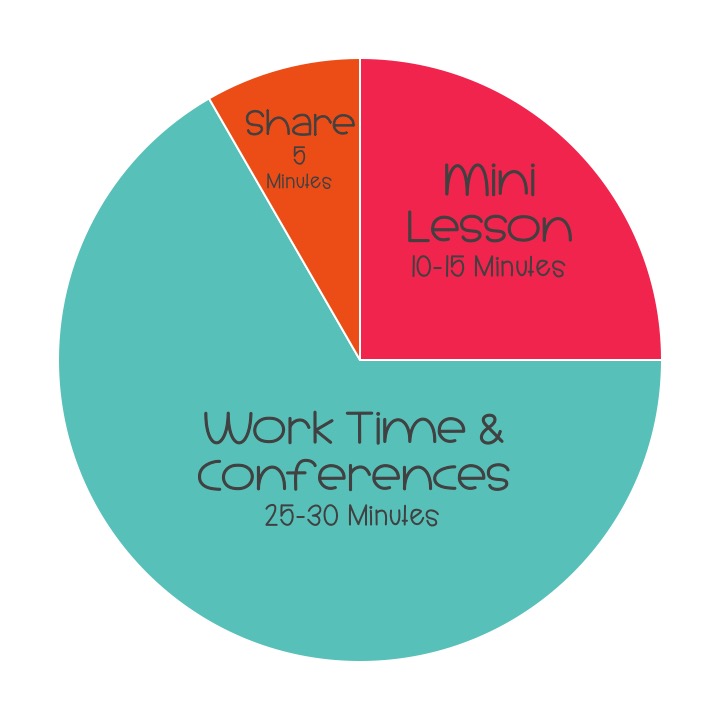
Writing workshop also includes time for conferencing. While students are independently writing (after TONS of training and work on improving endurance), the teacher is meeting with writers to help them to improve and grow. This is a time where the instruction is more differentiated and personalized to the writer’s needs.
Writing workshop also includes student choice. Students choose their writing topic. They are NOT responding to an assigned prompt. Writers get more excited and put forth more effort when they get to write about something that interests them. This is KEY! You will have to teach students how to generate their own topics, but I promise that it is time well spent.
What I did differently to make it work:
I had to make two changes in the writing workshop model to make it work in my classroom. These changes took me from “hot mess” to “happy writers”.
Students have SOME choice.
In the writing workshop students have choice when it come to their writing topic. I am all about that. The problem was that I had students writing fiction stories while I was delivering Oscar worthy lessons about research and paraphrasing facts. Those students weren’t using my lesson and so they were forgetting the skill.
Plus, I had students who had a favorite type of writing and never tried the others. They weren’t meeting all of the writing standards.
My solution?
Students can choose the topic of their writing, but it must be within the genre that I am teaching. I taught in units of study and we would study a genre for eight weeks. So if our unit was on personal narratives, they could choose any topic as long as it was a personal narrative. Simple solution. World of difference.
Students write a masterpiece at my pace.
In a true writing workshop model, students are going through the writing process at their own pace. This means that some students will be drafting, while others are editing and others are publishing.
This drove me MAD! I couldn’t handle the chaos. More importantly, my lessons were never relevant for the entire group since they were never at the same place in the writing process. I might give a killer lesson about writing leads. If a student was publishing, he wouldn’t use that skill right when it was taught and therefore usually forgot the skill.
My solution?
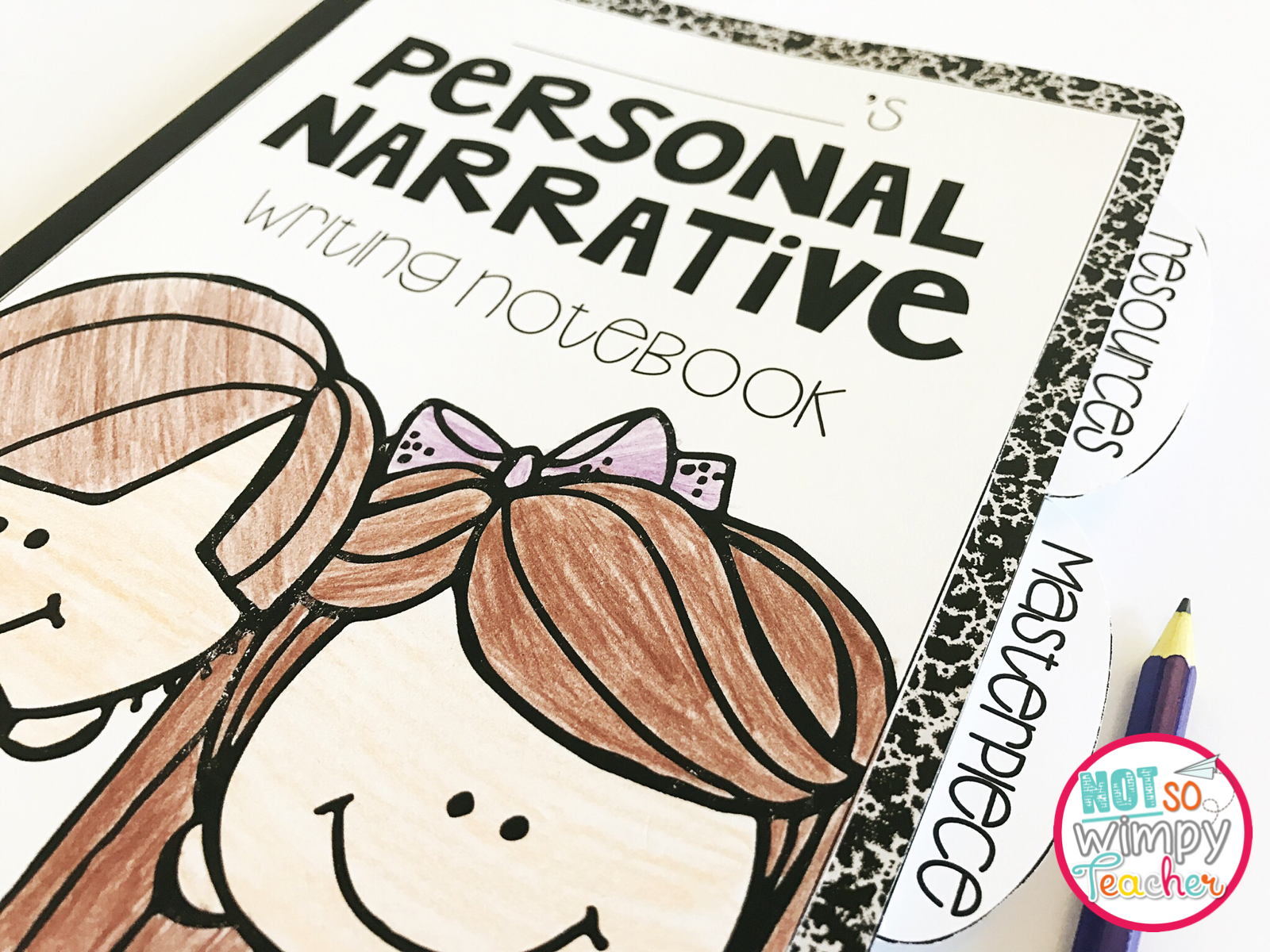
Students work through one piece of writing, which we call their masterpiece, at my pace. They still choose the topic, but they have to stay with me in the writing process.
Here is how that works… I teach students lessons about generating topics. They head to their writing spot and work on generating the topic for their masterpiece. They can’t just jump ahead and start drafting though. The next day we rehearse and discuss drafting. They independently draft. Maybe the next lesson is about revising their lead. That day, they work on their masterpiece lead.

If they finish the task from the mini lesson early, they work on other stories. These stories are still the same genre we are studying, but they are stories that students can work on at their own pace.
So they have choice. They work at my pace. They work at their pace. They are always writing. It is the best of every world!!!
Teaching our students HOW to write is so important! Not only are they standards, but they are important skills that students will use all through high school and college. It’s not easy to fit it in, but we can’t just skip it either! Look for ways to tighten up your transitions. Maybe shorten your morning work. Eliminate some of those extras that might be fun, but aren’t all that necessary. Let’s make writing instruction a routine in our classrooms!
Looking for more information about teaching writing?
I have lots of great resources for you!
You can sign up for my FREE writing email course by clicking HERE. (The course includes lots of free resources and tips!)
You can check out my writing videos on my YouTube channel by clicking HERE.
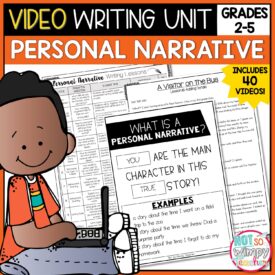
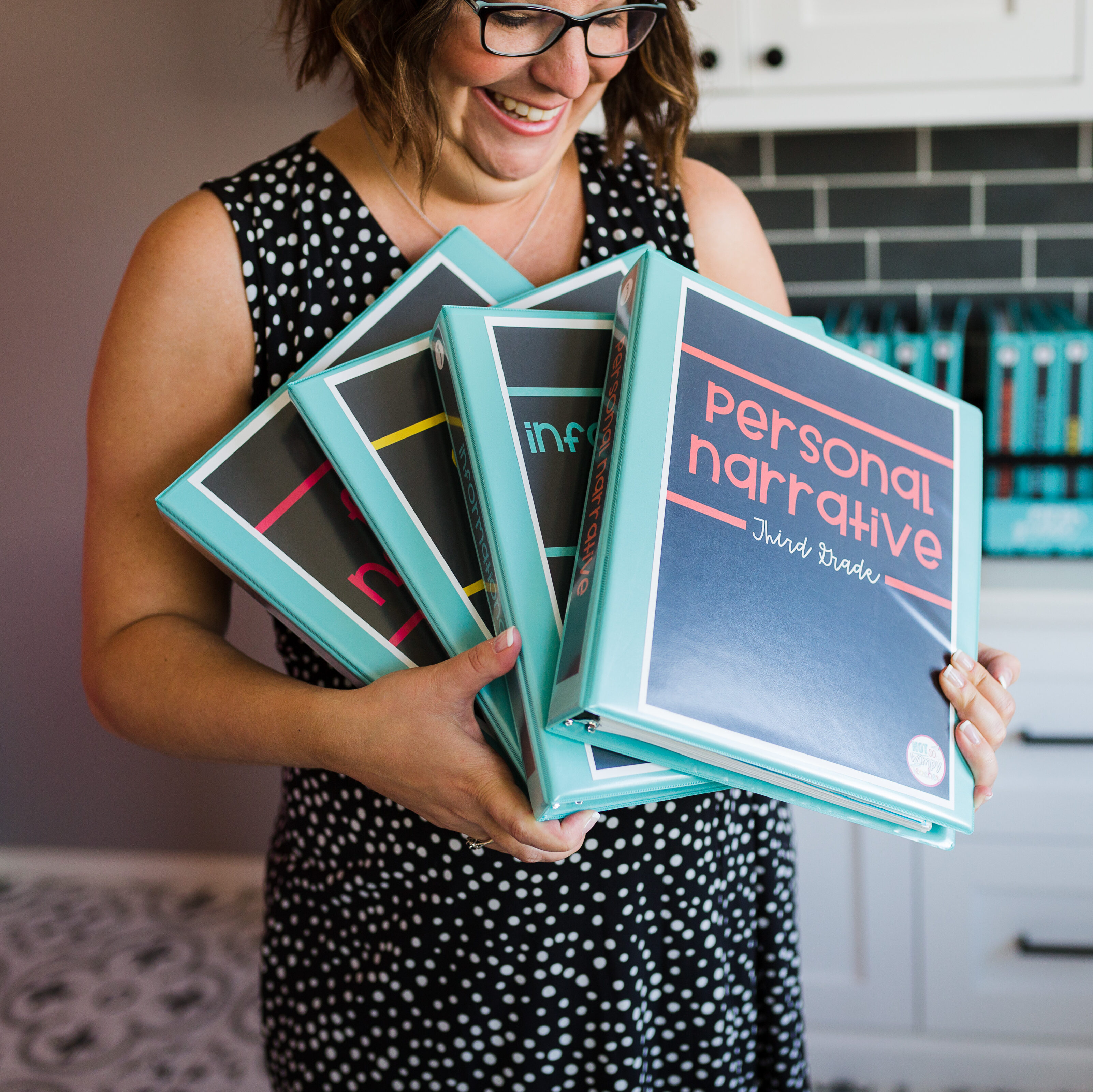
You can check out my writing units in my store by clicking HERE.
Have a Not So Wimpy day!




 End of Year Carnival Week for grades 2-5!
HI Jamie,
The process of Masterpieces for the mini lesson is very similar to what I have been doing this year.
Throughly enjoyed reading hte blog.
Thank you
Elizabeth
I just used your wonderful videos for teaching opinion writing on google classroom. It was a 10 day course. Are you going to make any more? I’d love one for fictional writing for my first and second graders..
She just released a Fictional narrative one AND an Report writing Informational series! I bought them both!!!
Thank you for your always very helpful posts. I am so glad I found your blog and products!
Emily
Your writing videos for both Opinion Writing and Informational Writing are AMAZING! My 3rd grade students have grown so much through the use of these Google slides and videos. You break it down in such a great way and your enthusiasm in the videos is contagious! Thank you for all of your efforts and positivity!
Ahhhhh! Thank you for clarifying how you do writer’s workshop. That makes sense.
I had a chance to use the opinion writing lesson plans during my student teaching. I loved that everything was broken down, however by the 3rd or 4th week the students were groaning. They didn’t want to work on the same piece of writing for so long. We tried offering other prompts or additional essays to give them a break, but I felt like they lost steam on their masterpiece. How do you keep them engaged and excited about the subject they chose?
This is one of the thoughts I have with starting the Personal Narrative Unit. Previous experience has led me down this same path when teaching writing. I find many students just don’t like to edit and revise the work and although I am super excited about using this unit I am also thinking of ways to try to avoid student losing enthusiasm.
I think Jamie also made a comment that really stuck with me about growth in writing. Writing skills are taught every year. Not every child will be successful at every skill but if we see growth in the writing then it should be celebrated! The more I praise and celebrate success with my students (use share time for this) the more enthusiastic they are to keep going.
Exactly, Tina. We definitely need to focus on growth. Growth from beginning to end of a unit, from beginning to end of the school year, and from year to year.
I am teaching first grade for the first time and am completely lost on how to make writing work here. Any tips for kids who have done very little writing?
Christy,
My areas of expertise are grades 2-5 so I have little experience teaching first. Some of the same principals could apply like making sure to provide lots of time and opportunity to write. Obviously, the expectations will be different. I suggest finding a first grade Facebook group or other similar group to get suggestions from other teachers. I’m sure you could find some sellers on TpT that have great resources for first.
Thank you. I am homeschooling and this is helping my daughter.