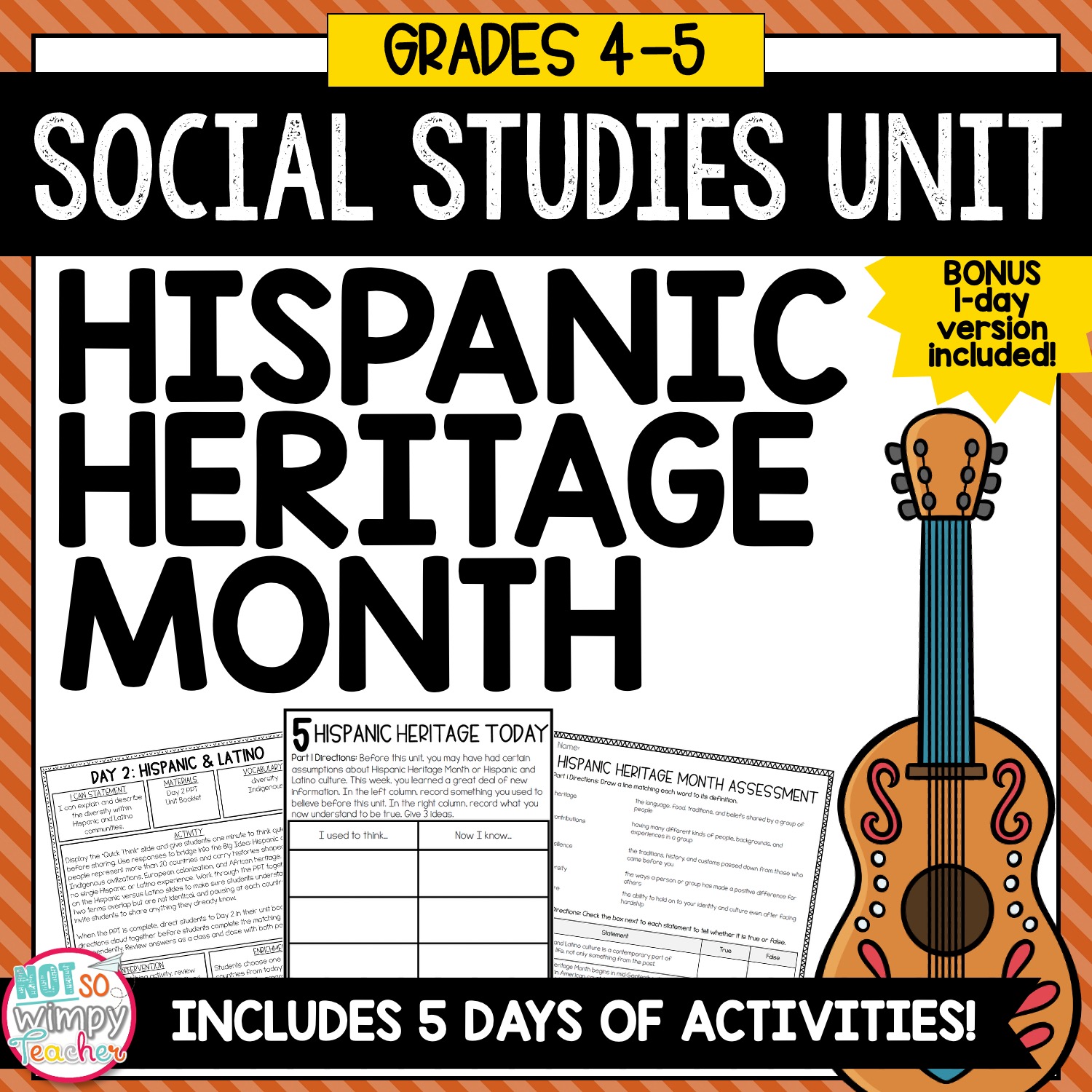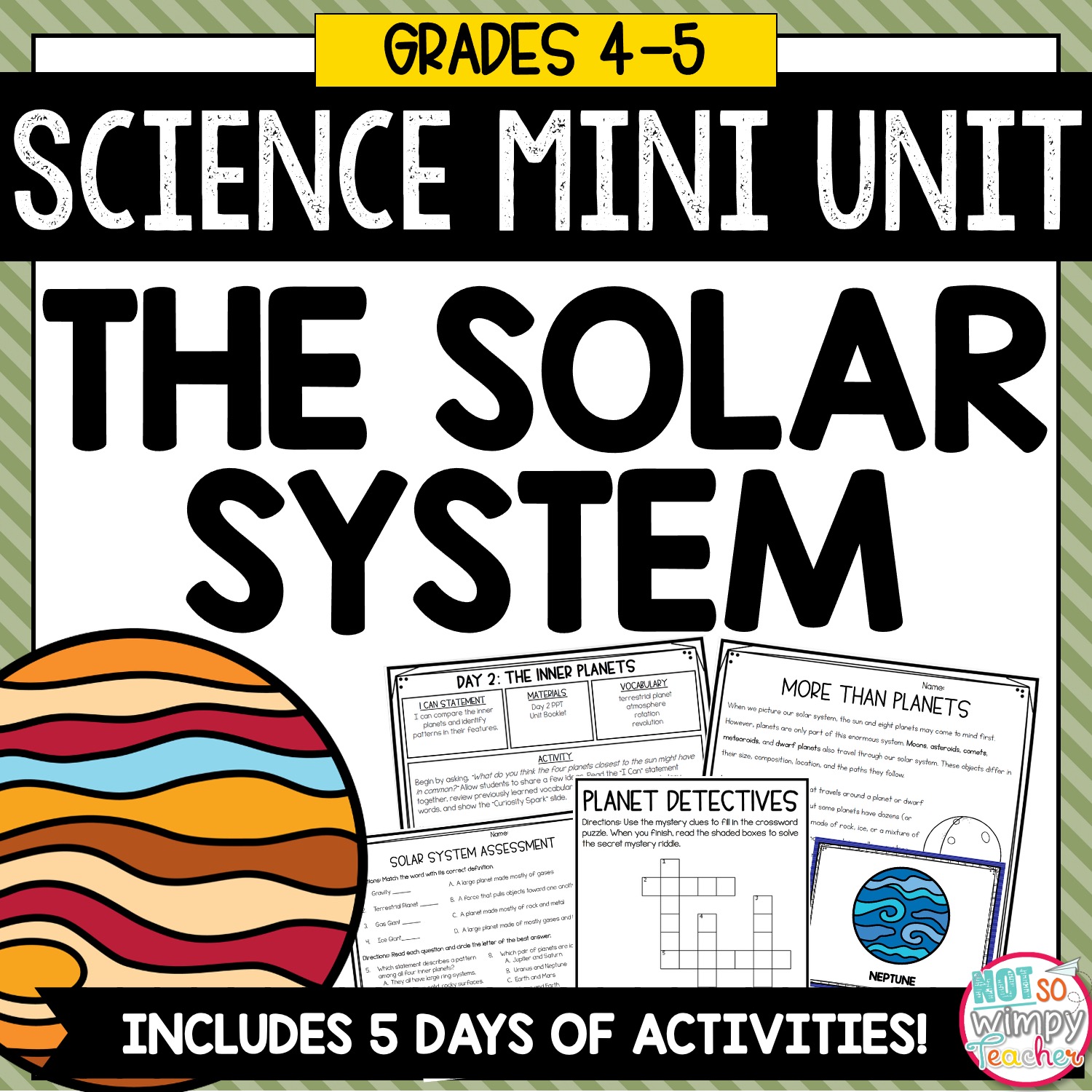
Solar System Mini Science Unit for 4th & 5th Grade
Save MORE with Lesson GenieMore about this resource
Mercury, Venus, Earth, Mars… every student can rattle off the planets. Far fewer can tell you why Mars looks red, why Jupiter and Saturn don’t have solid ground to stand on, or what’s floating around out there besides the planets themselves.
This 5-day Solar System mini unit takes students past planet-order memorization and into real understanding — comparing the inner and outer planets, digging into what makes each one unique, and uncovering the moons, asteroids, comets, and dwarf planets most units never get to.
This unit is an extension of our Space Science Unit.
What’s Included
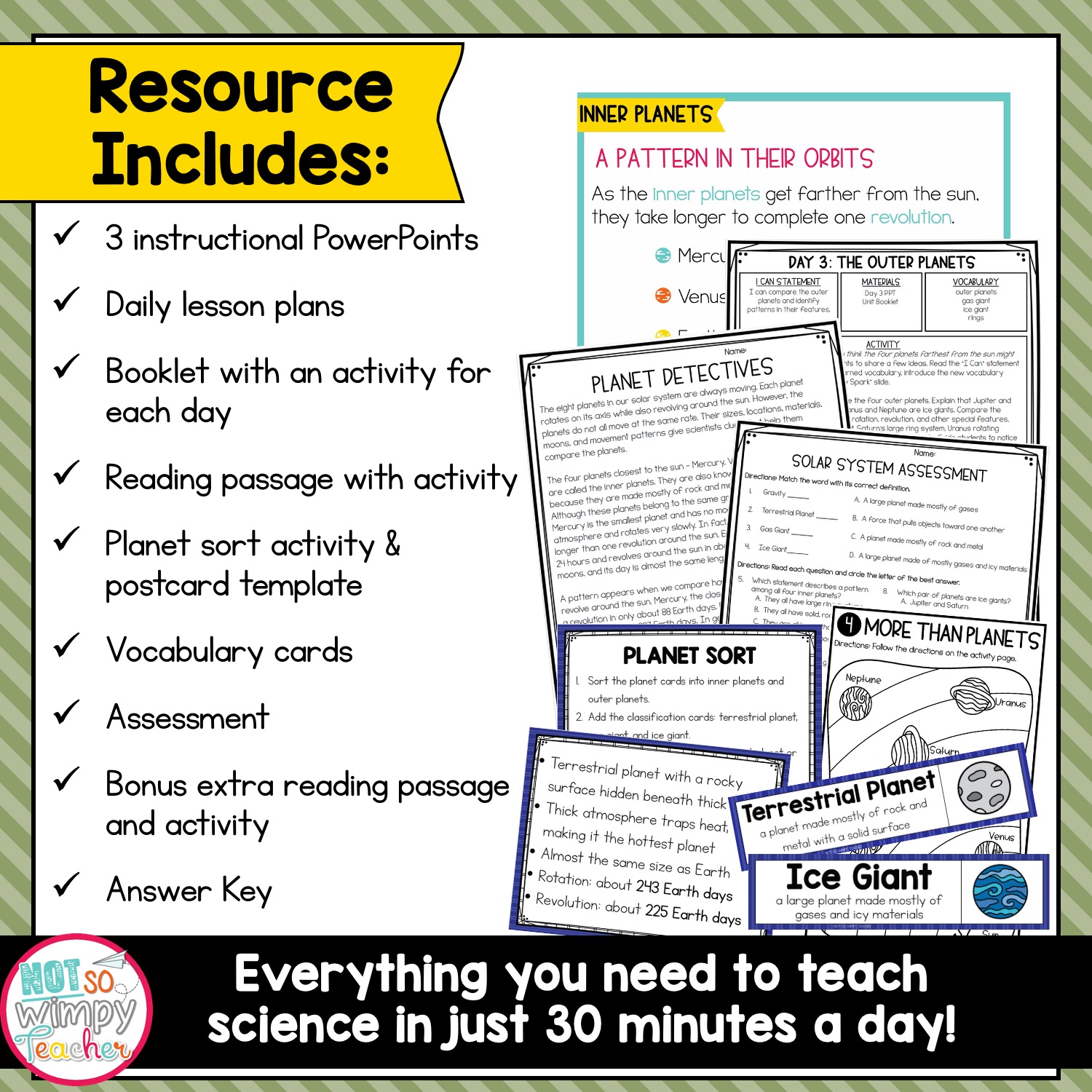
- Day 1 PowerPoint — The Solar System: introduces the Sun, planets, moons, and orbit, with a Curiosity Spark image and Turn and Talk prompts
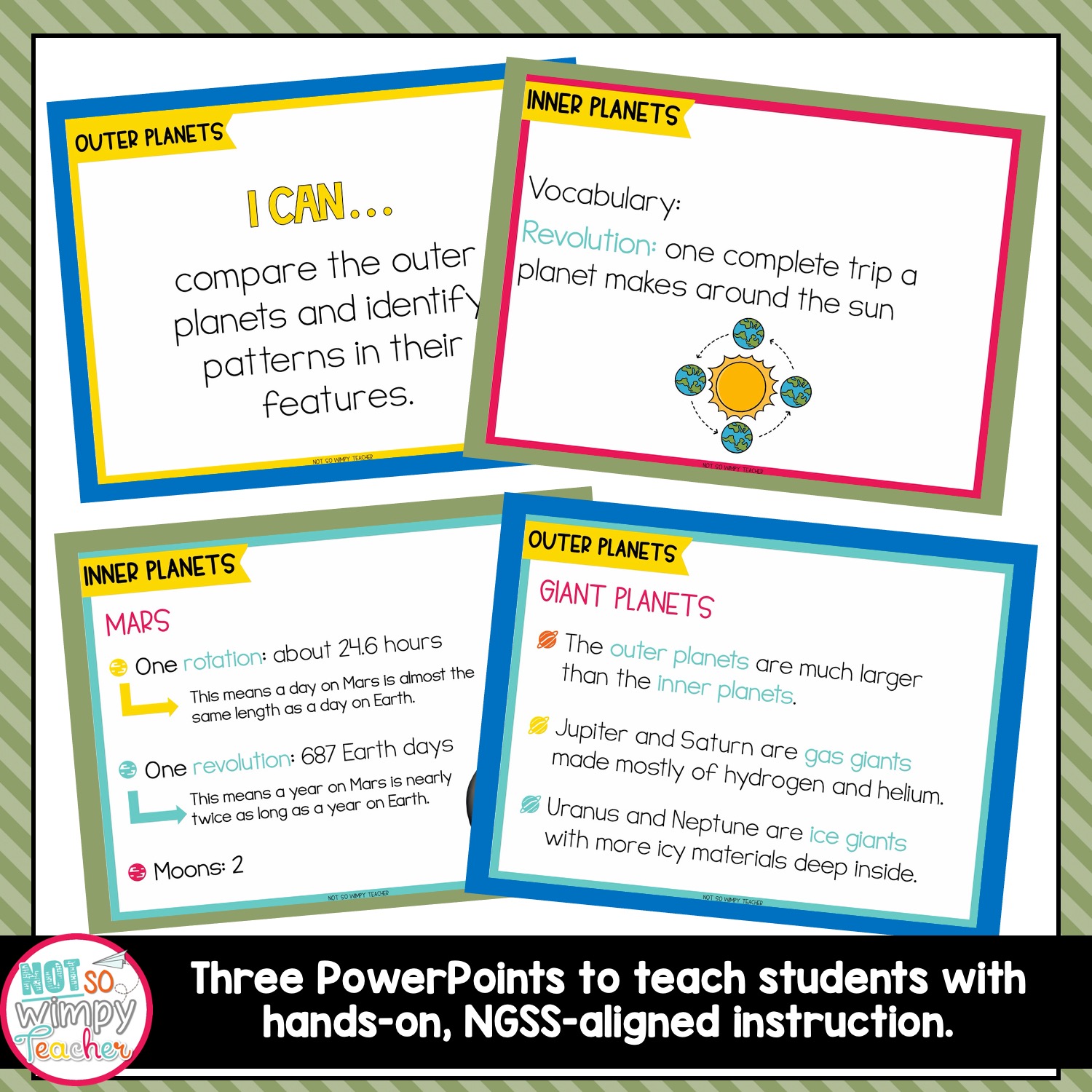
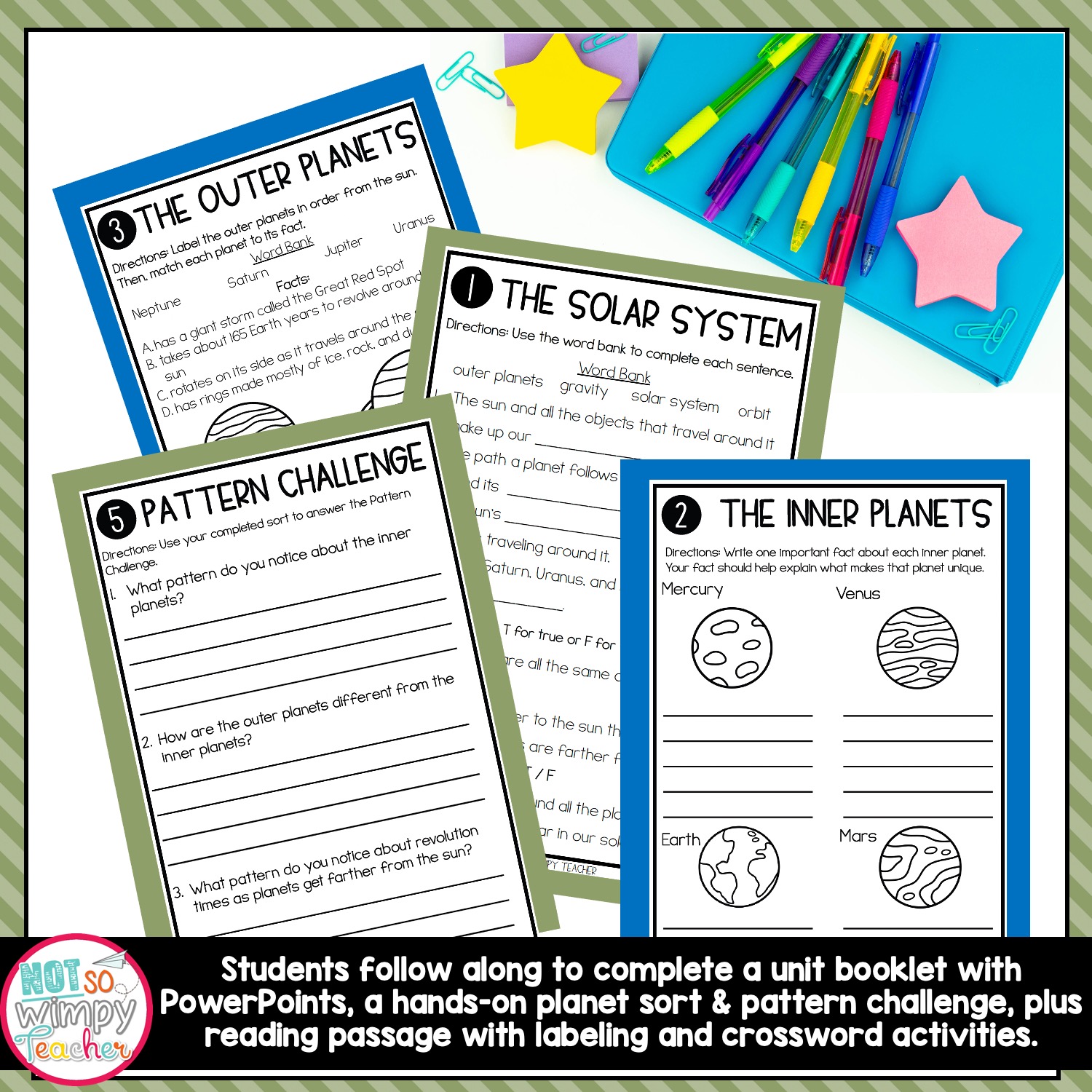
- Day 2 PowerPoint — The Inner Planets: Mercury, Venus, Earth, and Mars, their shared rocky surfaces, and what makes each one unique
- Day 3 PowerPoint — The Outer Planets: Jupiter, Saturn, Uranus, and Neptune, including Jupiter’s Great Red Spot, Saturn’s rings, and Uranus’s sideways spin
- Day 4 reading passage — “More Than Planets”: covers moons, asteroids, the asteroid belt, meteors, comets, and dwarf planets, paired with a solar system map activity
- Day 5 Planet Sort: fact cards for all 8 planets plus Inner Planet/Outer Planet sorting cards — students sort planets by group, then match fact cards to the correct planet (the 4th/5th grade version adds Terrestrial Planet, Gas Giant, and Ice Giant classification cards and a Pattern Challenge extension)
- Bonus “Planet Detectives” reading passage and crossword: a review activity where students use clues to identify planets and solve a shaded-letter mystery riddle
- Student booklet with a page for every lesson (word bank/true-false, inner planet clue-matching, outer planet labeling, the solar system map challenge, and a Space Postcard writing activity) — fully answered key included
- Solar System Assessment with a matching, multiple choice, true/false, and planet-ordering section — answer key included
- Vocabulary cards for key unit terms
- Teacher lesson plans with an “I Can” statement, materials list, step-by-step activity directions, and built-in intervention and enrichment options for every day
5 days. 2 PowerPoint lessons. 3 hands-on STEM challenges. 1 reading passage. 6 scenario cards. Every PowerPoint lesson opens with an “I Can” statement, so students always know what they’re working toward.
How to Use in the Classroom:
Designed to be taught one lesson per day over one week, with each session running about 20-30 minutes.
- Day 1 (~20-30 min): Whole group. PowerPoint introduces the solar system, planets, moons, and orbit.
- Day 2 (~25-30 min): Whole group. PowerPoint introduces the four inner planets and their shared features.
- Day 3 (~25-30 min): Whole group. PowerPoint introduces the four outer planets and their shared features.
- Day 4 (~25-30 min): Whole group or partners. Read the “More Than Planets” passage together, then complete the solar system map challenge.
- Day 5 (~30- min): Small groups. Students complete the Planet Sort, then individually complete their Space Postcard in the booklet.
- Planet Detectives (bonus): flexible — use as a sub plan, early finisher activity, independent center, or a whole-group review before the assessment.
Differentiation:
This mini unit includes built-in opportunities to support different learners.
- Turn and Talk prompts throughout every PowerPoint let students process new vocabulary with a partner before sharing out.
- Every lesson has a built-in intervention option (small-group review, sentence frames, or a simplified first step) and an enrichment option (research, Venn diagrams, “Guess My Planet” clue-writing, or turning the Space Postcard into a longer letter).
- The Day 5 sort can be scaffolded in two steps — sort the planet cards first, then add the fact cards once that’s correct.
- Choose the 2nd/3rd grade version for foundational vocabulary and simpler fact cards, or the 4th/5th grade version for added vocabulary (gravity, terrestrial planet, gas giant, ice giant) and real numerical data on rotation and revolution.
❤️ ❤️ Why You’ll Love It: ❤️ ❤️
- No-prep, print-and-go lessons that cover the entire solar system in one week
- Goes beyond “memorize the planets” — students compare, classify, and use real vocabulary like rotation, revolution, and (in the upper-grade version) terrestrial planet and gas giant
- The “More Than Planets” lesson covers content most solar system units skip entirely — asteroids, comets, meteors, and dwarf planets
- A bonus crossword/mystery riddle activity gives you an easy, engaging review day with zero extra prep