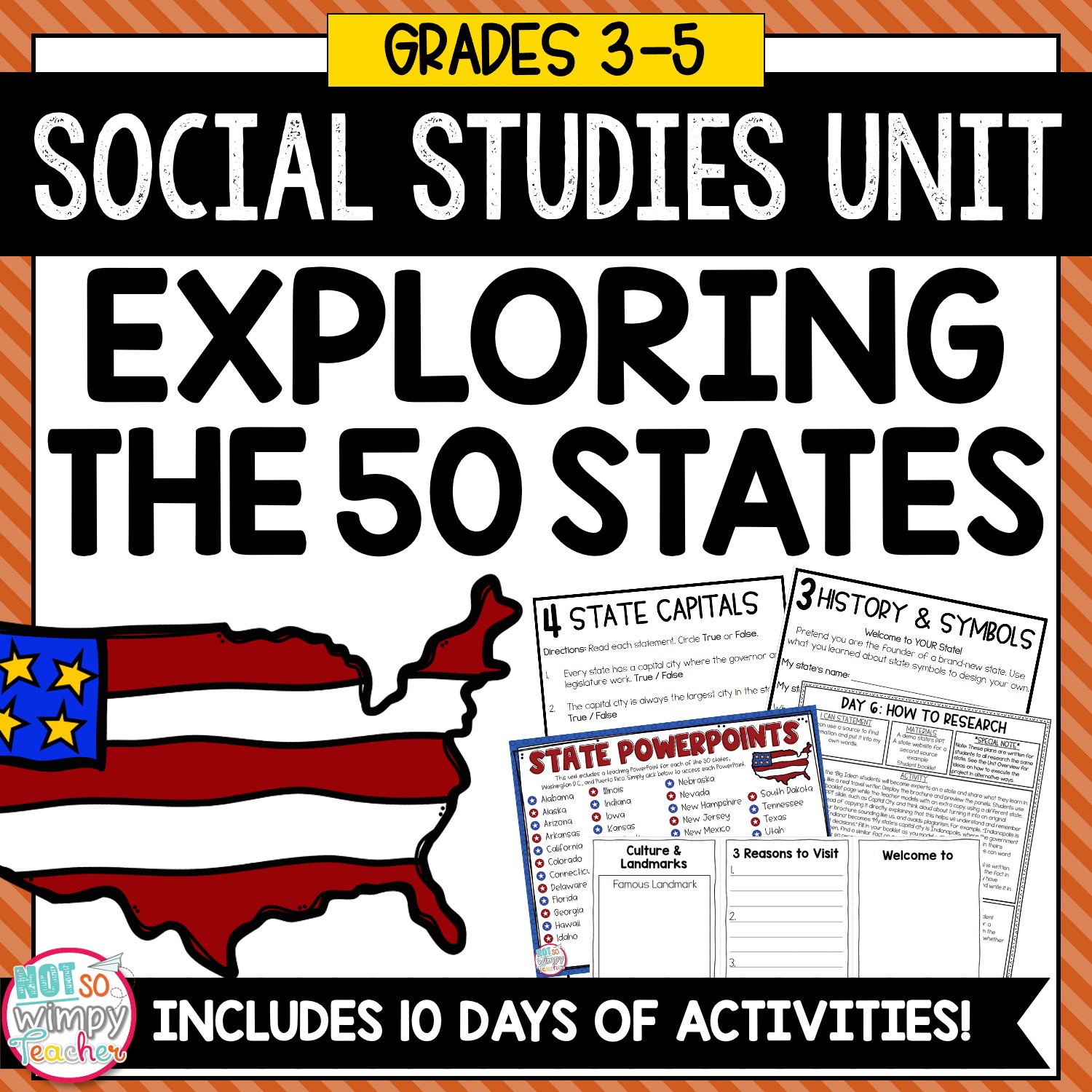
Exploring the 50 States Social Studies Unit for Grades 3-5
Save MORE with Lesson GenieAlso available in the following bundles
More about this resource
Take your students on a journey across the United States as they explore what makes each state unique! Bring social studies to life with this engaging Exploring the 50 States unit. Students will learn how to understand any state through five important lenses: geography, history, government, symbols, and culture. Then, they will apply what they learned by researching a state and creating a travel brochure to share with their classmates.
This unit is designed to help students go beyond memorizing state names and capitals. Instead, students learn how landforms, climate, natural resources, Native peoples, statehood, symbols, capital cities, landmarks, traditions, and culture all work together to shape a state’s identity.
This unit is flexible enough to work in many different ways. Teach the full two-week unit, use Week 1 as a standalone introduction to the 50 states, use Week 2 as a research project, or use the included state PowerPoints as state spotlights throughout the year.
This resource also includes 52 individual PowerPoint presentations — one for each state, Washington, D.C., and Puerto Rico. Each presentation follows the same structure so students can research and compare states in a consistent, organized way.
What’s Included:
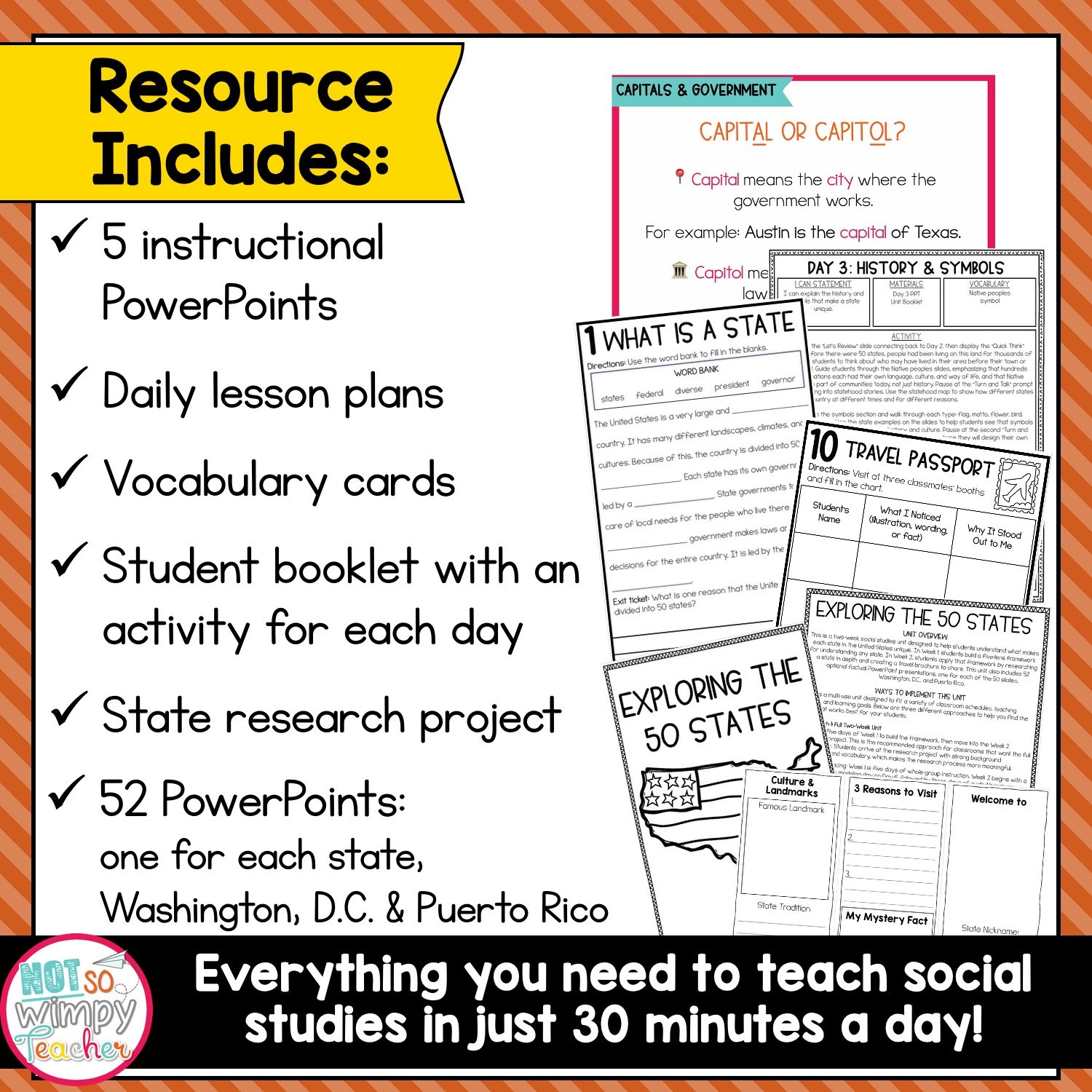
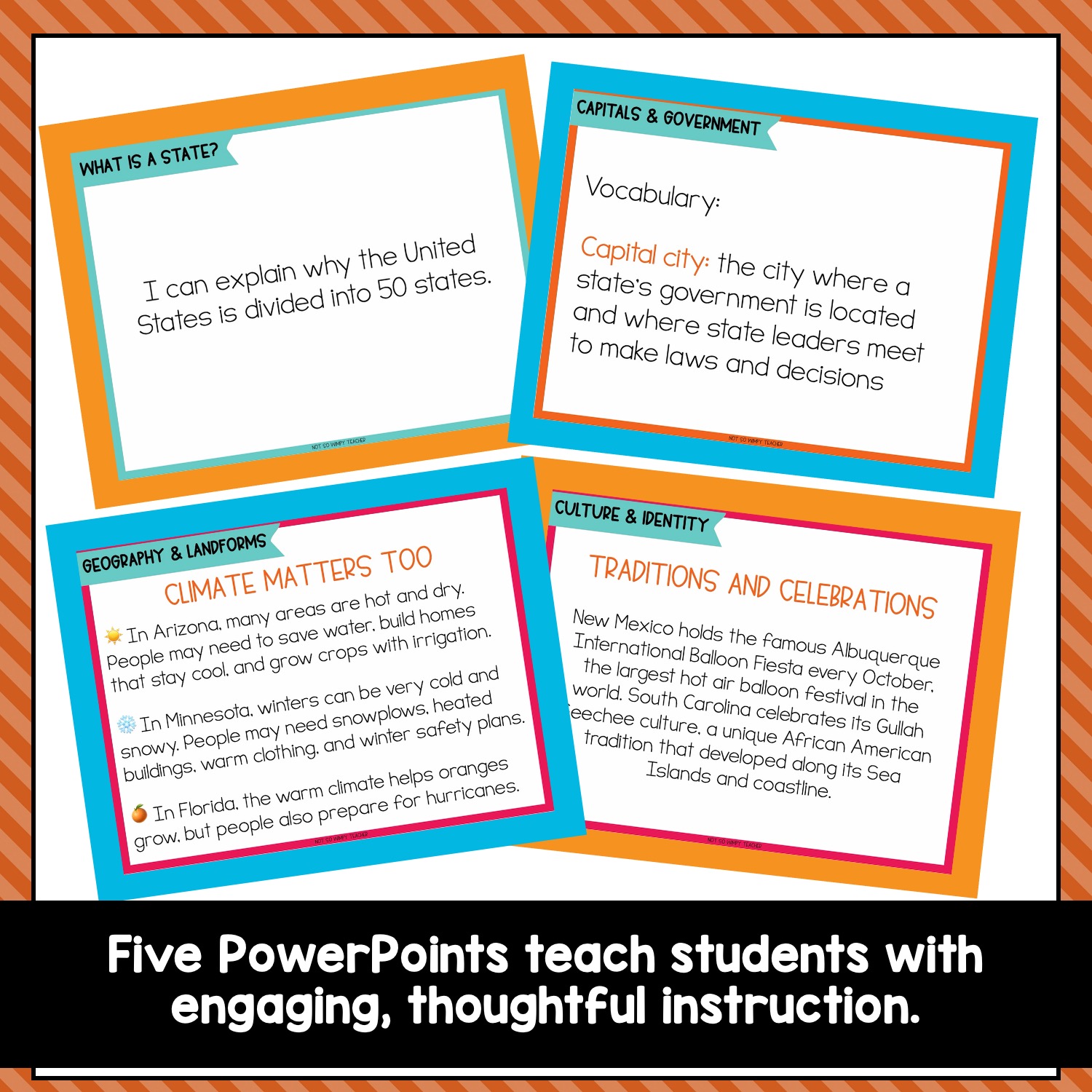
- 5 PowerPoint lessons with detailed teacher notes
- Detailed lesson plans with both intervention and enrichment
- Student workbook with guided notes activities
- 52 individual PowerPoints for all 50 states, Washington, D.C., and Puerto Rico
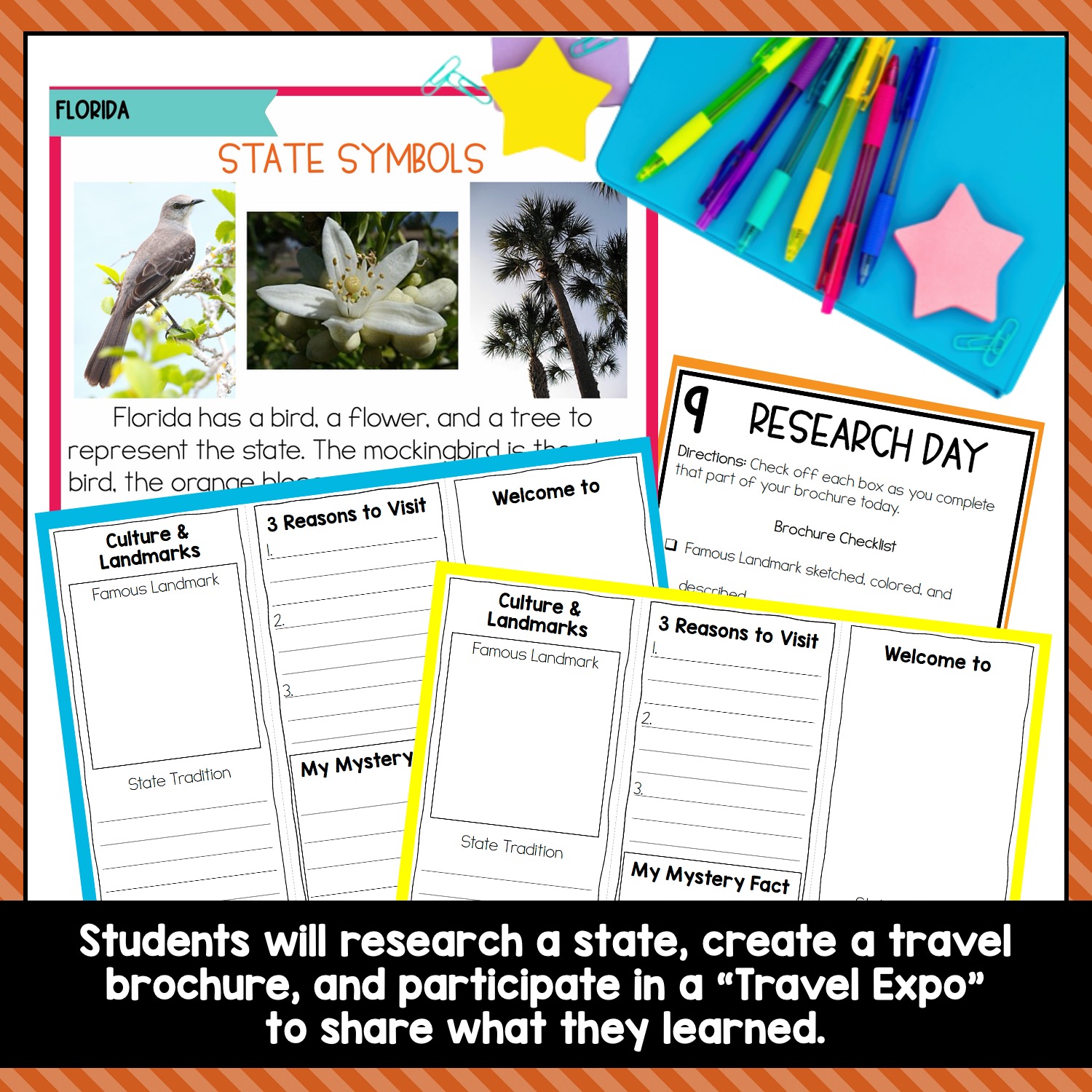
- “Any State” Travel Brochure template
- Vocabulary cards to support key concepts
- Comprehensive assessment
- Complete daily lesson plans with teaching tips, intervention strategies, and enrichment ideas
- Ways to extend learning
- Research resources
- Answer keys for all activities
Skills Covered:
- states
- federal & state government
- governors
- statehood
- diverse landscapes and communities
- geography, landforms, climate, natural resources
- Native peoples
- state symbols, flags, mottos, flowers, birds, trees, nicknames
- capital cities
- legislatures
- Washington, D.C.
- culture, identity, traditions, landmarks, famous places
- research skills
- using multiple sources
- writing facts in your own words
- creating a travel brochure
- sharing research with an audience
How to Use in the Classroom:
This unit is designed to be flexible. Teachers can use the complete two-week unit, only Week 1, only Week 2, or the state PowerPoints throughout the year.
- Full Two-Week Unit Option
This is the recommended approach for classrooms that want the full experience. In Week 1, students build background knowledge about what makes states unique. In Week 2, students apply that knowledge through a guided research project and travel brochure.
- Week 1 Only Option
Use the first five lessons as a standalone introduction to states, geography, government, symbols, and culture. This option works well if you have limited time or if students will complete a different state research project later in the year.
- Week 2 Only Option
Use the research project week on its own if students already have background knowledge about states. This option works well as an enrichment project, extension activity, or end-of-unit research project.
- State Spotlight Option
The 52 individual PowerPoints can also be used outside of the unit as weekly or monthly state spotlights. Use them during morning meeting, social studies warm-ups, Friday features, or any time you want students to learn about a new state.
10-Day Lesson Overview:
- Lesson 1: What Is a State?
Students learn why the United States is divided into 50 states. They explore the difference between state government and federal government and learn why states help organize a large, diverse country. Students also learn about statehood, governors, and how each state has its own government and identity.
- Lesson 2: Geography & Landforms
Students learn how geography shapes the way people live in a state. They explore landforms, climate, and natural resources, then think about how these features affect jobs, travel, homes, farming, activities, and challenges people may face. Students also consider opportunities and challenges connected to mountains, coastlines, deserts, and other landforms.
- Lesson 3: History & Symbols
Students learn that every state has a history that began long before statehood. They explore Native peoples, statehood stories, and state symbols. Students learn how flags, mottos, flowers, birds, trees, and nicknames can represent a state’s identity, geography, history, or values. Then, students design symbols for an imaginary state.
- Lesson 4: State Capitals & Government
Students learn what a capital city is and why it matters. They explore the difference between capital and capitol, learn about legislatures, and discover why the capital city is not always the largest city in a state. Students also learn that Washington, D.C. is a special district created for the federal government.
- Lesson 5: Culture & Identity
Students learn how culture, traditions, landmarks, and famous places help make each state unique. They explore how food, music, art, celebrations, and landmarks are shaped by geography and by the people who have lived in a place across history. This lesson brings together the full framework students will use during their research project.
- Lesson 6: How to Research
Students begin Week 2 by learning how to research a state. The teacher models how to use a state PowerPoint and a website as research sources. Students practice finding a fact, thinking about what it means, and writing it in their own words instead of copying. This lesson prepares students for the brochure research they will complete during the rest of the week.
- Lesson 7: Research Day
Students begin researching their assigned or chosen state and start completing the first sections of their travel brochure. Depending on the classroom approach, students may research the same state as a class, different assigned states, or states they chose themselves. Students use the state PowerPoint and other approved sources to gather information.
- Lesson 8: Research Day
Students continue researching and completing their brochure. They focus on important state information such as Native peoples, statehood, state symbols, climate, landforms, and natural resources. Students use the checklist to make sure their facts are complete, written in their own words, and neatly presented.
- Lesson 9: Research Day
Students complete the culture and landmark sections of their brochure. They research a famous landmark, state tradition, reasons to visit, and a mystery fact. Students also finalize illustrations, labels, and written information so their brochure is ready to share.
- Lesson 10: Travel Expo
Students finish their brochures and participate in a Travel Expo. During the showcase, students visit classmates’ booths, learn about other states, and complete a Travel Passport page. Students notice facts, illustrations, and presentation choices from their classmates’ brochures, then compare what different students included.
Lessons are designed to fit into a typical social studies block.
This unit works well for:
- whole group instruction
- partner discussions
- small groups
- independent research
- state research projects
- morning meeting state spotlights
- Friday state features
- class presentations
The final travel brochure gives students an authentic way to organize and share their research while showing what makes a state worth visiting.
Differentiation:
This unit includes built-in supports to help all learners succeed.
Differentiation strategies include:
- vocabulary cards for key terms
- suggested intervention and enrichment activities embedded into daily lesson plans
- repeated review of vocabulary throughout lessons
- student-friendly PowerPoint lessons with discussion prompts
- booklet pages to guide student thinking
- research modeling before students work independently
- brochure templates with organized sections
- research checklists for each work day
- whole class, assigned state, or student choice research options
- state PowerPoints organized in the same format for consistency
- Travel Expo sharing options
- opportunities for drawing, labeling, writing, discussing, and presenting
Teachers can complete the research project as a whole class for more support, assign each student a different state for a broader class-wide experience, or allow students to choose their own state for more motivation and ownership.
❤️❤️ Why You’ll Love This Resource ❤️❤️
- Flexible enough to use as a full two-week unit, one-week unit, research project, or yearlong state spotlight
- Helps students understand states through geography, history, government, symbols, and culture
- Includes 52 individual PowerPoints for all 50 states, Washington, D.C., and Puerto Rico
- Goes beyond memorizing states and capitals by helping students understand what makes each place unique
- Builds research skills with modeling, checklists, brochure templates, and a final Travel Expo
- Easy-to-use lesson flow with engaging discussions, visuals, booklet pages, and project materials
Watch your students develop deeper understanding as they explore the importance of the 50 states through this engaging, comprehensive unit!