The 13 Colonies Social Studies Unit for 4th and 5th Grade
Save MORE with Lesson GenieAlso available in the following bundles
More about this resource
Step back in time and explore life in early America with this engaging and comprehensive unit on The 13 Colonies! Through interactive PowerPoint lessons, a daily booklet, regional comparisons, hands-on activities, task cards, and a creative enrichment project, students will discover how geography, culture, and community shaped the New England, Middle, and Southern Colonies.
Teachers often struggle to:
- Clearly explain why European countries — and leaders like King James I — wanted to establish colonies in North America
- Help students understand where the 13 Colonies were located and how they were grouped into three distinct regions
- Teach how geography, climate, and natural resources shaped jobs, food, and daily life in each colonial region
- Support students in recognizing how Indigenous peoples and settlers from different countries influenced colonial food, homes, and traditions
- Guide students in understanding the hardships faced by both colonists and Indigenous peoples and how communities adapted over time
- Help students analyze how regional differences in culture and economy contributed to the development of early America
The unit includes interactive PowerPoints, enrichment activities, task cards, a research project, and an assessment. Students also complete a social studies booklet to track their learning each day.
By the end of this unit, students won’t just memorize facts—they’ll think like young historians, connecting geography, culture, and human needs to understand how the 13 Colonies grew and changed over time. They’ll see how early colonial life influenced many foods, customs, and traditions we still recognize today.
What’s Included:
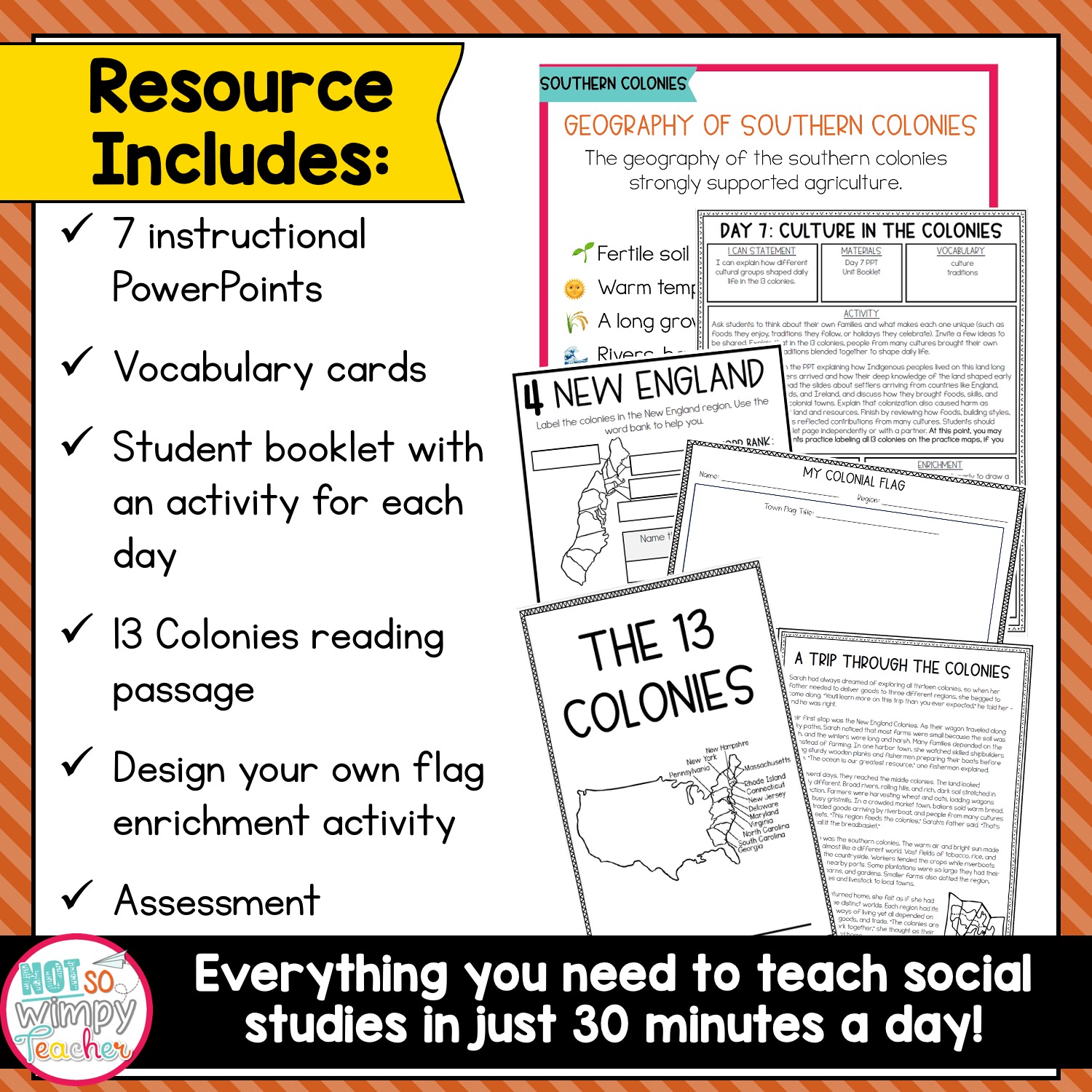
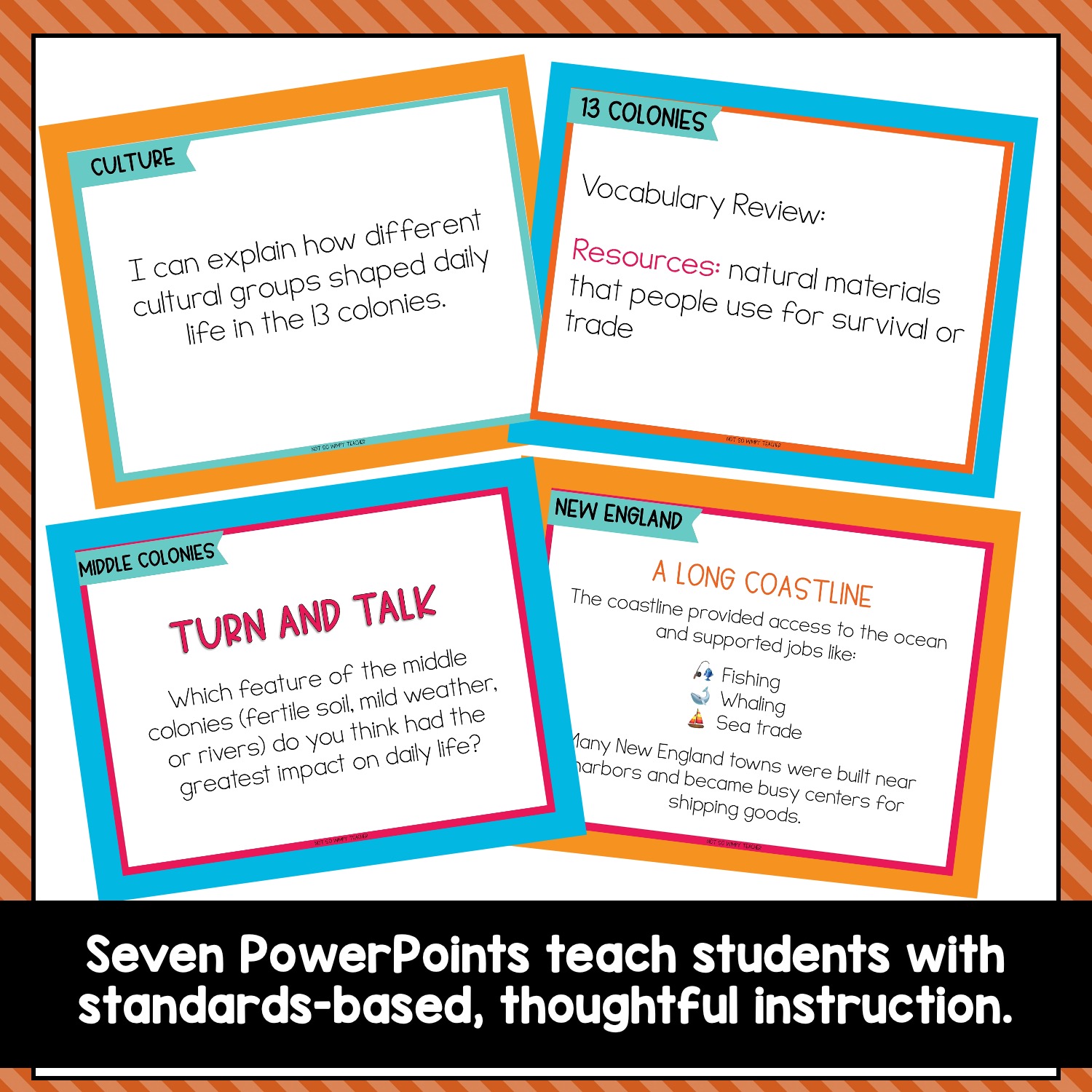
- 7 PowerPoint lessons with detailed teacher notes
- Detailed lesson plans with both intervention and enrichment
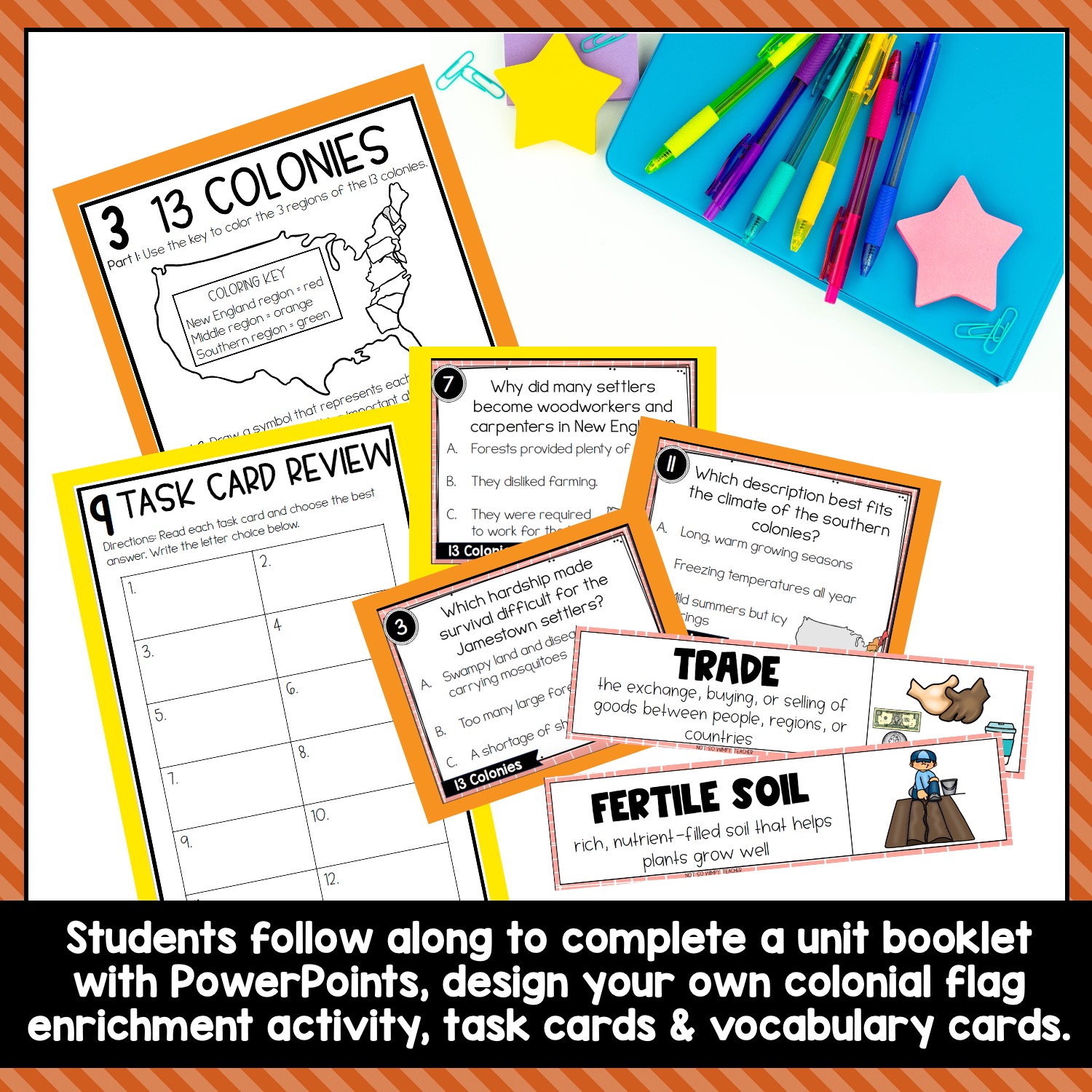
- Student workbook with guided notes activities
- Reading passages with response questions
- Task cards
- Design your own colonial flag enrichment activity
- Vocabulary cards for key terms
- Comprehensive assessment
- Complete daily lesson plans with social studies standards
Skills Covered:
- Why European countries — and leaders like King James I — By the end of this unit, students won’t just memorize facts—they’ll think like young historians, connecting geography, culture, and human needs to understand how the 13 Colonies grew and changed over time. They’ll see how early colonial life influenced many foods, customs, and traditions we still recognize today.wanted to start colonies in North America
- The location of the 13 Colonies and how they were grouped into three regions
- How geography, climate, and natural resources shaped jobs, food, and daily life in each region
- How Indigenous peoples and settlers from different countries influenced colonial food, homes, and traditions
- What hardships colonists and Indigenous peoples faced and how communities adapted
- How the colonies’ cultures, economies, and regional differences helped shape early America
How to Use in the Classroom:
Follow our 10-day sequence or adapt it to fit your pacing:
- Day 1: The Start of the Colonies
- Day 2: Jamestown
- Day 3: The 13 Colonies
- Day 4: New England Colonies
- Day 5: Middle Colonies
- Day 6: Southern Colonies
- Day 7: Culture in the Colonies
- Day 8: Reading Passage
- Day 9: Task Cards
- Day 10: Assessment
Each lesson takes approximately 30 minutes and can be taught in whole group, small group, or paired activities!
❤️❤️ Why You’ll Love This Resource ❤️❤️
- Print-and-go format saves hours of prep time
- Engaging mix of direct instruction and interactive activities
- Thoughtful guidance for teaching sensitive topics with confidence
- Builds critical thinking skills through meaningful discussion
Watch your students develop deeper understanding as they explore the importance of equality and justice through this engaging, comprehensive unit!