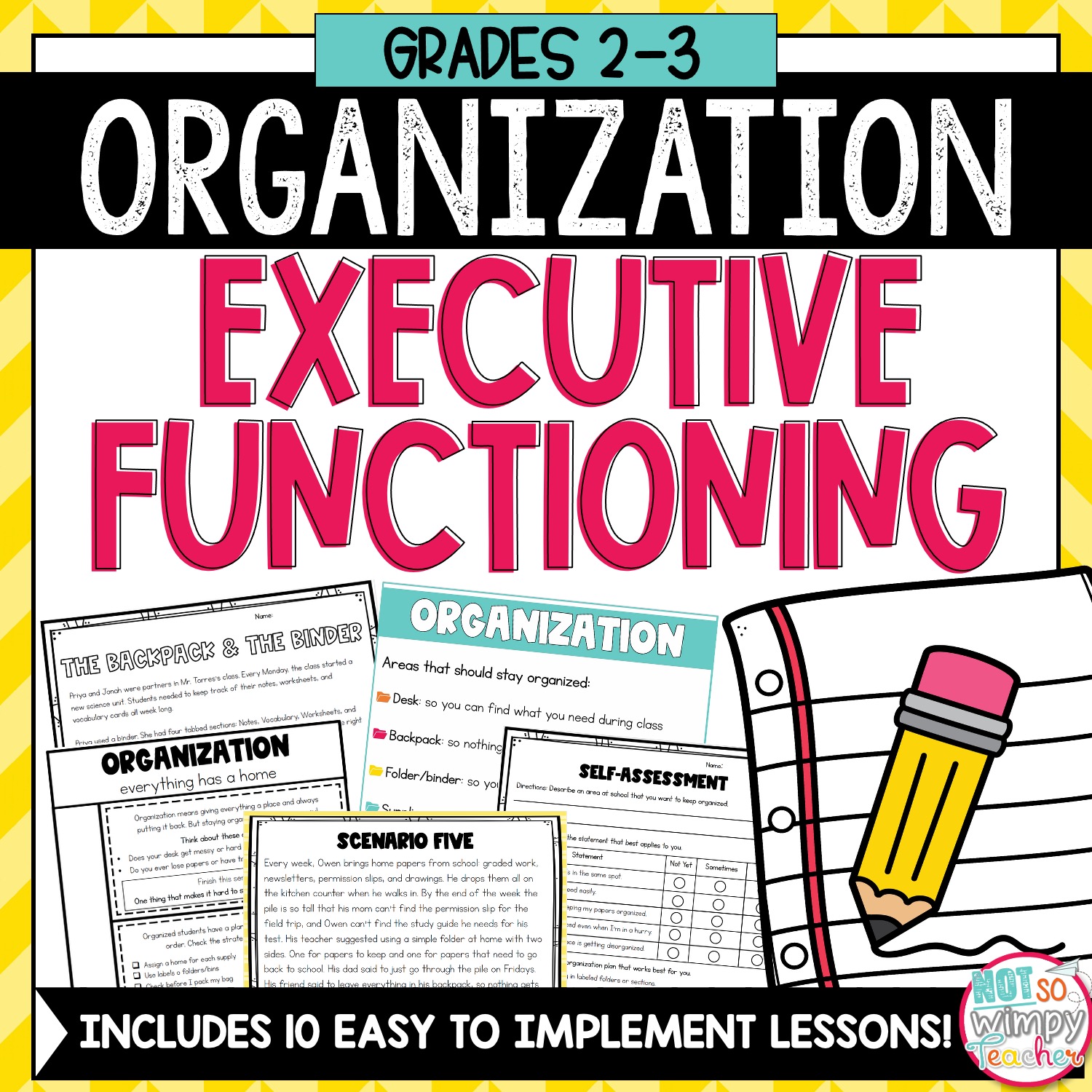
This engaging Executive Functioning Skills: Organization Unit helps you teach one of the most essential thinking skills students need for school success. With 10 low prep lessons filled with real life scenarios, reading passages, hands-on sorting, and reflection, students will learn what organization looks like, identify strategies that are working vs. strategies that aren’t, and build their own organization plan for their desk, backpack, folder, or locker.
Executive Functioning Skills: Organization Unit for 2nd & 3rd Grade
Save MORE with Lesson GenieMore about this resource
Messy desk. Missing homework. A backpack that swallows permission slips whole. If any of that sounds familiar, your students don’t need another “clean up your space” reminder, they need a plan.
Organization isn’t a personality trait. It’s a skill, and like every other skill, it can be taught. Giving everything a home, building daily habits, and knowing what to do when a plan stops working. These are the moments where a student’s whole day either runs smoothly… or falls apart.
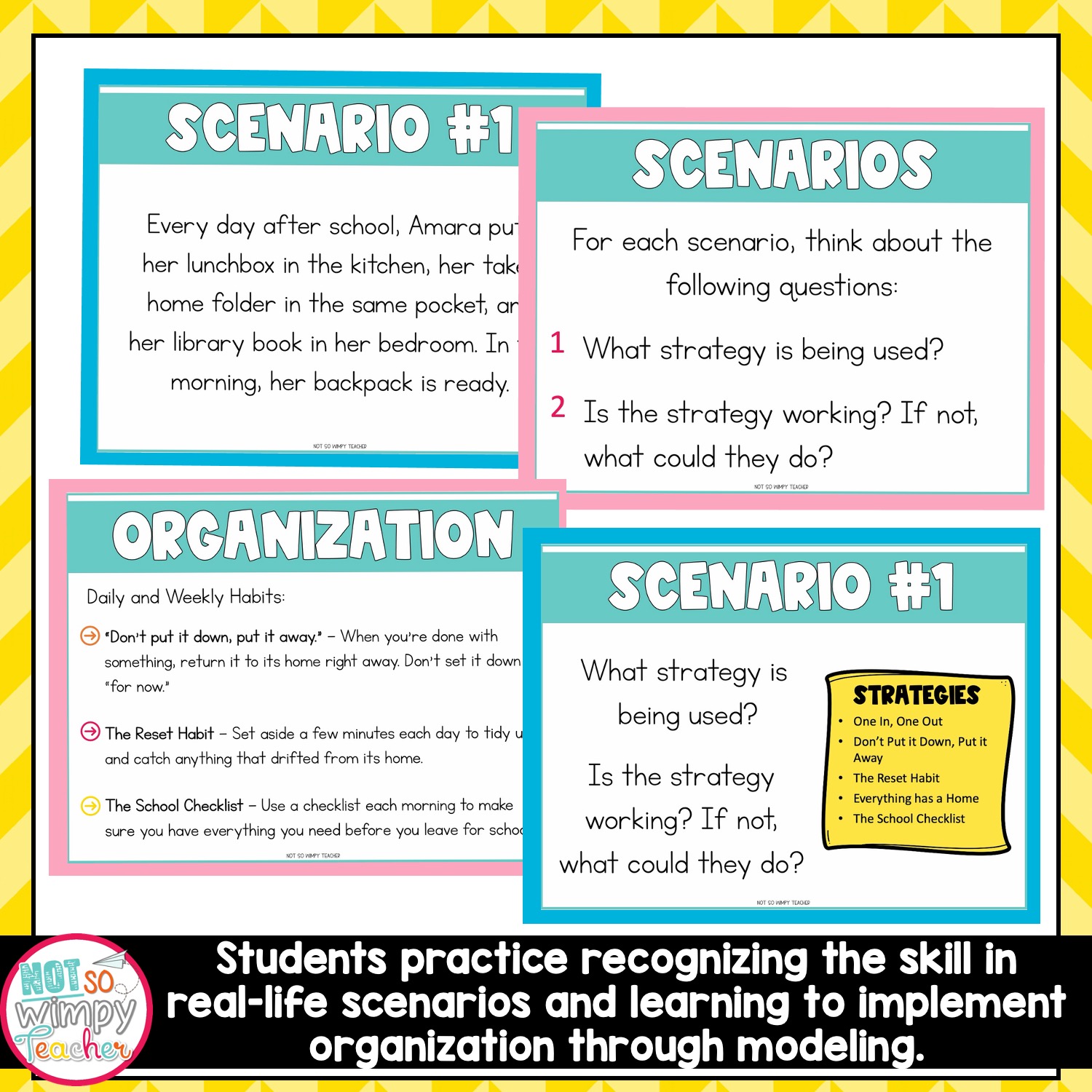
This engaging Executive Functioning Skills: Organization Unit helps you teach one of the most essential thinking skills students need for school success. With 10 low prep lessons filled with real life scenarios, reading passages, hands-on sorting, and reflection, students will learn what organization looks like, identify strategies that are working vs. strategies that aren’t, and build their own organization plan for their desk, backpack, folder, or locker.
Designed to fit seamlessly into your morning meeting, academic block, intervention time, or classroom community time, this flexible unit helps students build the invisible skills that make everything else in school work. Students move from understanding what organization means to applying it in real classroom tasks through PowerPoint mini lessons, scenario practice, small group discussion, an interactive notebook, a hands-on card sort, and self reflection.
This resource is part of our Executive Functioning Skills curriculum series and can be used as a standalone unit or alongside additional executive functioning skill units.
What’s Included:
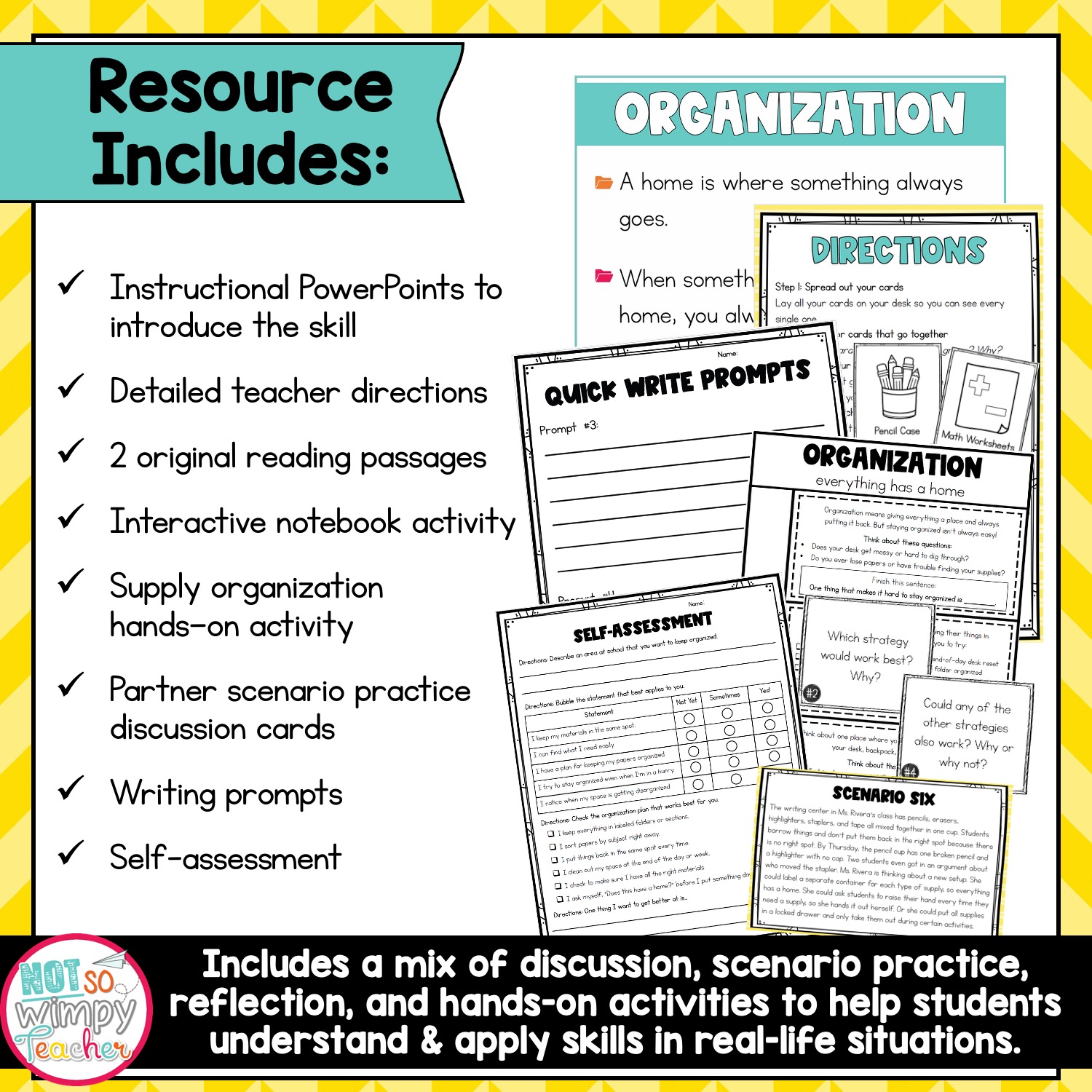
- 10 complete executive functioning lessons focused on organization
- Teacher directions and implementation guide
- Clear lesson outlines with daily objectives
- 2 instructional PowerPoints (Lesson 1 introduction and Lesson 2 scenarios)
- 2 reading passage lessons with discussion question cards
- Interactive notebook activity (My Organization Playbook)
- Scenario cards for small groups or partners
- Independent practice task with student checklist
- Strong Start Charades game with 30 game cards
- Quick write reflection activity with writing template
- Self assessment (Organization Check-In)
- Flexible sample schedules
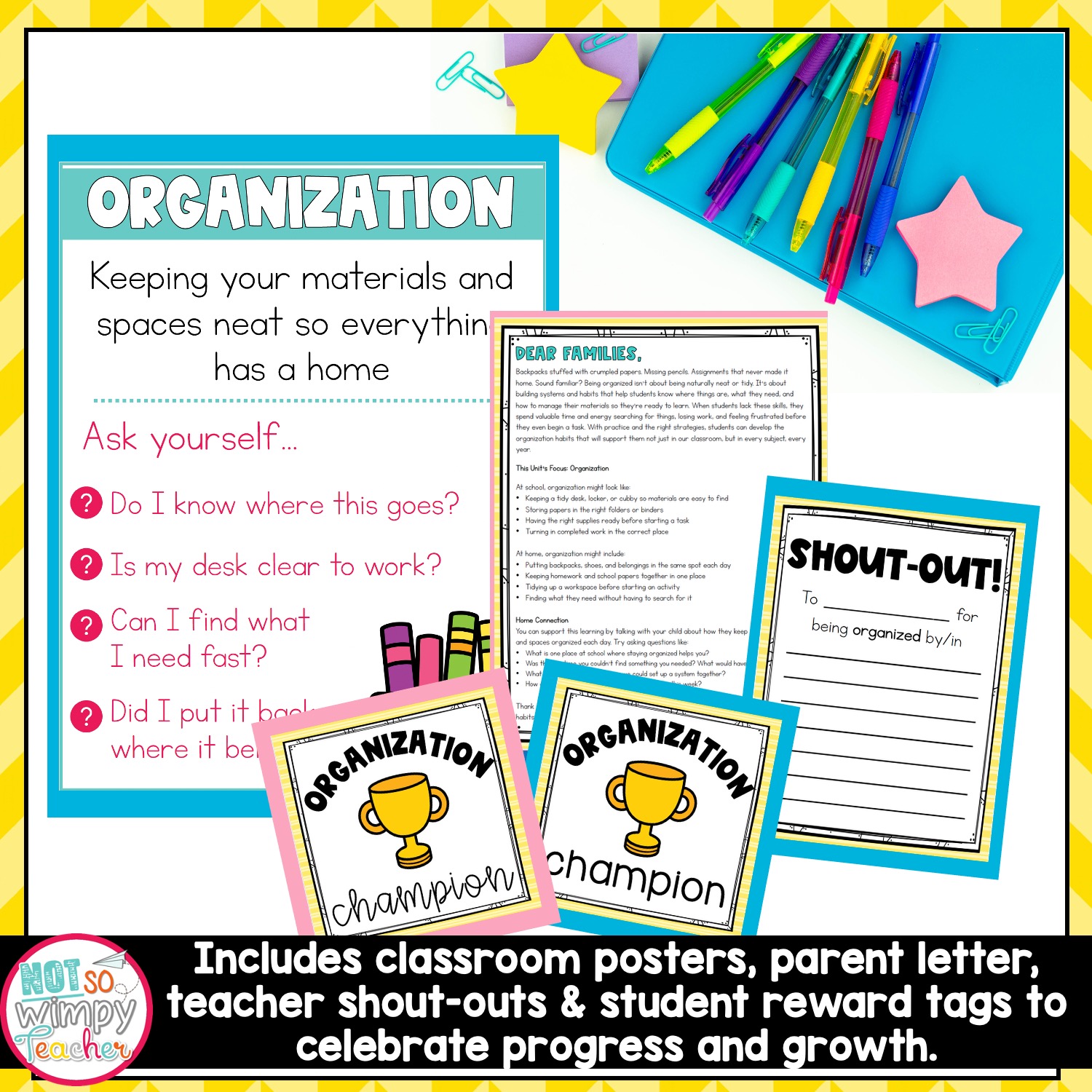
- Family letter and home connection page
- Reward tags
- Teacher shout out cards
- Organization poster
- Binder covers and interactive notebook covers
Skills Included:
- organization
- giving materials a “home”
- identifying and evaluating organization strategies
- sorting and categorizing materials
- building daily and weekly organization habits
- self reflection and metacognition
- goal setting
- independence in managing school materials
Unit Lessons:
- Lesson 1: Introduce Organization
Students learn what organization means and why giving their things a “home” helps them feel calm and ready to work.
- Lesson 2: Strategies That Work vs. Strategies That Don’t
Students work through scenarios to identify organization strategies in action and explain whether each one is actually working.
- Lesson 3: Organization in Action
Using an original reading passage, students analyze how a messy desk affects a character’s day and how a simple plan turns things around.
- Lesson 4: My Organization Playbook
Students complete an interactive notebook activity to reflect on what makes staying organized hard for them and build their own organization plan.
- Lesson 5: The Right Plan for the Problem
Students read and discuss a more complex passage comparing two different organization systems, analyzing why the right plan depends on the problem.
- Lesson 6: Strategy Challenge
Students use scenario cards in small groups to identify what’s causing an organization problem and choose the strategy that would help most.
- Lesson 7: Independent Organization Practice
Students use a before-and-during checklist to apply organization strategies to a real, messy space of their own — their actual desk, folder, or backpack.
- Lesson 8: Organization Sort
Students sort 24 real classroom item cards into their own labeled groups, then explain their system and check whether it would hold up under pressure.
- Lesson 9: Growing in Organization
Students complete four guided quick writes and expand one prompt into a deeper reflection about their growth.
- Lesson 10: Organization Check-In
Students reflect on their progress, identify the strategies that help them most, and set a goal for continued growth.
How to Use in the Classroom:
This unit is designed to be flexible and easy to fit into your existing routine. Each lesson takes about 20 minutes and can be taught during morning meeting, an academic block, intervention time, or classroom community time.
All 10 lessons are designed to be completed within one month at a pace that works for your classroom. Three pacing options are included:
- Full Implementation (Recommended): complete all 10 lessons, teaching 2 or 3 per week
- Condensed Schedule: 6 key lessons for teachers with limited time
- Essentials Only: 5 core lessons when time is very limited
Lessons can be taught whole group, small group, with partners, or individually, depending on the activity. The structure follows a predictable rhythm of direct teaching, guided practice, real life application, and reflection, so students always know what to expect.
Differentiation:
This unit includes built in flexibility to support a variety of learners and classroom needs.
- whole group, small group, or partner options
- discussion based and written reflection activities
- hands on game, scenario practice, and role play
- flexible pacing and scheduling options
- sentence stems and guided prompts to support student thinking
- option to laminate cards and reuse them throughout the year
These options make it easy to adjust lessons for your students while fitting naturally into your classroom routine.
❤️❤️ Why You’ll Love It: ❤️❤️
- Low prep and easy to fit into your routine
- Built around real classroom situations students recognize
- Teaches an invisible skill students are often expected to have already mastered
- Includes a hands on game and engaging activities students love
- Helps build independence, confidence, and stronger learning habits
- Focuses on growth, not perfection
- Flexible for busy teachers and varied schedules
What makes this unit special is that students don’t just talk about starting their work. They practice it, reflect on it, and apply it in authentic classroom situations.