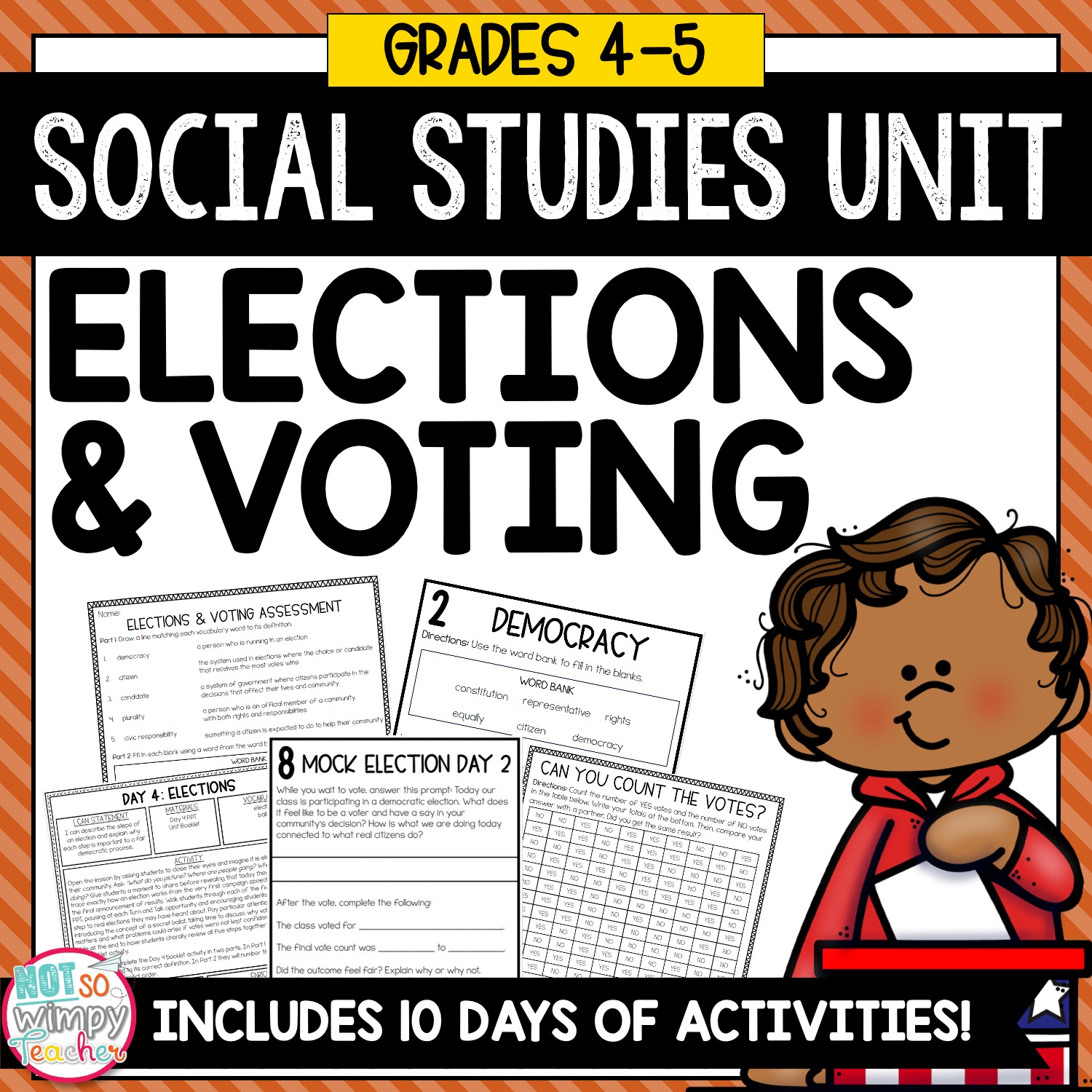
Elections & Voting Social Studies Unit for 4th and 5th Grade
Save MORE with Lesson GenieAlso available in the following bundles
More about this resource
Help your students understand rules, democracy, voting, elections, and what it means to be an active citizen!
Bring social studies to life with this engaging 10-day Elections & Voting unit. Students will learn why groups need rules, how democracy gives people a voice, why voting matters, how elections work, how winners are determined, and which leaders citizens vote for at the community, state, and national levels. The unit culminates with a mock election in which students become voters who engage in their civic responsibilities!
This unit is designed to make teaching social studies engaging, age-appropriate, and easy to implement with ready-to-use PowerPoints, student booklet pages, task cards, vocabulary cards, mock election materials, enrichment options, and a final assessment.
Teachers often struggle to:
- Build understanding of rules and why fair decision-making matters
- Introduce democracy and active citizenship
- Explain the purpose of voting in making community decisions
- Teach the role of candidates, campaigns, and ballots in elections
- Help students understand how and where people vote, including polling places
- Develop understanding of how winners are determined, including the concept of plurality
The unit includes interactive PowerPoints, enrichment activities, task cards, and a two-day activity where students hear campaigns, practice being an informed voter, and take place in a mock election. Students also complete a social studies booklet to track their learning each day.
By the end of this unit, students will understand how voting and elections work.
What’s Included:
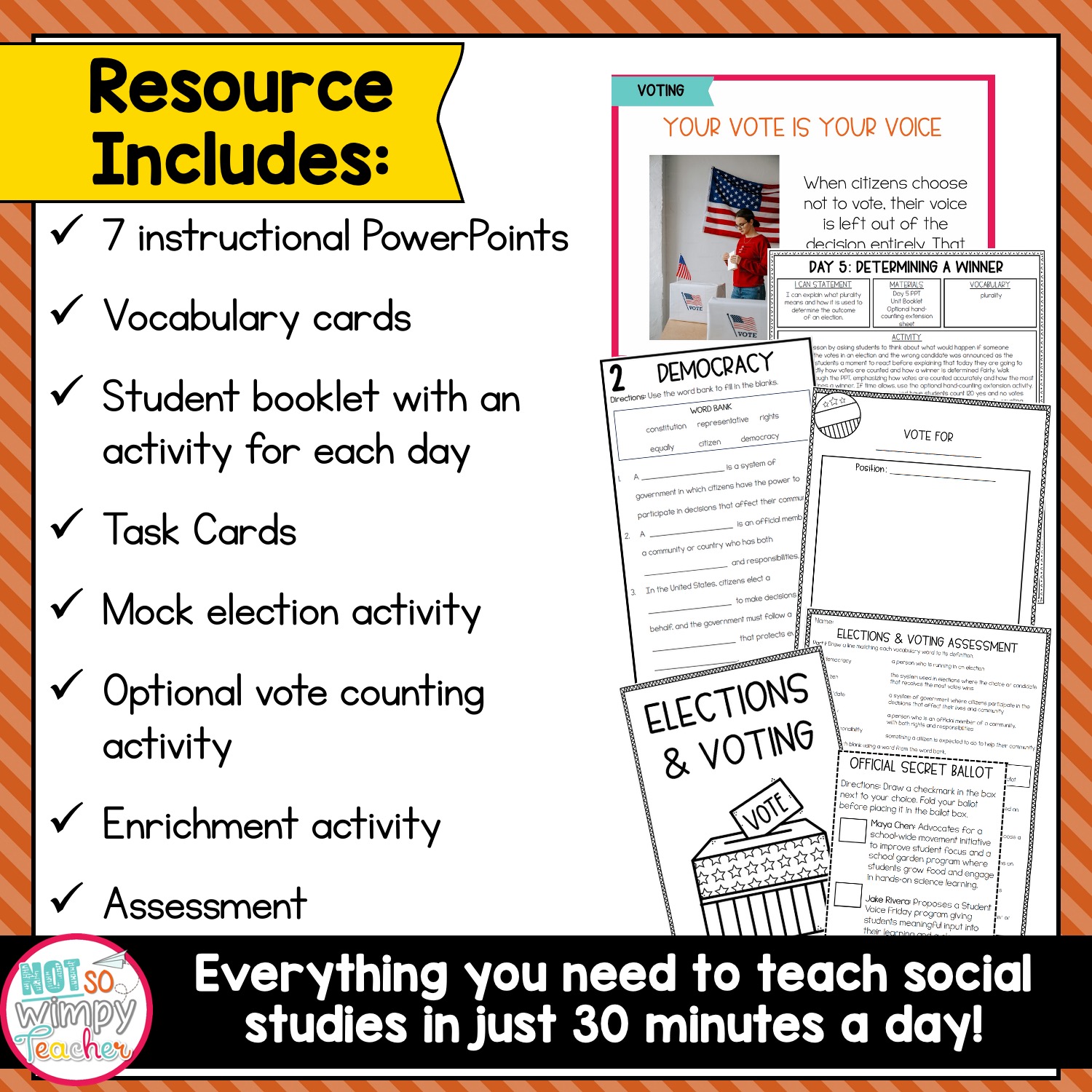
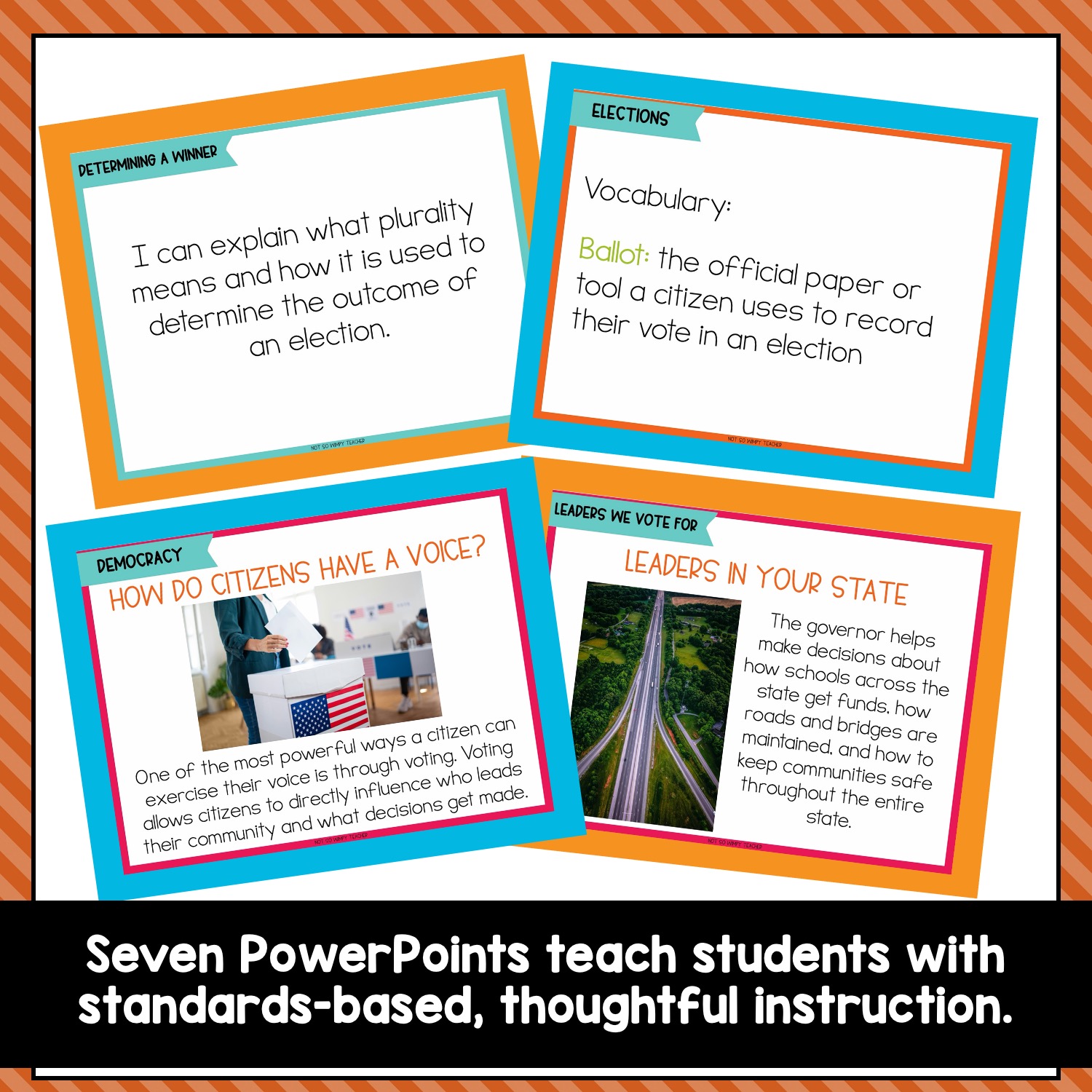
- 7 PowerPoint lessons with detailed teacher notes
- Detailed lesson plans with both intervention and enrichment
- Student workbook with guided notes activities
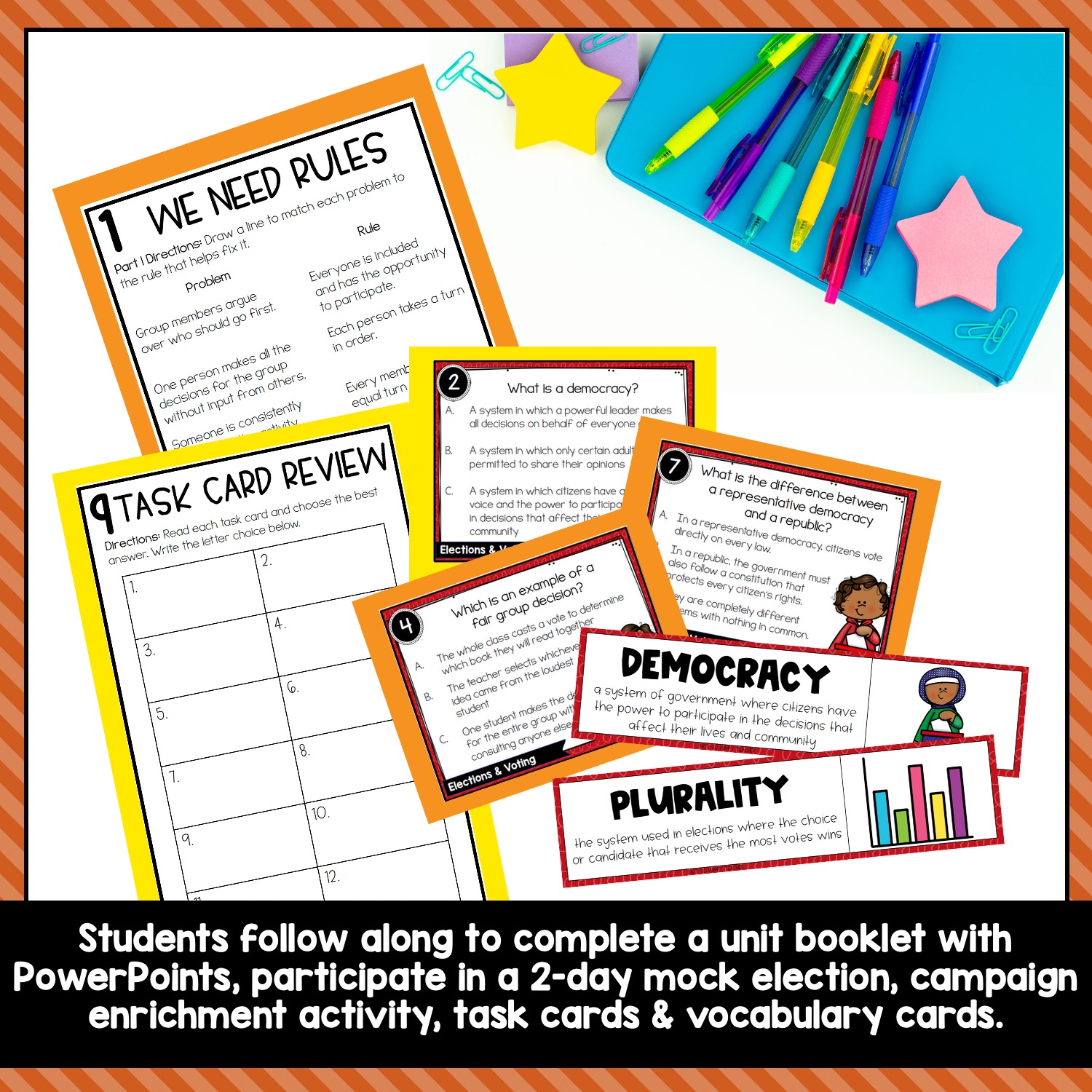
- 12 task cards for review and practice
- Optional enrichment activity
- Two-day mock election activity
- Vocabulary cards to support key concepts
- Comprehensive assessment
- Complete daily lesson plans with teaching tips, intervention strategies, and enrichment ideas
- Answer keys for all activities
Skills Covered:
- rules and fair decision-making
- democracy
- citizens
- rights and responsibilities
- voting
- candidates and campaigns
- ballots
- polling places
- steps of an election
- plurality
- community leaders
- civic responsibility
How to Use in the Classroom:
Follow our 10-day sequence or adapt it to fit your pacing:
- Lesson 1: We Need Rules
Students learn why groups need rules and fair ways to make decisions. They explore how rules help keep people safe, help groups run smoothly, and make sure everyone is treated fairly. Students also begin thinking about voting as one fair way a group can make a decision.
- Lesson 2: Democracy
Students learn what democracy means and how people have a voice in decisions. They explore the role of citizens, rights, responsibilities, voting, and representative democracy. Students also practice identifying examples of democracy in action.
- Lesson 3: Voting
Students learn why voting is important and why every vote matters. They explore what it means to be an informed voter and how citizens can learn about candidates and choices before casting a vote. Students also learn that even kids can practice being good citizens before they are old enough to vote.
- Lesson 4: Elections
Students learn the steps in an election from start to finish. They explore how candidates share their ideas, how voters learn about their choices, how citizens cast private ballots, how votes are counted, and how results are announced. Students sequence the steps of an election in their booklet.
- Lesson 5: Determining a Winner
Students learn how votes are counted and how a winner is determined. They explore the meaning of plurality and practice identifying whether different voting situations show plurality. An optional vote-counting extension gives students a hands-on look at why accurate counting matters.
- Lesson 6: Leaders We Vote For
Students learn about leaders citizens vote for at different levels of government. They identify community leaders, state leaders, and national leaders, including mayors, governors, and the President. Students also learn why voting is a civic responsibility.
- Lesson 7: Mock Election Part 1
Students begin a mock election by becoming informed voters. They learn about two fictional candidates running for Student Council President and take notes about each candidate’s ideas, reasons to vote for them, and questions they still have. Students privately reflect on which candidate they are leaning toward and why.
- Lesson 8: Mock Election Part 2
Students participate in a classroom election. They visit the polling place, receive a ballot, cast their vote privately, place it in the ballot box, and watch as the votes are counted. After the results are announced, students reflect on what it felt like to vote, whether the outcome felt fair, and what they learned about voting.
- Lesson 9: Elections & Voting Task Card Review
Students review key unit concepts through an engaging task card activity. The 12 task cards focus on rules, democracy, citizens, informed voters, ballots, plurality, elected leaders, civic responsibility, and why every vote matters. This lesson works well as a partner activity, center, small group review, or whole-class review.
- Lesson 10: Final Assessment
Students demonstrate their understanding through a summative assessment that includes vocabulary matching, fill-in-the-blank sentences, multiple choice questions, and a short-answer response focused on democracy and fair decision-making.
Each lesson takes approximately 30 minutes and can be taught in whole group, small group, or paired activities!
❤️❤️ Why You’ll Love This Resource ❤️❤️
- Print-and-go format saves hours of prep time
- Engaging mix of direct instruction and interactive activities
- Thoughtful guidance for teaching sensitive topics with confidence
- Builds critical thinking skills through meaningful discussion
Watch your students develop deeper understanding as they explore the importance of elections and voting through this engaging, comprehensive unit!


