Communities Social Studies Unit for 2nd and 3rd Grade
Save MORE with Lesson GenieAlso available in the following bundles
More about this resource
Help your students understand the people, places, and interactions that make communities work!
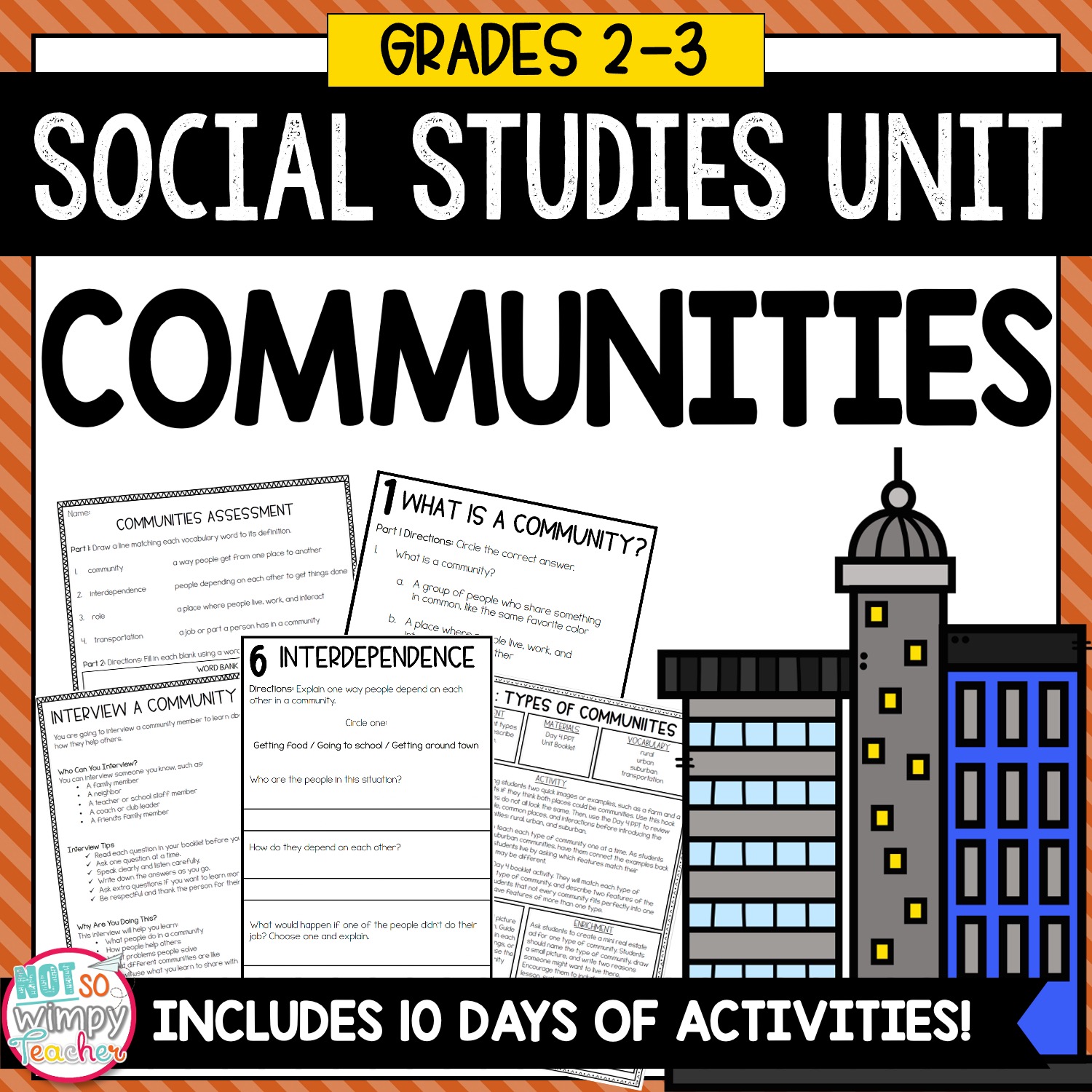
Bring social studies to life with this engaging 10-day Communities unit. Students will learn what makes up a community, why people have different roles, how places help people interact, and how rural, suburban, and urban communities are alike and different.
Through interactive lessons, students will learn that communities are more than just places on a map. Communities are made up of people who live, work, interact, and depend on one another.
Students will also complete a two-day community member interview project where they ask questions, summarize what they learned, and compare one community role to another.
Teachers often struggle to:
- Explain what makes a community
- Teach the roles and responsibilities of community members
- Help students understand interdependence
- Show how people, places, and interactions connect
- Compare rural, suburban, and urban communities
- Connect community concepts to students’ everyday lives
- Make community roles meaningful and engaging
- Provide real-world examples of how communities work together
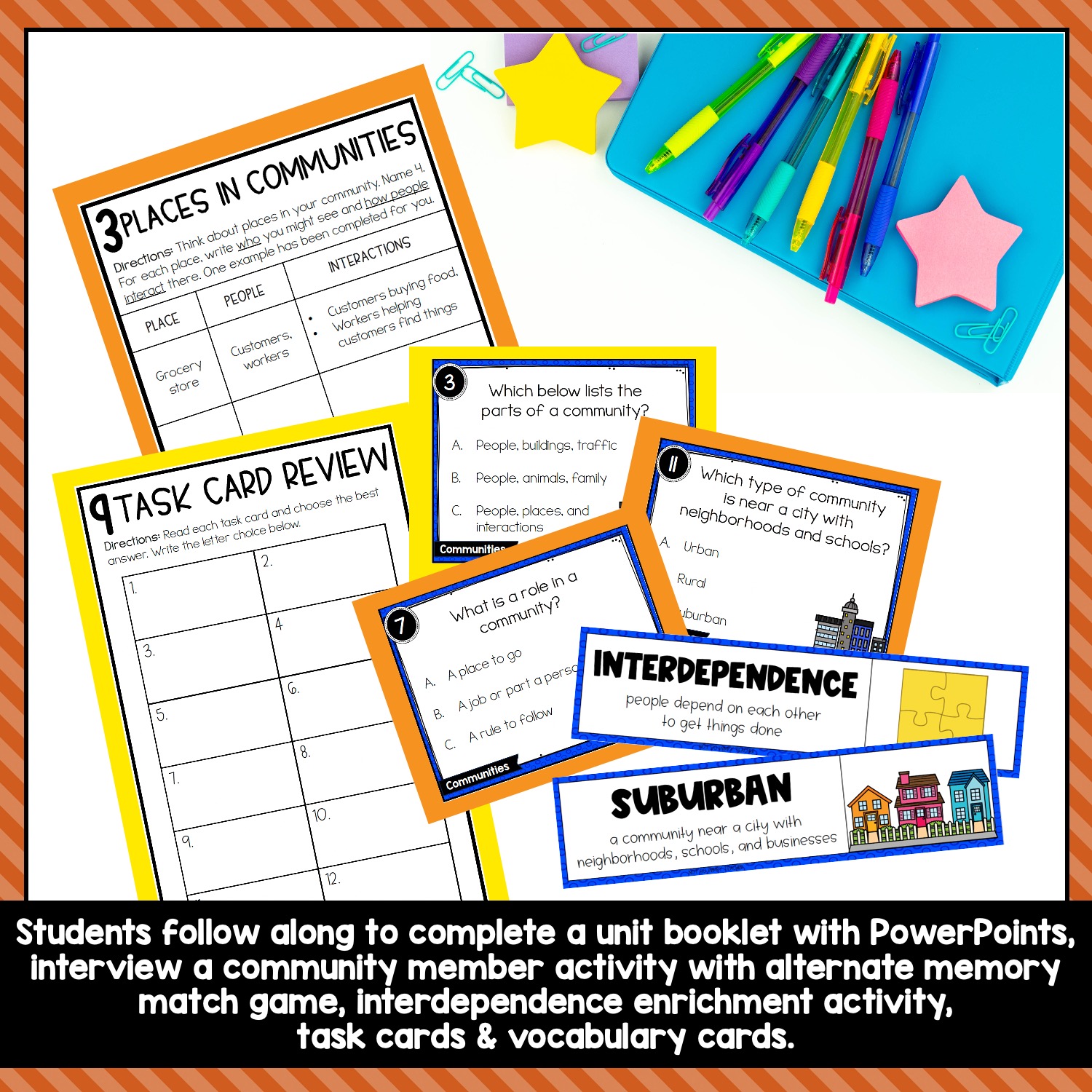
The unit includes interactive PowerPoints, enrichment activities, task cards, a two-day project where students interview a community member. Students also complete a social studies booklet to track their learning each day.
By the end of this unit, students will understand the people, places, and interactions that make communities work.
What’s Included:
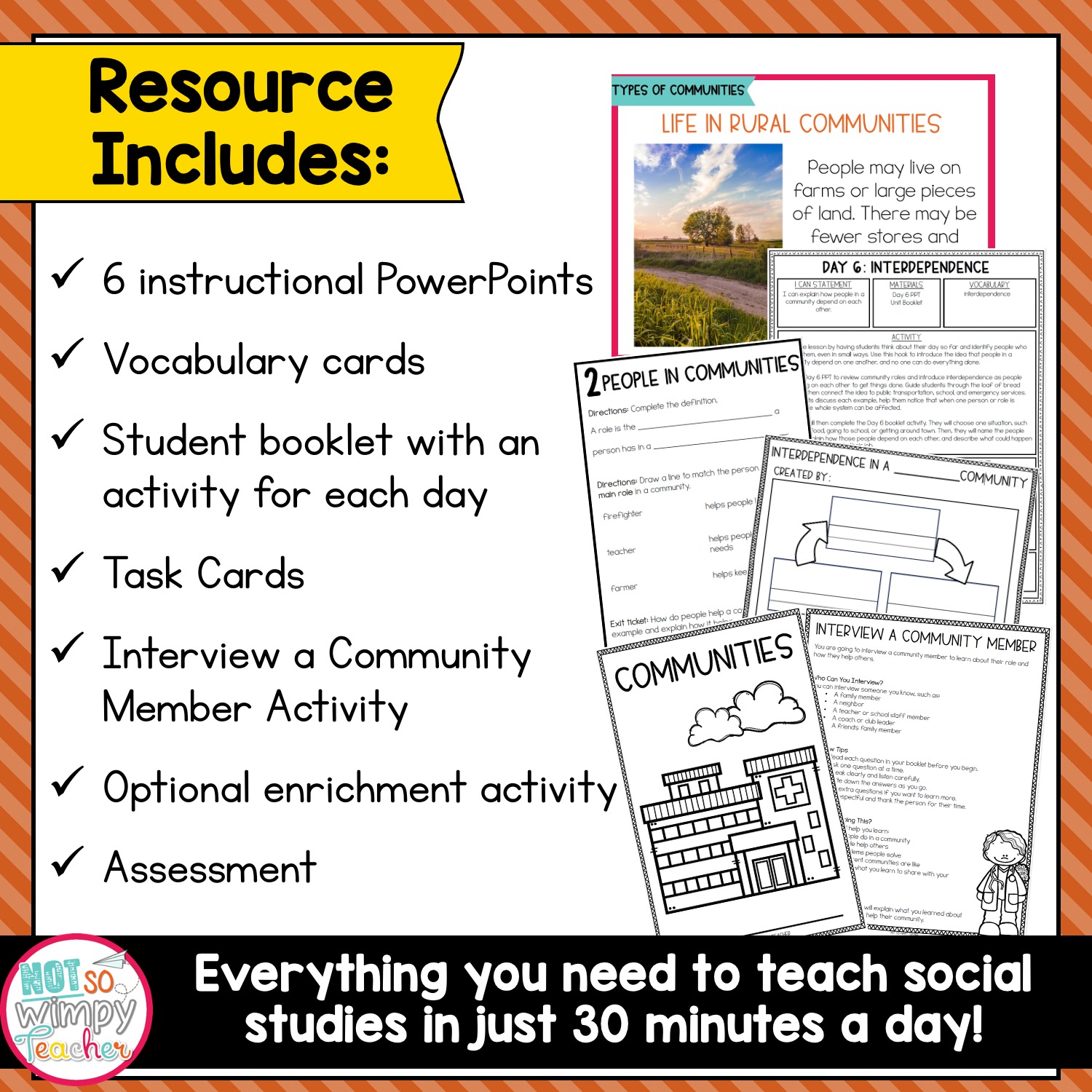
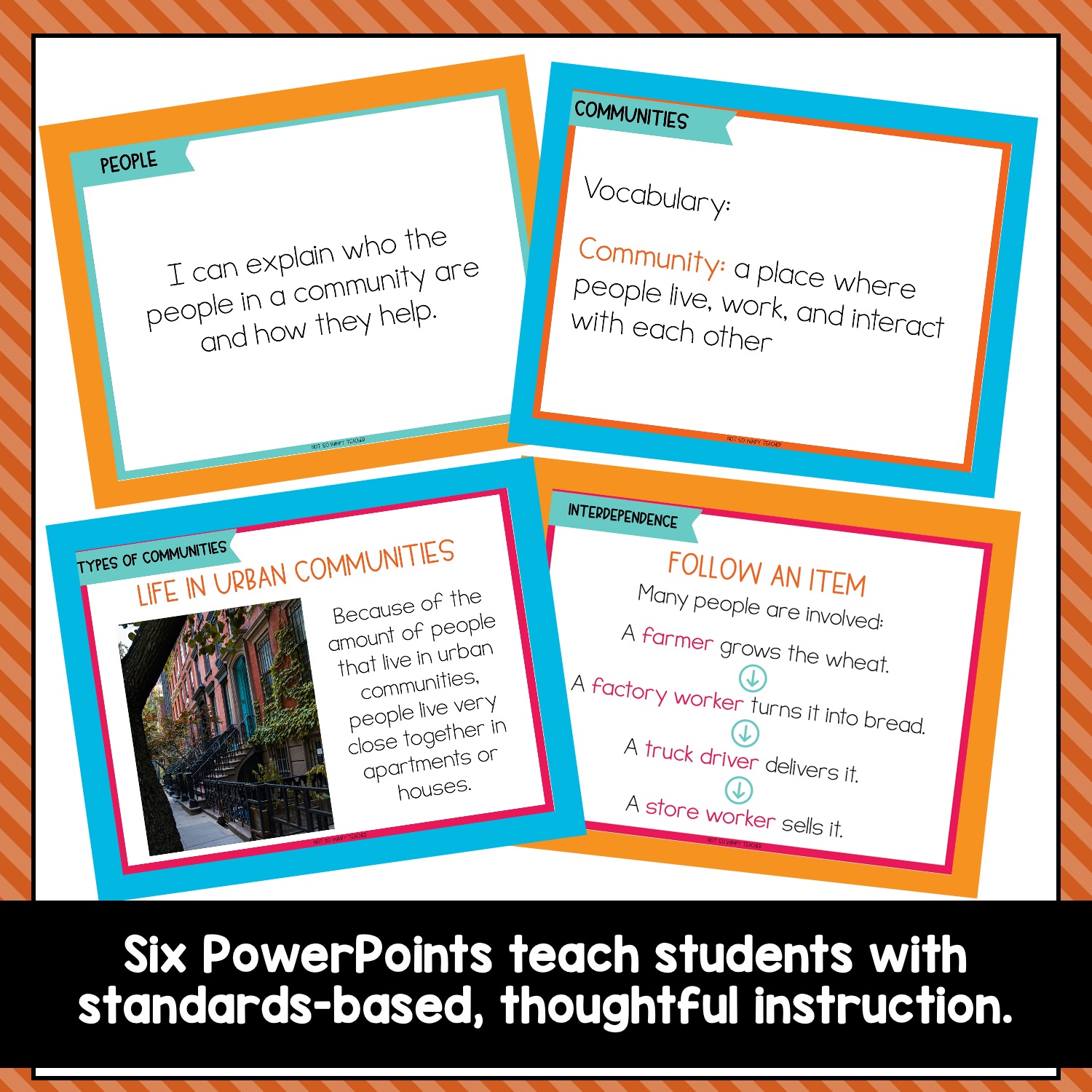
- 6 PowerPoint lessons with detailed teacher notes
- Detailed lesson plans with both intervention and enrichment
- Student workbook with guided notes activities
- 12 task cards for review and practice
- Optional enrichment activity
- Interview a community member two-day project
- Vocabulary cards to support key concepts
- Comprehensive assessment
- Complete daily lesson plans with teaching tips, intervention strategies, and enrichment ideas
- Answer keys for all activities
Skills Covered:
- what makes a community
- people, places, and interactions
- roles in a community
- how people help a community
- places in a community
- how people interact in community places
- rural, suburban, and urban communities
- interdependence
How to Use in the Classroom:
Follow our 10-day sequence or adapt it to fit your pacing:
- Lesson 1: What Is a Community?
Students learn that a community is a place where people live, work, and interact with each other. They identify the three main parts of a community: people, places, and interactions. Students also practice deciding whether different examples are communities or not communities.
Lesson 2: People in Communities
Students learn that people in a community have roles. They explore how different roles help meet needs, keep people safe, help people learn, and keep the community running smoothly. Students also begin thinking about how people depend on one another.
- Lesson 3: Places in Communities
Students learn that places are where people meet, work together, and interact. They explore common places such as schools, grocery stores, parks, hospitals, libraries, and government buildings. Students explain who they might see in each place and how people interact there.
- Lesson 4: Types of Communities
Students learn about rural, suburban, and urban communities. They identify features of each type of community, including open space, buildings, neighborhoods, businesses, transportation, and population. Students also connect the lesson to the type of community where they live.
- Lesson 5: Comparing Communities
Students compare rural, suburban, and urban communities. They look at space, people, homes, transportation, places, and daily life. Students explain how differences between communities affect the way people live each day.
- Lesson 6: Interdependence
Students learn that interdependence means people depend on each other to get things done. They explore examples such as how food gets to a home, how public transportation works, how schools function, and how emergency services help communities.
- Lesson 7: Interview a Community Member
Students begin a community member interview project. They ask questions to learn about a person’s role, how that person helps the community, who they interact with, and who depends on them. If interviews are not possible, students can complete the Community Member Memory Game and reflection.
- Lesson 8: Summarize and Share
Students summarize what they learned from their interview and explain how the community member helps others. They listen to classmates share and compare what was the same and different between community roles. Students using the alternate activity can research or reflect on one community role from the memory game.
- Lesson 9: Communities Task Card Review
Students review key unit concepts through an engaging task card activity. The task cards focus on community vocabulary, roles, interdependence, and rural, suburban, and urban communities. This lesson works well as a partner activity, center, small group review, or whole-class review.
- Lesson 10: Final Assessment
Students demonstrate their understanding through a summative assessment that includes vocabulary matching, fill-in-the-blank sentences, multiple choice questions, and a short-answer response.
Each lesson takes approximately 30 minutes and can be taught in whole group, small group, or paired activities!
❤️❤️ Why You’ll Love This Resource ❤️❤️
- Print-and-go format saves hours of prep time
- Engaging mix of direct instruction and interactive activities
- Thoughtful guidance for teaching sensitive topics with confidence
- Builds critical thinking skills through meaningful discussion
Watch your students develop deeper understanding as they explore the importance of communities through this engaging, comprehensive unit!