STEM: Science Technology Engineering Math Mini Science Unit for 4th & 5th Grade
Save MORE with Lesson GenieMore about this resource
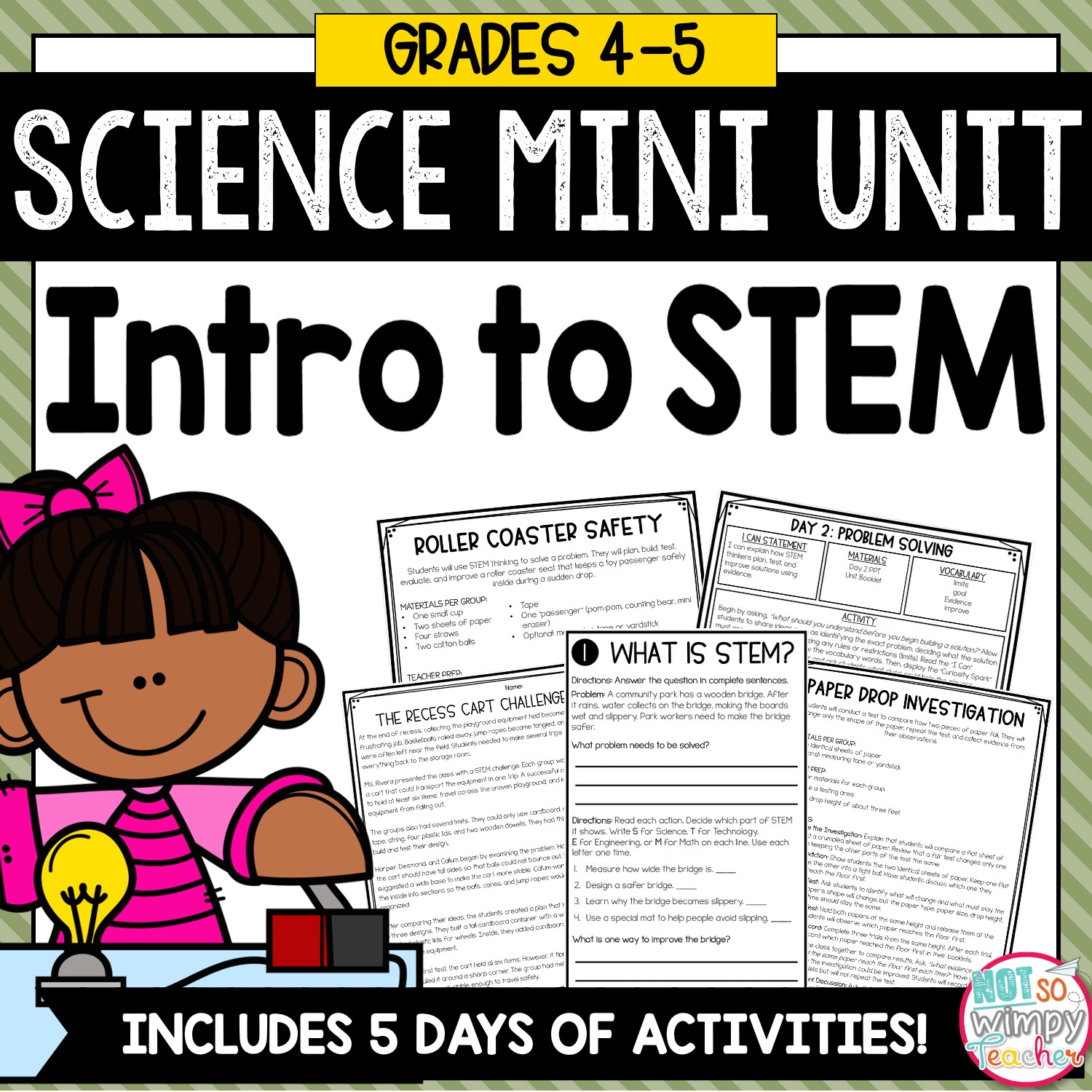
Crumpled paper, index card towers, and a roller coaster seat that has to survive a sudden drop — this 5-day STEM mini unit turns “what is STEM?” into something students actually get to do. Instead of just defining science, technology, engineering, and math, students learn to think like STEM problem-solvers: identify a problem, plan a solution, test it, and improve it when it doesn’t work the first time.
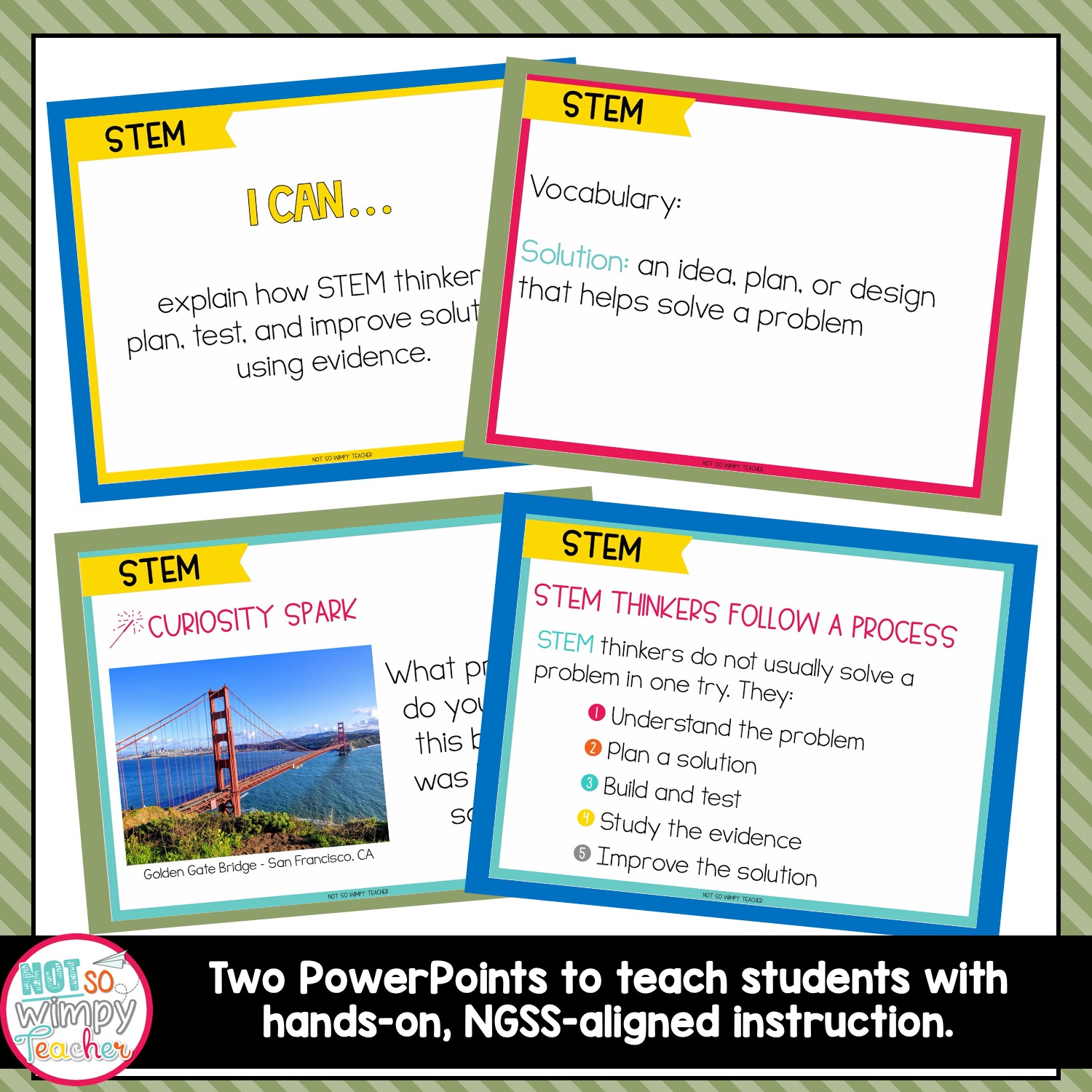
Two PowerPoint lessons build the foundation (what STEM means and how the engineering design process works), then three hands-on challenge days put it into practice with a fair-test science investigation, a build challenge, and a full plan-build-test-improve engineering task. A reading passage and a set of scenario cards round out the unit with extra practice analyzing what went wrong — and why — in other teams’ designs.
Looking for a less complex version? This resource is also available available in a 2nd/3rd grade version. Same 5-day structure and same skills — the reading level and challenge complexity are adjusted for the younger grade band. Check it out here.
What’s Included
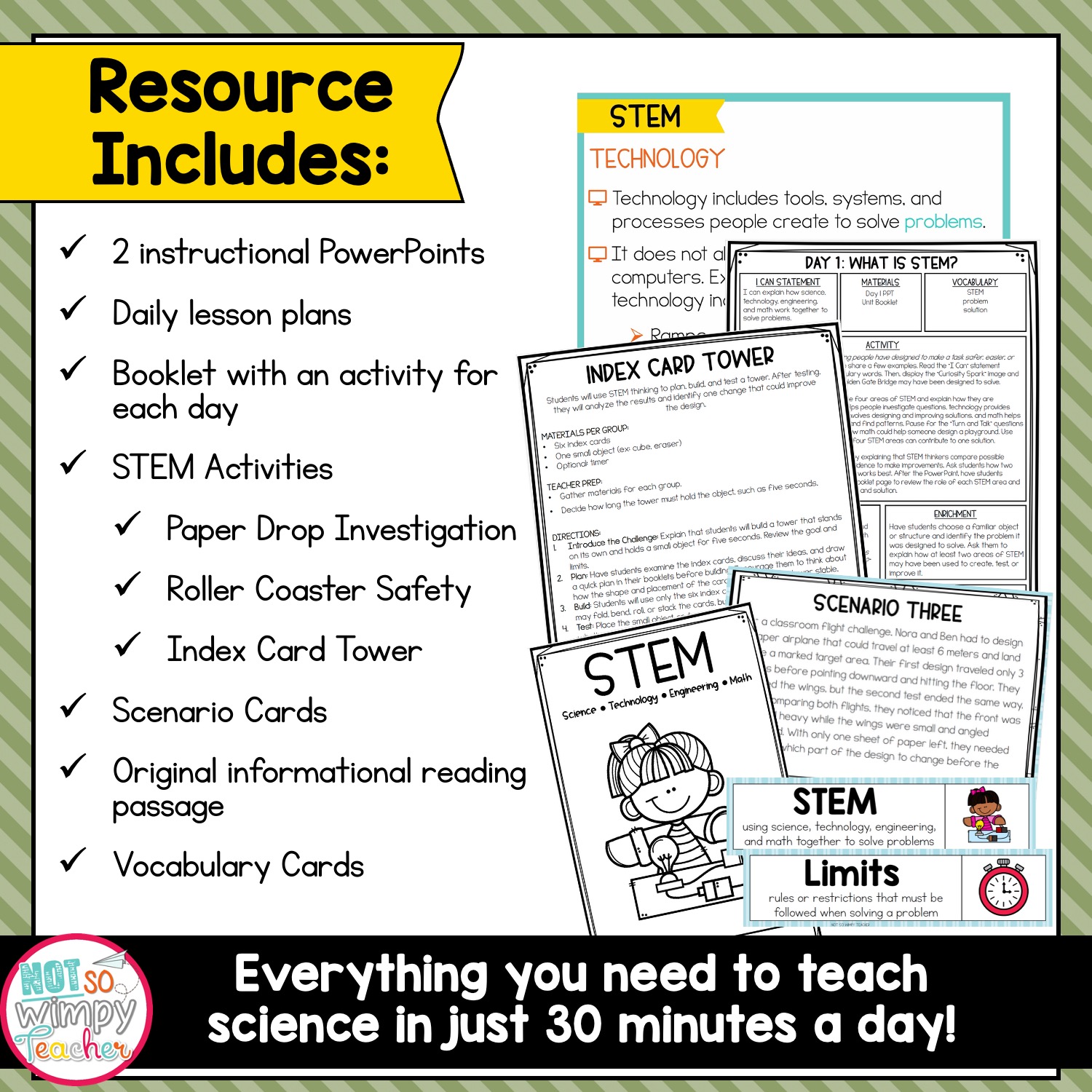
- Day 1 PowerPoint (21 slides): Introduces STEM and the vocabulary words STEM, Problem, and Solution, with a curiosity spark, embedded Turn and Talk discussion prompts, a fun fact, and a review slide
- Day 2 PowerPoint (30 slides): Reviews Day 1 vocabulary and introduces Limits, Goal, and Improve through a step-by-step “crayon problem” example, plus a True/False check and review
- Day 3 hands-on investigation — Paper Drop Investigation: students run a fair test comparing a flat vs. crumpled sheet of paper, make predictions, run three trials, and record evidence
- Day 4 STEM challenge — Index Card Tower: students plan, build, and test a free-standing tower using only six index cards, then identify one improvement without rebuilding
- Day 5 STEM challenge — Roller Coaster Safety: students design, build, test, and improve a seat that keeps a toy “passenger” secure during a sudden drop
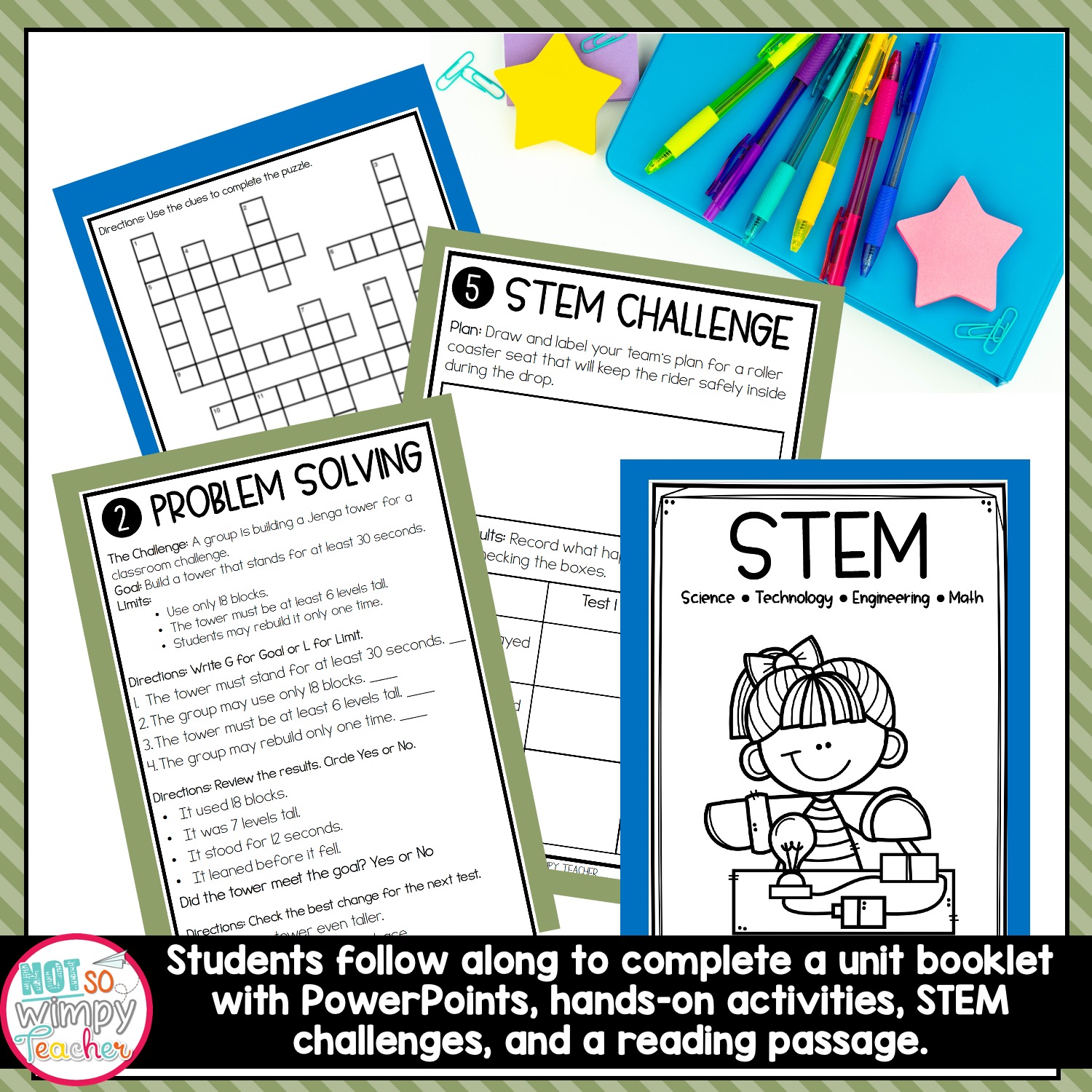
- Student STEM Booklet: the recording booklet students use across Days 3-5 to sketch plans, log predictions, and reflect on results
- Reading passage — “The Book Rescue”: an original story following a student team through a failed first design, a second attempt, and a final success
- Scenario cards (6 scenarios): real-sounding STEM “fails” (a leaning tower, a sagging bridge, a nose-diving paper airplane, a leaky shelter, a hook that’s too short, a car that slides off a ramp) paired with discussion questions asking what the team was building and what happened when they tested it
- Teacher directions, materials lists, and teacher prep steps for every hands-on day
- Optional enrichment discussion questions built into Days 3-5
5 days. 2 PowerPoint lessons. 3 hands-on STEM challenges. 1 reading passage. 6 scenario cards. Every PowerPoint lesson opens with an “I Can” statement, so students always know what they’re working toward.
How to Use in the Classroom:
Designed to be taught one lesson per day over one week, with each session running 20-45 minutes depending on the day.
- Day 1 (~20-30 min): Whole group. Use the PowerPoint to introduce STEM and the first three vocabulary words.
- Day 2 (~25-30 min): Whole group. Review Day 1, then introduce Limits, Goal, and Improve through the crayon example.
- Day 3 (~30-40 min): Small groups. Students run the Paper Drop Investigation, recording predictions and results in their booklets.
- Day 4 (~30-40 min): Small groups. Students plan, build, and test their Index Card Towers.
- Day 5 (~40-50 min): Small groups. Students complete the full plan-build-test-improve cycle with the Roller Coaster Safety challenge.
- Reading passage and scenario cards are flexible — use them as a bridge between hands-on days, a whole-group discussion starter, an independent or partner center, a sub plan, or an early finisher activity.
Differentiation:
This mini unit includes built-in opportunities to support different learners.
- Turn and Talk prompts throughout the PowerPoints let students process new vocabulary with a partner before sharing out, supporting students who need more time with new terms.
- All three hands-on challenges are open-ended — there’s no single “correct” tower, seat, or fold, so every group can succeed at their own level while still practicing the same design process.
- Optional enrichment discussion questions on Days 3-5 stretch early finishers or advanced groups without requiring extra materials or rebuilding.
- Scenario cards work whole group, small group, or independently, and the open-ended discussion questions can be answered as simply or in as much depth as a student is ready for.
- Choose the 2nd/3rd grade version for more concrete language and shorter texts, or the 4th/5th grade version for more nuanced scenarios and a higher reading level.
❤️ ❤️ Why You’ll Love It: ❤️ ❤️
- No-prep, print-and-go lessons that fit into a single week without derailing your regular schedule
- Uses simple, inexpensive materials you likely already have (paper, index cards, straws, tape, cotton balls) — no special STEM kit required
- Teaches the actual engineering design process (plan, build, test, improve), not just STEM vocabulary
- Builds a growth mindset around failure — the reading passage and scenario cards both model that a design “not working” is data, not defeat
- Works as a standalone week, a STEM fair kickoff, or a hands-on supplement to any science unit