This engaging Social-Emotional Learning Problem-Solving Unit helps you turn those everyday moments into meaningful lessons that slow students down and teach them a repeatable process: name the actual problem, think of more than one solution, consider what could happen, try a thoughtful next step, and check whether it worked. Through discussion, reading passages, scenario cards, partner role-play, and an original problem-solving board game, students practice sorting out real problems.
Social-Emotional Learning: Problem-Solving SEL Unit for 4th & 5th Grade
Save MORE with Lesson GenieMore about this resource
Your students face problems all day long — a confusing assignment, a friend who won’t respond, a group project that falls apart. Most of the time, they jump straight to a solution before they’ve even figured out what the real problem is.
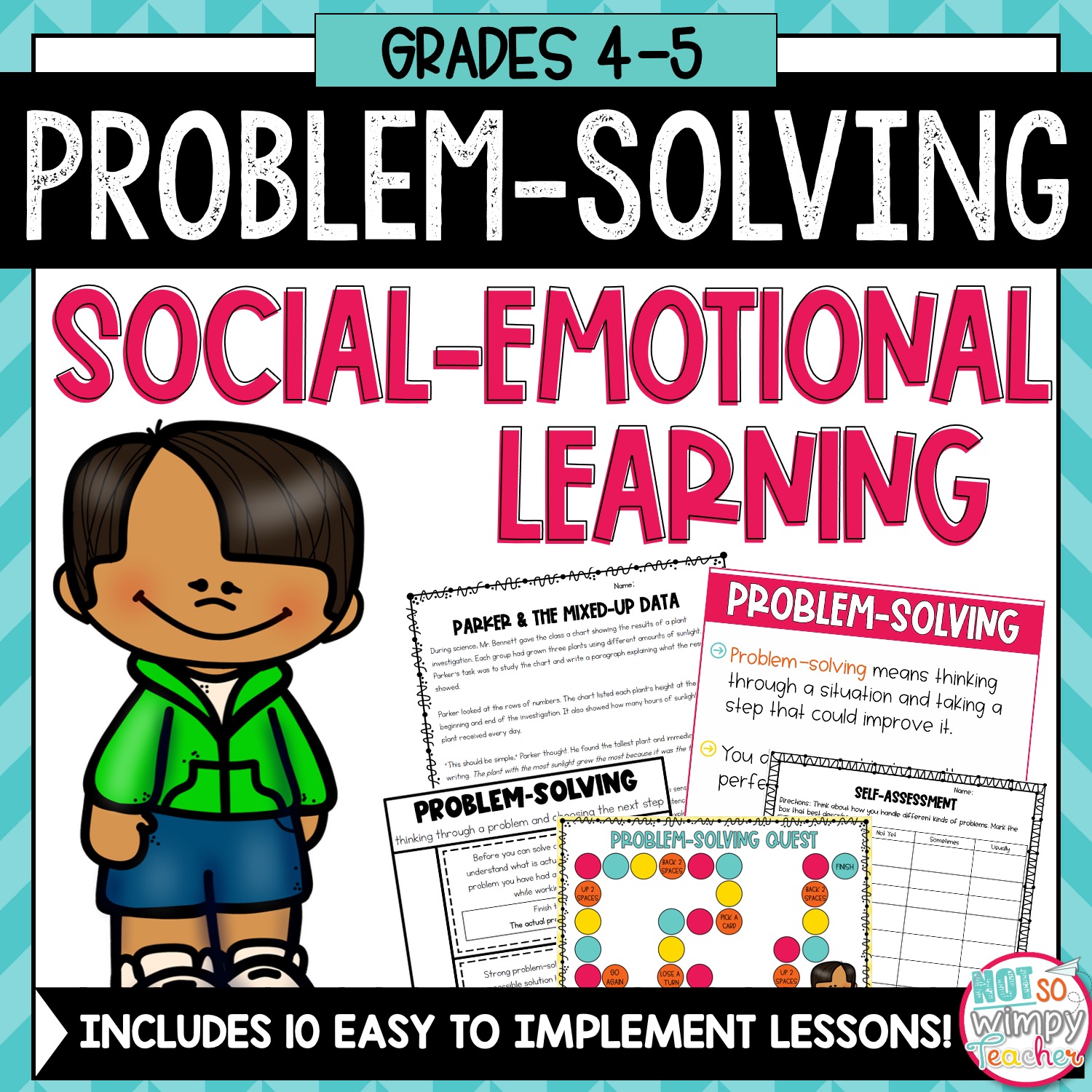
This engaging Social-Emotional Learning Problem-Solving Unit helps you turn those everyday moments into meaningful lessons that slow students down and teach them a repeatable process: name the actual problem, think of more than one solution, consider what could happen, try a thoughtful next step, and check whether it worked. Through discussion, reading passages, scenario cards, partner role-play, and an original problem-solving board game, students practice sorting out real problems.
Built to fit into morning meeting or your SEL block, this unit is low-prep for you and high-engagement for your students. Whether you teach all 10 lessons or use the condensed schedule, you’ll finish this unit with students who don’t just know the steps of problem-solving — they can actually use them.
This resource is part of our Social-Emotional Learning curriculum series and can be used as a standalone character trait unit or alongside additional SEL units.
What’s Included:
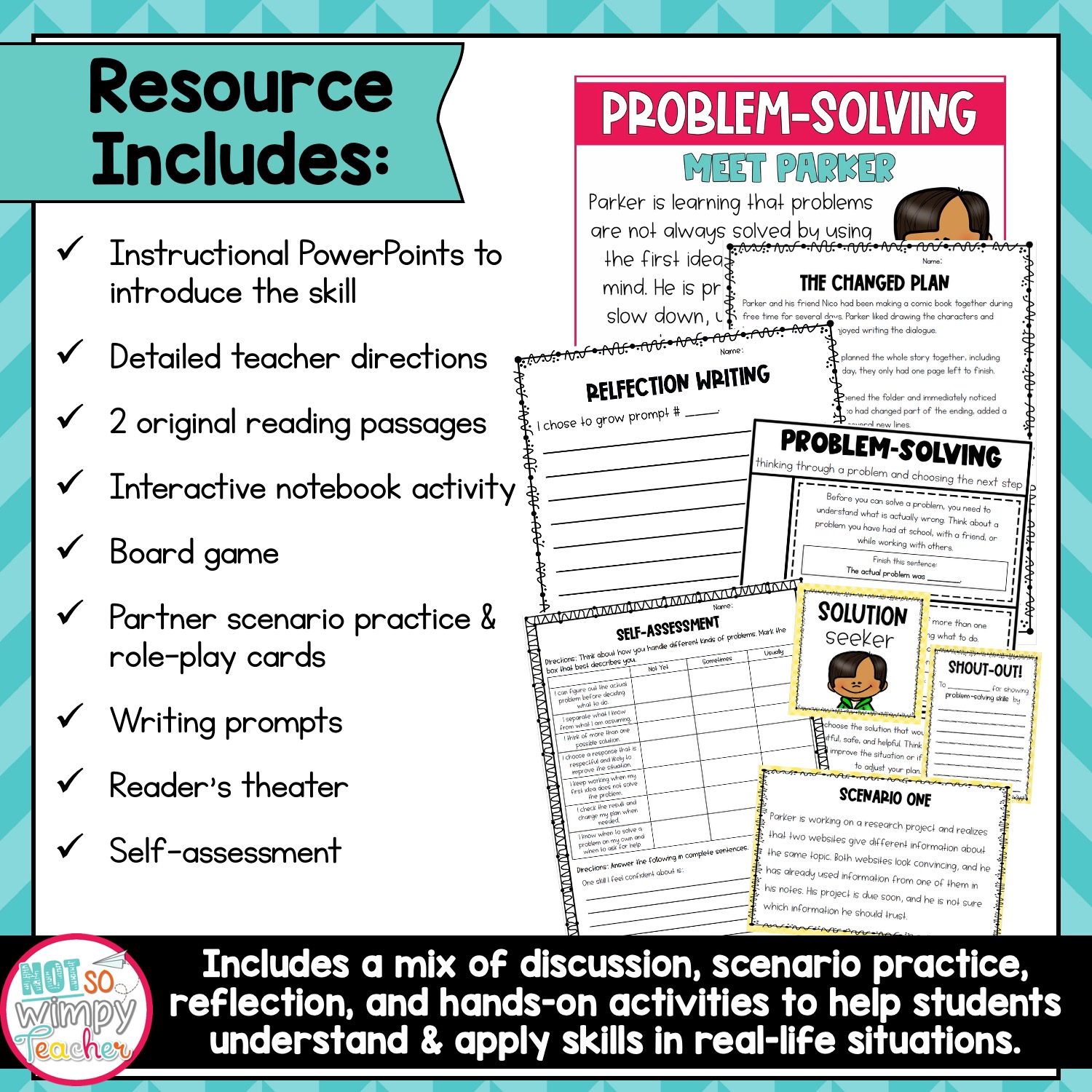
- 10 complete SEL lessons focused on problem-solving
- Teacher directions and implementation guide
- Clear lesson outlines with daily objectives
- 2 instructional PowerPoints
- Scenario-based discussion lessons
- 2 reading passage lessons
- Interactive notebook activity
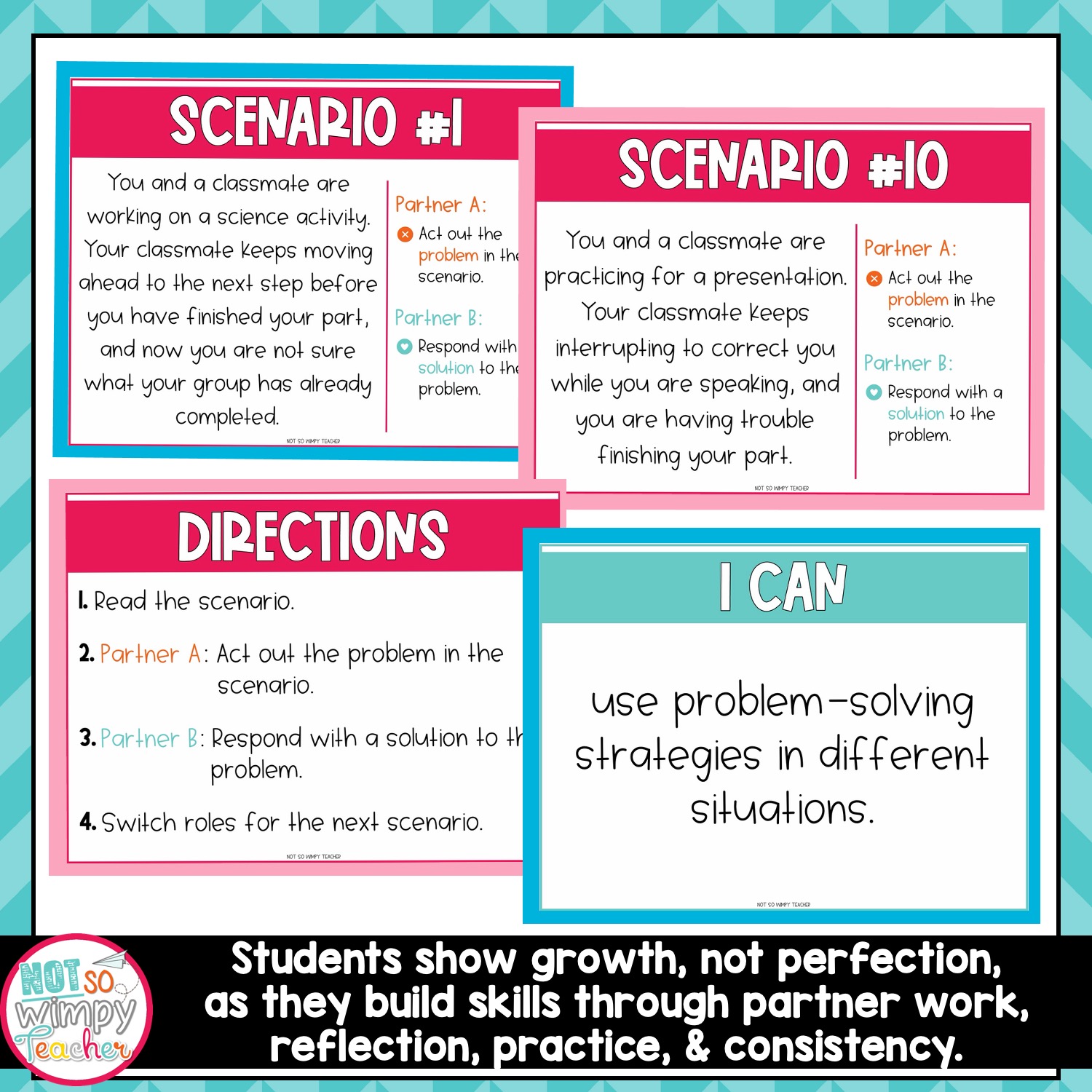
- Scenario cards for small groups or partners
- Partner role-play practice activity
- Board game
- Quick write reflection activity
- Self-assessment
- Flexible sample schedules
- Picture book suggestions
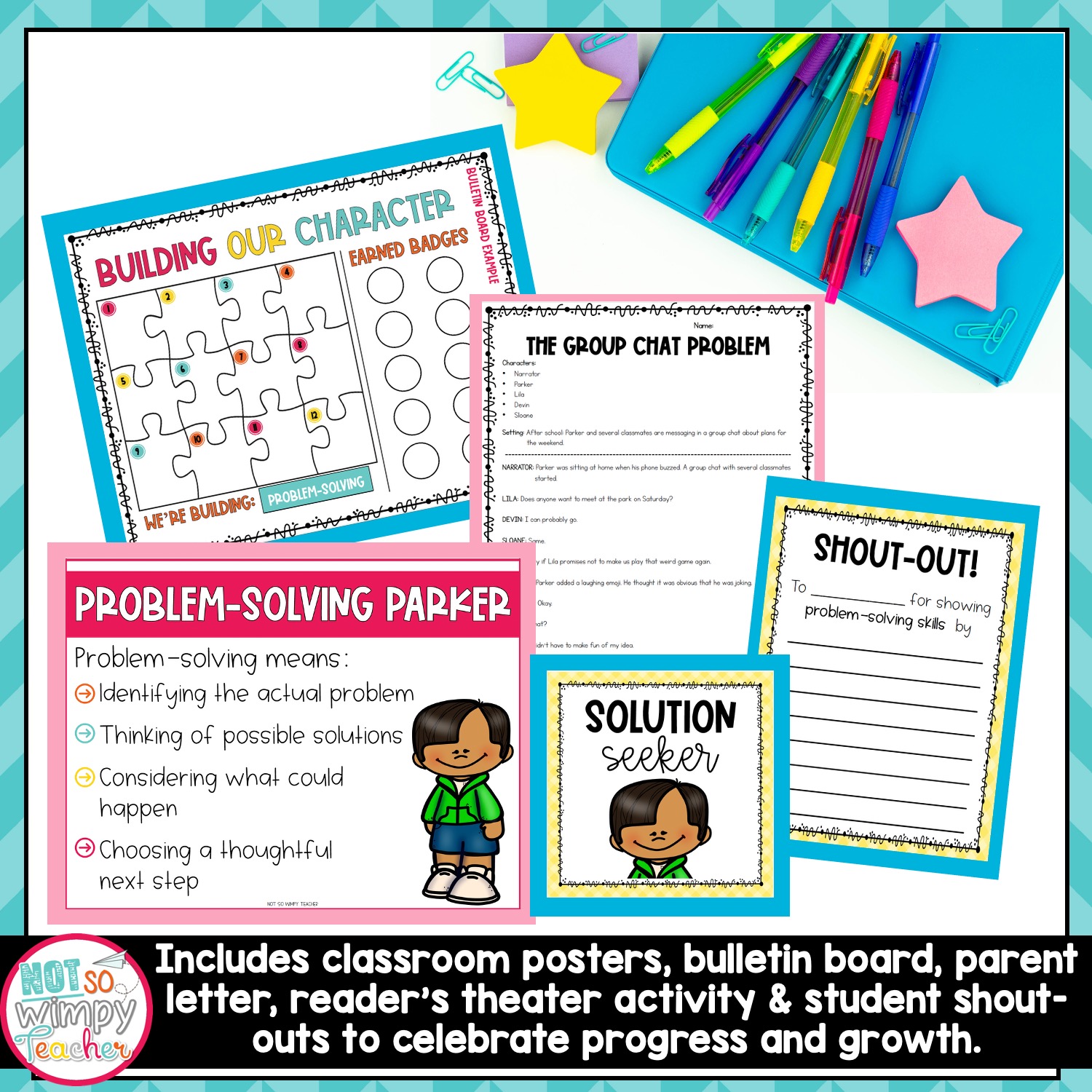
- Family letter/home connection page
- Reader’s theater activity with four scenario scripts
- Reward tags
- Peer shout-out cards
- Problem-solving trait badge
- Bulletin board extension ideas
Skills Included:
- Identifying the problem
- Generating more than one possible solution
- Evaluating solutions before choosing one
- Trying a solution and checking whether it worked
- Adjusting a plan when the first idea doesn’t work
- Recognizing when to solve a problem independently vs. when to ask for help
- Collaborative problem-solving in partner and group settings
Unit Lessons:
- Lesson 1: Introduce Problem-Solving — Students learn what problem-solving means and practice the 5-step problem-solving process: identify the problem, think of possible solutions, consider what could happen, choose and try a thoughtful next step, and check the result.
- Lesson 2: Name the Problem — Students examine short scenarios to determine the actual problem behind a situation, separating facts from assumptions and deciding whether a problem is one they can solve themselves or one that needs adult help.
- Lesson 3: When Learning Feels Hard — Using a reading passage, students follow a character who misreads a data chart, catches his mistake, and changes his strategy instead of giving up.
- Lesson 4: My Problem-Solving Plan — Students complete a 3-flap interactive notebook activity, naming a real problem, listing a possible solution, and choosing a thoughtful next step.
- Lesson 5: A Friendship Problem — Students read a passage about a mix-up between two friends working on a project together and consider several possible solutions and how each could affect the friendship.
- Lesson 6: What Could You Try? — Students use scenario cards in partners or small groups to name academic, friendship, and group-work problems, generate multiple solutions, and decide which is most helpful.
- Lesson 7: Try a Thoughtful Solution — Through partner role-play, students act out a problem and practice responding with a thoughtful solution, then switch roles.
- Lesson 8: The Solution Challenge — Students play the Problem-Solving Quest board game, landing on spaces that ask them to name a problem, solve it, or decide on a next step across a variety of academic, friendship, and classroom situations.
- Lesson 9: Growing as a Problem-Solver — Students complete four quick-write prompts about problems at school, with friends, times a first solution didn’t work, and times they needed help, then expand one prompt into a deeper reflection.
- Lesson 10: Problem-Solving Self-Assessment — Students rate themselves on 8 problem-solving skills and reflect in writing on a skill they feel confident about.
Differentiation:
This unit includes built-in flexibility to support a variety of learners and classroom needs.
- whole group, small group, or partner options
- discussion-based and written reflection activities
- role-play and hands-on practice
- flexible pacing and scheduling options
- guided prompts and sentence stems
These options make it easy to adjust lessons for your students while fitting naturally into your classroom routine.
❤️ ❤️ Why You’ll Love It: ❤️ ❤️
- Low-prep and easy to fit into your routine
- Built around real-life student situations
- Encourages meaningful discussion and reflection
- Includes games and role-play students will love
- Helps build strong classroom community
- Focuses on growth, not perfection
- Flexible for busy teachers and varied schedules
What makes this unit special is that students don’t just talk about problem-solving, they practice it, reflect on it, and apply it in authentic situations.


