Native Americans Social Studies Unit for 2nd and 3rd Grade
Save MORE with Lesson GenieAlso available in the following bundles
More about this resource
Take your students on a journey across North America — through forests, grasslands, deserts, and coastal lands—while discovering how Native American tribes adapted to their environments.
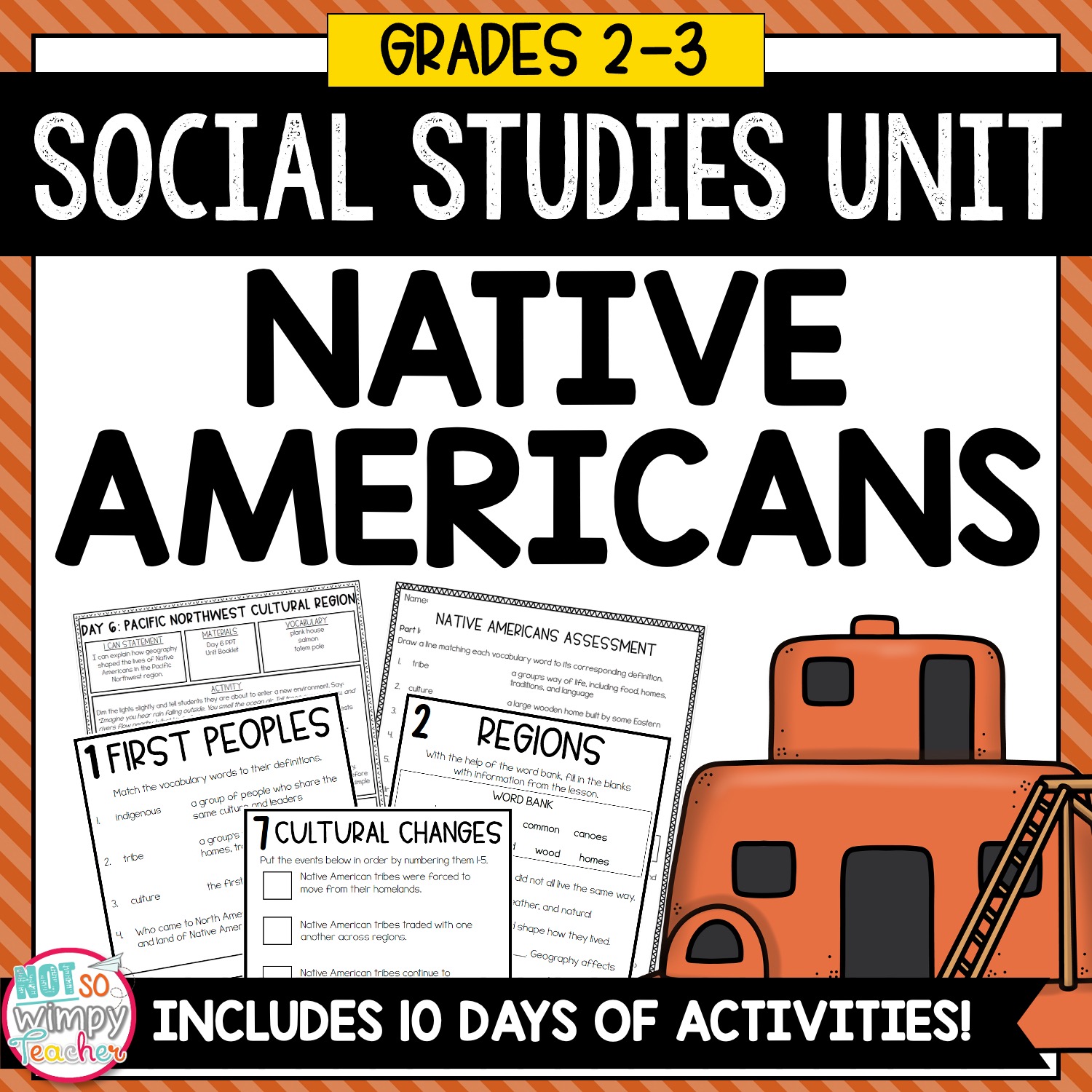
Bring Native American history to life in your classroom with this engaging 10-day Native Americans unit for 2nd and 3rd grade! Students will explore how Native American tribes lived across different regions of North America and discover how geography shaped daily life, traditions, homes, and food sources.
This hands-on social studies unit helps students understand that Native Americans were the first people to live in North America and that their cultures continue today. Through interactive lessons, reading passages, task cards, and stations, students learn about cultural regions, geography, and how people adapt to their environment.
Teachers often struggle to:
- Explain how geography influenced the way Native American tribes lived in different regions of North America
- Describe what daily life looked like for tribes in the Eastern Woodlands, Plains, Southwest, and Pacific Northwest
- Show how natural resources affected the homes, food, clothing, and transportation of each cultural region
- Clarify the cause-and-effect relationship between environment and the choices people made
- Help students understand the differences and similarities between Native American cultural regions
- Explain that Indigenous peoples were the first inhabitants of North America and had diverse, complex cultures
- Demonstrate how Native American cultures and traditions continue to exist today
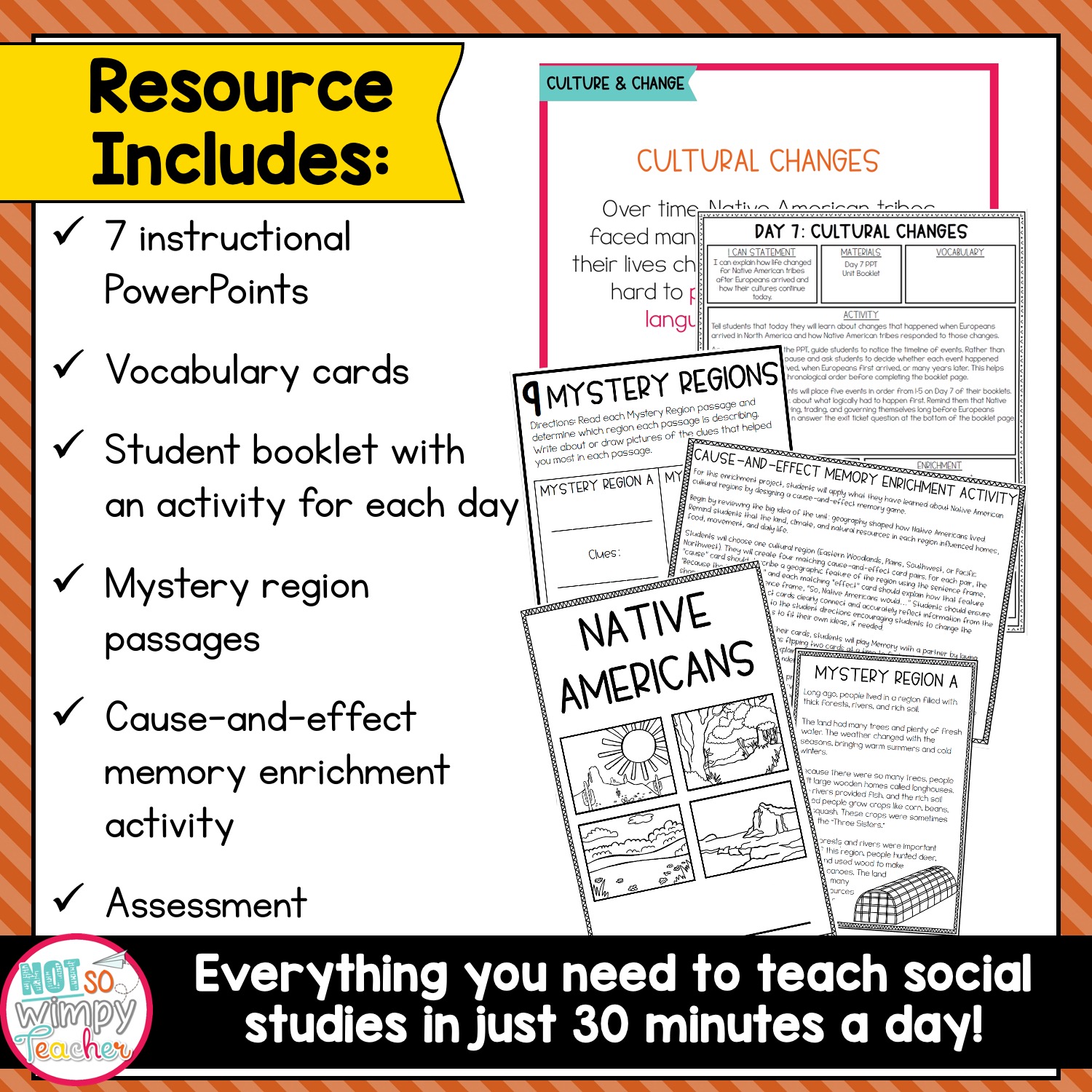
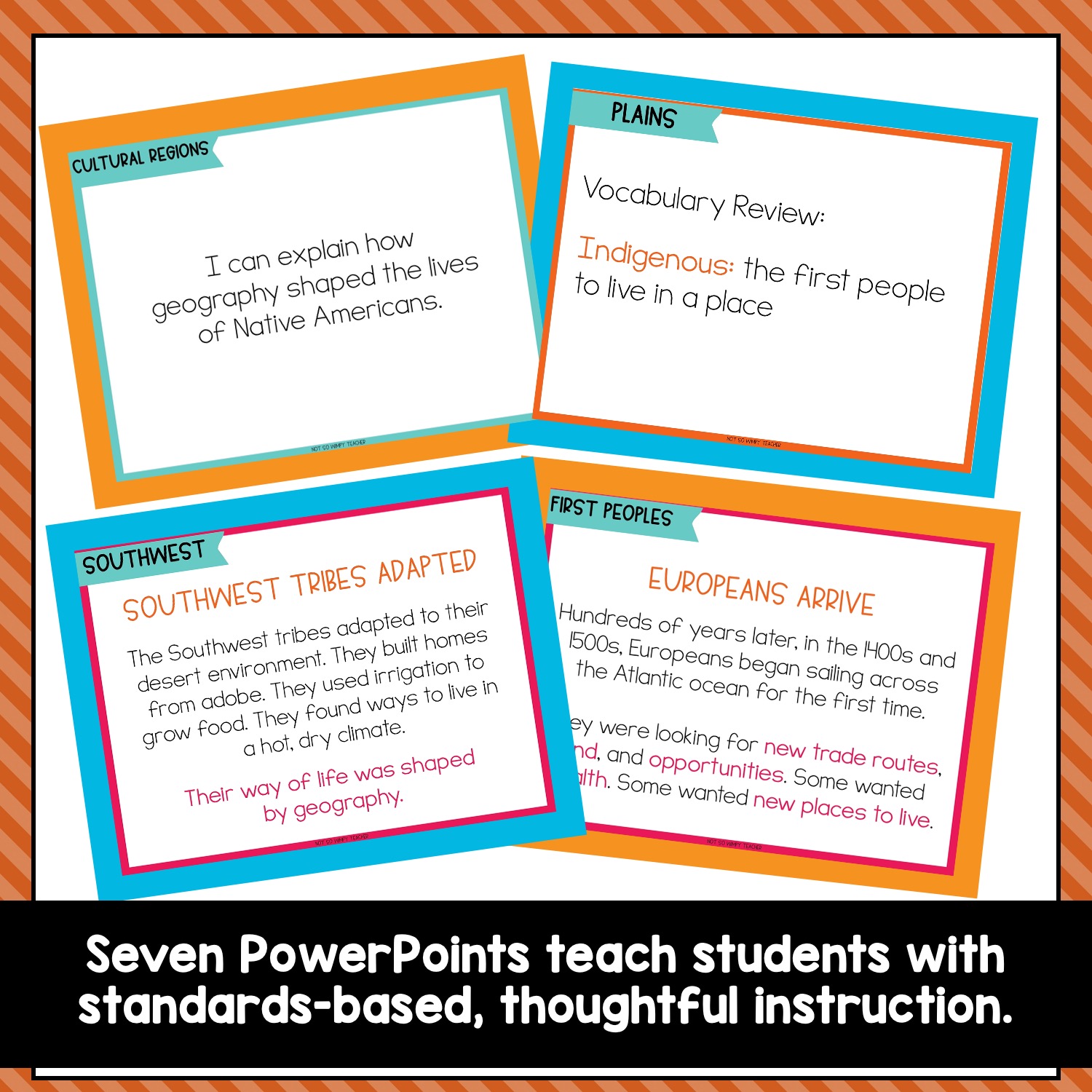
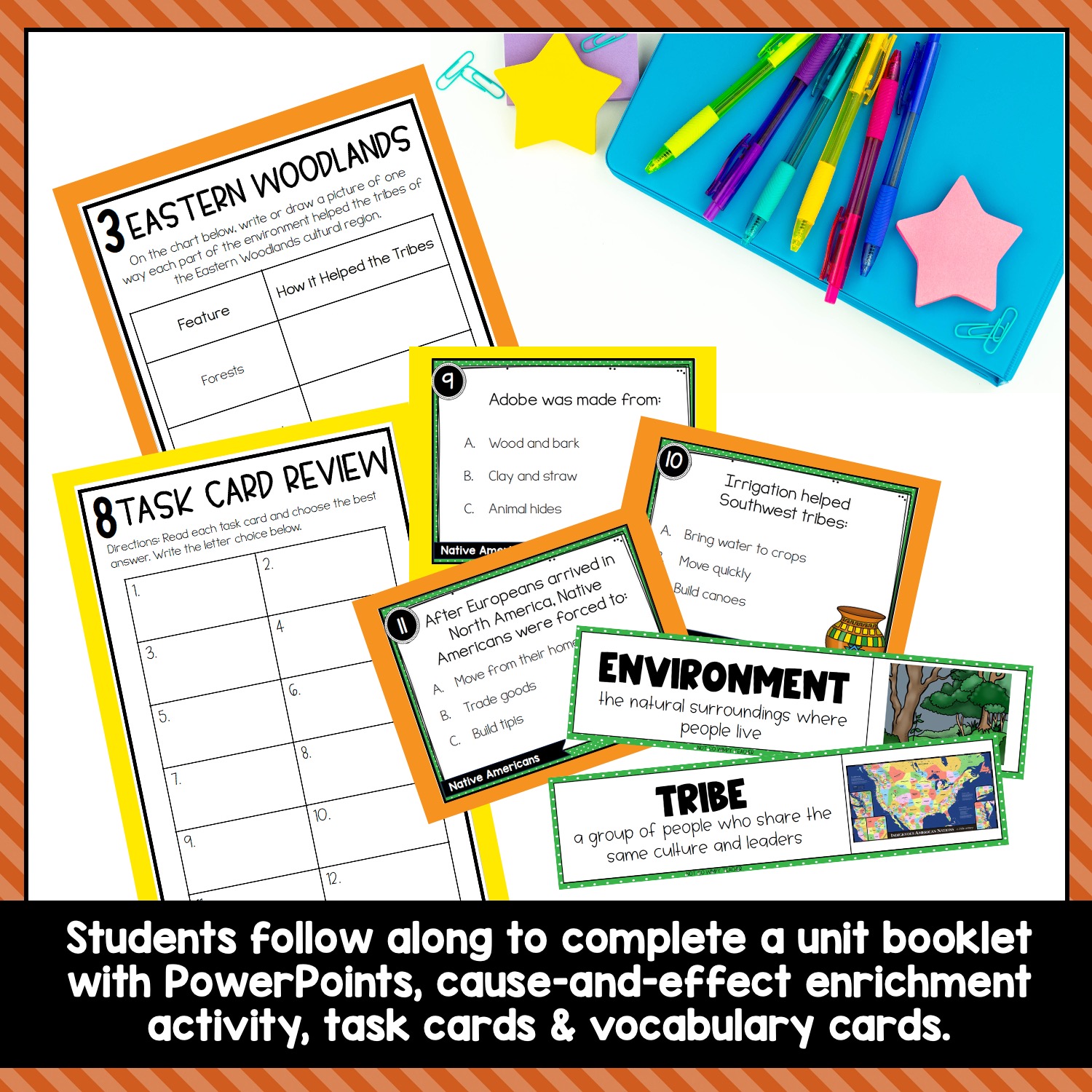
The unit includes interactive PowerPoints, enrichment activities, task cards, a cause-and-effect memory game, mystery region reading passages, and an assessment. Students also complete a social studies booklet to track their learning each day.
By the end of this unit, students will explore four major cultural regions — Eastern Woodlands, Plains, Southwest, and Pacific Northwest — and learn how land, climate, and natural resources influenced how tribes built homes, found food, and traveled.
What’s Included:
- 7 PowerPoint lessons with detailed teacher notes
- Detailed lesson plans with both intervention and enrichment
- Student workbook with guided notes activities
- Reading passages with response questions
- 12 task cards for review and practice
- Cause-and-effect memory enrichment game
- “Mystery region” reading station passages
- Vocabulary cards to support key concepts
- Comprehensive assessment
- Complete daily lesson plans with teaching tips, intervention strategies, and enrichment ideas
- Answer keys for all activities
Skills Covered:
- Indigenous peoples of North America
- Tribes and culture
- Geography and environment
- Cultural regions
- Eastern Woodlands region
- Plains region
- Southwest region
- Pacific Northwest region
- Cause-and-effect relationships between geography and daily life
- How Native American cultures continue today
Students will explore examples such as longhouses in forest regions, tipis on the Plains, adobe homes in the Southwest, and plank houses in the Pacific Northwest.
How to Use in the Classroom:
Follow our 10-day sequence or adapt it to fit your pacing:
- Day 1: First Peoples
- Day 2: Cultural Regions
- Day 3: Eastern Woodlands Cultural Region
- Day 4: Plains Cultural Region
- Day 5: Southwest Cultural Region
- Day 6: Pacific Northwest Cultural Region
- Day 7: Cultural Changes
- Day 8: Task Card Review
- Day 9: Mystery Region Passages
- Day 10: Assessment
Each lesson takes approximately 30 minutes and can be taught in whole group, small group, or paired activities!
❤️❤️ Why You’ll Love This Resource ❤️❤️
- Print-and-go format saves hours of prep time
- Engaging mix of direct instruction and interactive activities
- Thoughtful guidance for teaching sensitive topics with confidence
- Builds critical thinking skills through meaningful discussion
Watch your students develop deeper understanding as they explore the importance of equality and justice through this engaging, comprehensive unit!