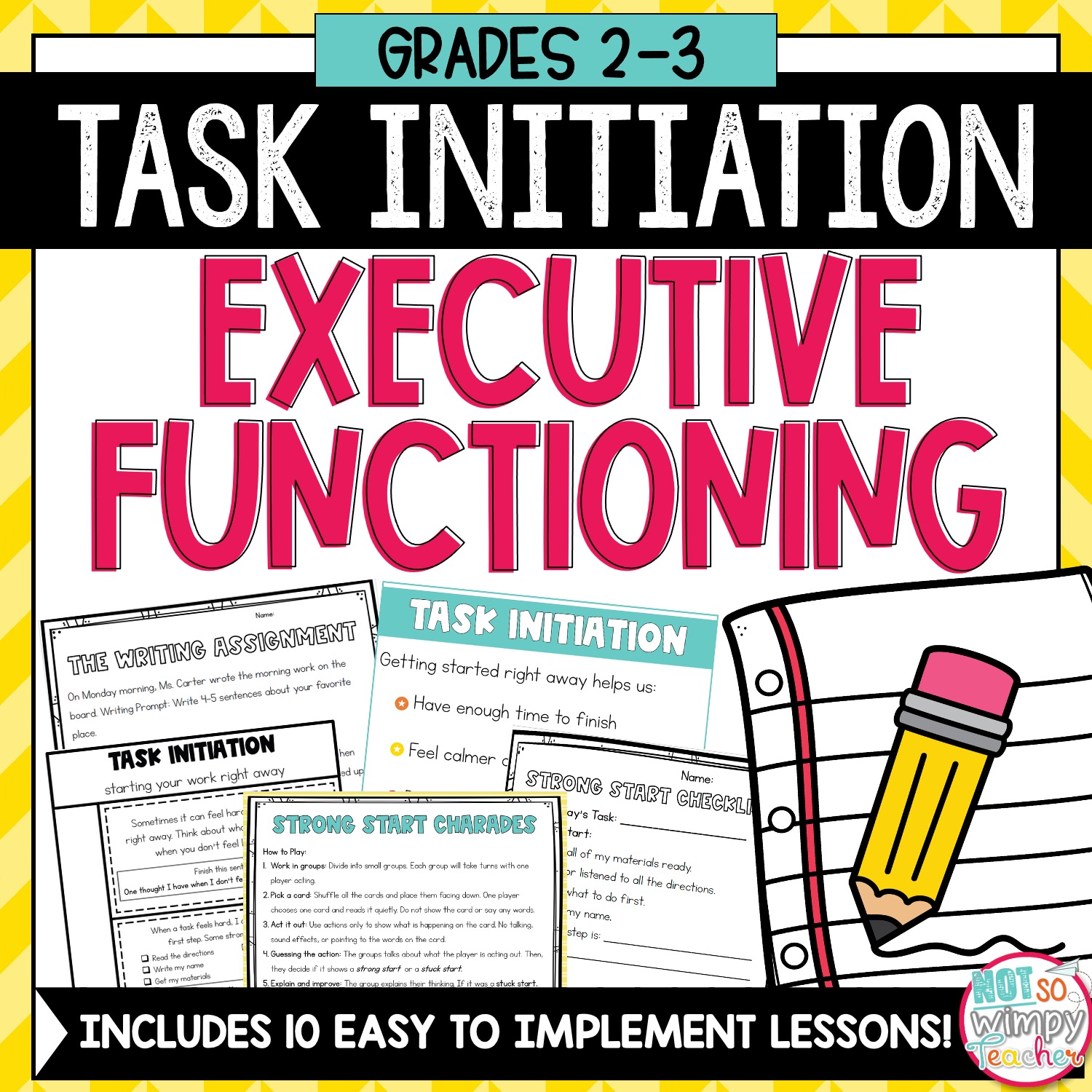
This engaging Executive Functioning Skills: Task Initiation Unit for grades 2-3 helps you teach one of the most essential thinking skills students need for school success. With 10 low prep lessons filled with real life scenarios, reading passages, role play, games, and reflection, students will learn what task initiation looks like, identify strong starts vs. stuck starts, and practice the strategies that help them begin their work right away.
Executive Functioning Skills: Task Initiation Unit for 2nd & 3rd Grade
Save MORE with Lesson GenieMore about this resource
Some of the most important skills students need for success are the ones we’re most likely to assume they already have.
Getting started. Taking the first step. Beginning the work even when it feels hard, boring, or overwhelming. These are the moments where learning either takes off… or stalls out.
This engaging Executive Functioning Skills: Task Initiation Unit for grades 2-3 helps you teach one of the most essential thinking skills students need for school success. With 10 low prep lessons filled with real life scenarios, reading passages, role play, games, and reflection, students will learn what task initiation looks like, identify strong starts vs. stuck starts, and practice the strategies that help them begin their work right away.
Designed to fit seamlessly into your morning meeting, academic block, intervention time, or classroom community time, this flexible unit helps students build the invisible skills that make everything else in school work. Students move from understanding what task initiation means to applying it in real classroom tasks through PowerPoint mini lessons, scenario practice, partner discussions, an interactive notebook, a charades style game, and self reflection.
This resource is part of our Executive Functioning Skills curriculum series and can be used as a standalone unit or alongside additional executive functioning skill units.
What’s Included:
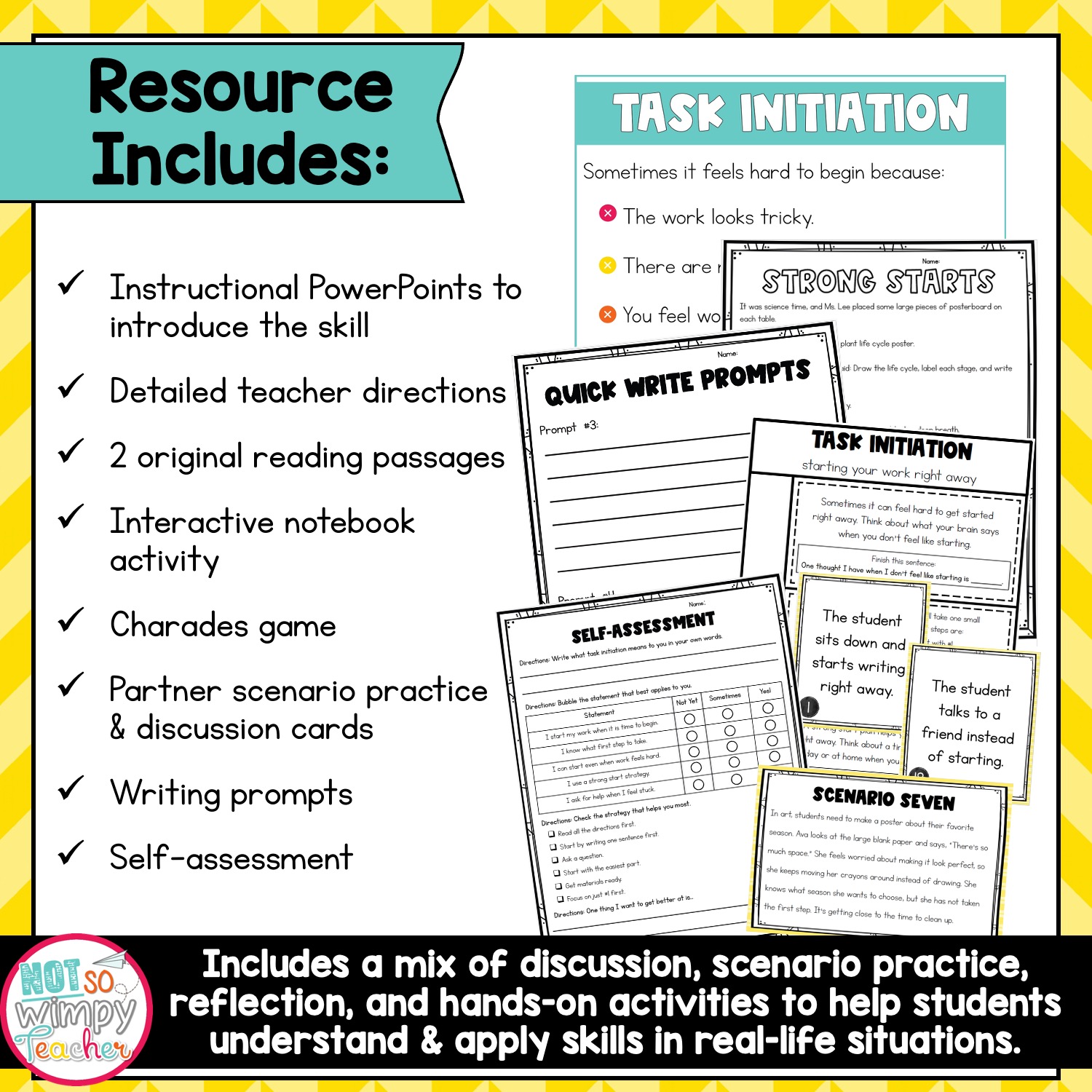
- 10 complete executive functioning lessons focused on task initiation
- Teacher directions and implementation guide
- Clear lesson outlines with daily objectives
- 2 instructional PowerPoints (Lesson 1 introduction and Lesson 2 scenarios)
- 2 reading passage lessons with discussion question cards
- Interactive notebook activity (My Strong Start Playbook)
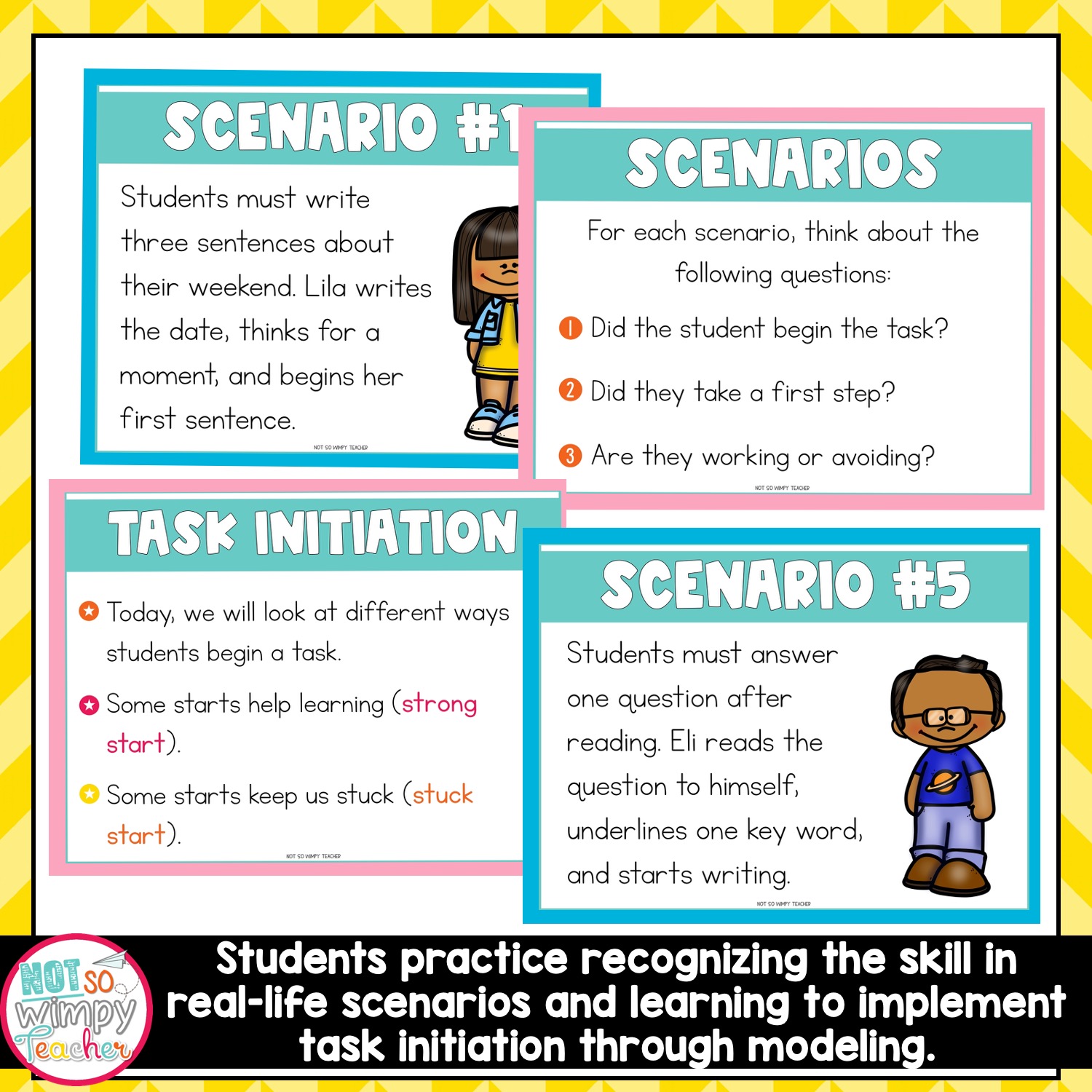
- Scenario cards for small groups or partners
- Independent practice task with student checklist
- Strong Start Charades game with 30 game cards
- Quick write reflection activity with writing template
- Self assessment (Growth Check)
- Flexible sample schedules
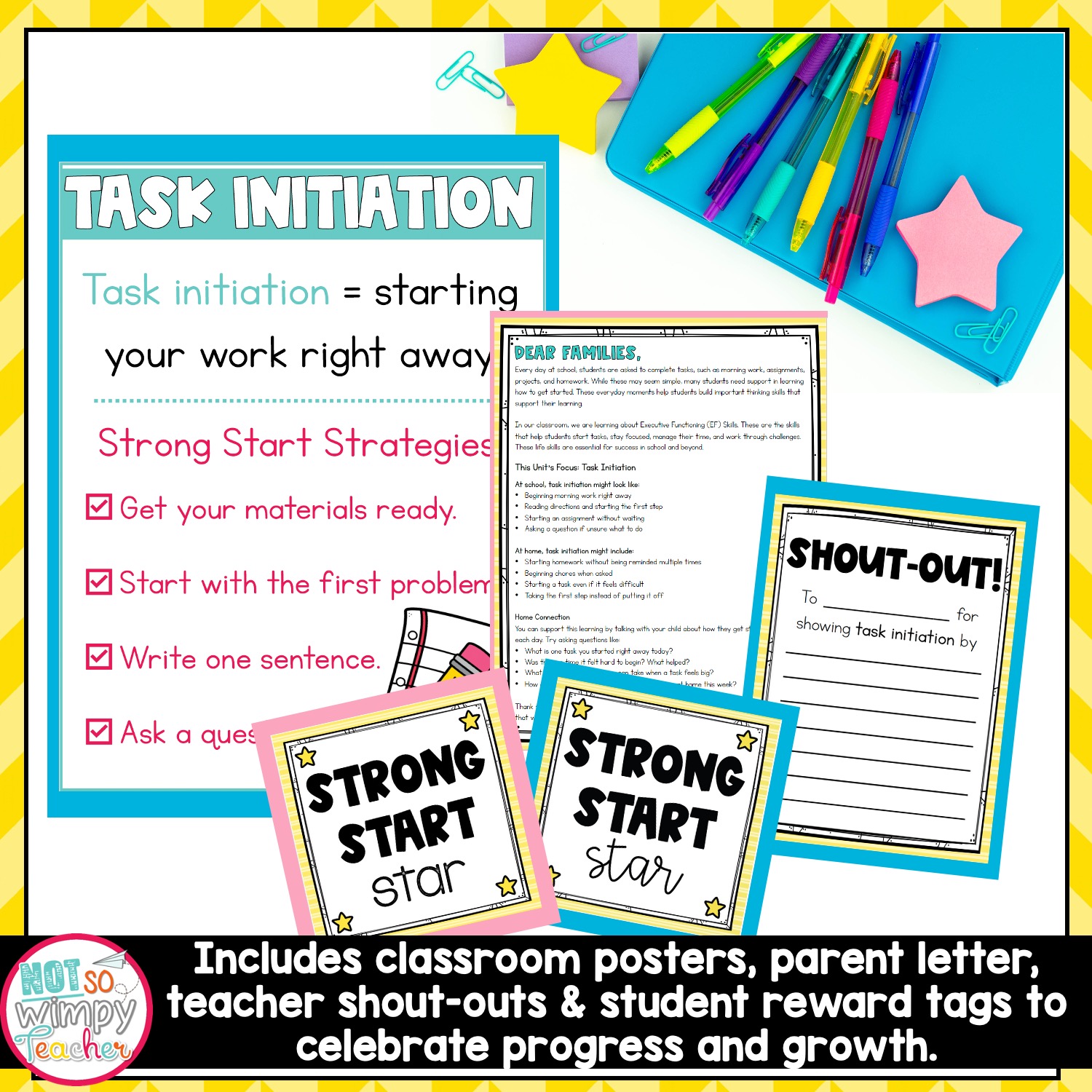
- Family letter and home connection page
- Reward tags
- Teacher shout out cards
- Task initiation poster
- Binder covers and interactive notebook covers
Skills Included:
- task initiation
- recognizing strong starts vs. stuck starts
- identifying a first step
- using starting strategies (easiest first, breaking tasks into steps, asking for help)
- self reflection and metacognition
- goal setting
- independence in academic tasks
- self awareness around starting habits
Unit Lessons:
- Lesson 1: Introduce Task Initiation
Students learn what task initiation means and why getting started right away helps their learning.
- Lesson 2: Strong Starts vs. Stuck Starts
Students work through scenarios to identify examples of strong and weak task initiation and explain the clues that helped them decide.
- Lesson 3: See it in Action
Using a reading passage, students analyze how a character struggles to get started and how one small first step changes the rest of the task.
- Lesson 4: My Strong Start Playbook
Students complete an interactive notebook activity to reflect on what makes starting hard for them and build their own strong start plan.
- Lesson 5: Starting Strategies
Students read and discuss a passage comparing two different starting strategies, analyzing how each one affected the outcome of the task.
- Lesson 6: Strategy Challenge
Students use scenario cards in small groups to identify what is making starting difficult and choose the strategy that would help most.
- Lesson 7: Independent Start Practice
Students use a checklist to apply task initiation strategies to a real classroom task assigned by the teacher.
- Lesson 8: Strong Start Charades
Students play an engaging charades game to act out and identify examples of strong starts and stuck starts through movement and collaborative play.
- Lesson 9: Growing in Task Initiation
Students complete four guided quick writes and expand one prompt into a deeper reflection about their growth.
- Lesson 10: Growth Check
Students reflect on their progress, identify the strategies that help them most, and set a goal for continued growth.
How to Use in the Classroom:
This unit is designed to be flexible and easy to fit into your existing routine. Each lesson takes about 20 minutes and can be taught during morning meeting, an academic block, intervention time, or classroom community time.
All 10 lessons are designed to be completed within one month at a pace that works for your classroom. Three pacing options are included:
- Full Implementation (Recommended): complete all 10 lessons, teaching 2 or 3 per week
- Condensed Schedule: 6 key lessons for teachers with limited time
- Essentials Only: 5 core lessons when time is very limited
Lessons can be taught whole group, small group, with partners, or individually, depending on the activity. The structure follows a predictable rhythm of direct teaching, guided practice, real life application, and reflection, so students always know what to expect.
Differentiation:
This unit includes built in flexibility to support a variety of learners and classroom needs.
- whole group, small group, or partner options
- discussion based and written reflection activities
- hands on game, scenario practice, and role play
- flexible pacing and scheduling options
- sentence stems and guided prompts to support student thinking
- option to laminate cards and reuse them throughout the year
- These options make it easy to adjust lessons for your students while fitting naturally into your classroom routine.
❤️❤️ Why You’ll Love It: ❤️❤️
- Low prep and easy to fit into your routine
- Built around real classroom situations students recognize
- Teaches an invisible skill students are often expected to have already mastered
- Includes a hands on game and engaging activities students love
- Helps build independence, confidence, and stronger learning habits
- Focuses on growth, not perfection
- Flexible for busy teachers and varied schedules
- What makes this unit special is that students don’t just talk about starting their work. They practice it, reflect on it, and apply it in authentic classroom situations.


