This engaging Executive Functioning Skills: Time Management Unit helps you teach one of the most important thinking skills students need for school success. It has 10 low prep lessons with real life scenarios, original reading passages, a hands-on matching puzzle, and reflection. Students learn what planning and time management mean and practice a simple Think – Plan – Do – Check routine. They also learn to estimate time, break big tasks into steps, check whether they’re on track, and adjust their plan when something takes longer than expected.
Executive Functioning Skills: Organization Unit for 4th & 5th Grade
Save MORE with Lesson GenieMore about this resource
“You have 15 minutes to finish.” Then a pencil needs sharpening, the title gets colored in, a friend has something very important to say… and suddenly it’s “Two minutes left!” Sound familiar?
Time management isn’t something students just pick up as they get older. It’s a skill, and it can be taught. Thinking before you start, estimating how long something will take, noticing when you’re falling behind, and changing your plan instead of panicking are what make the difference between finishing calmly and rushing at the end.
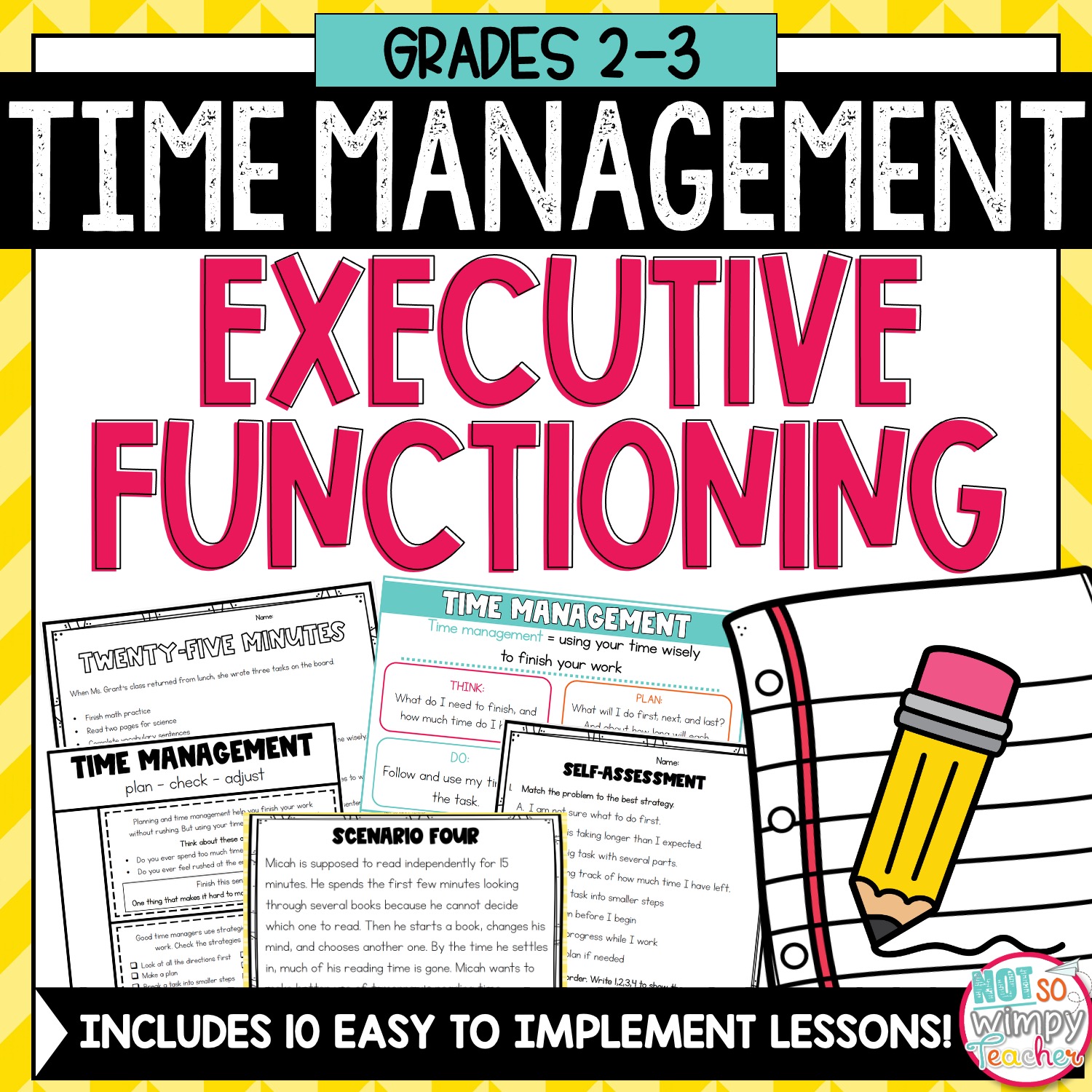
This engaging Executive Functioning Skills: Time Management Unit helps you teach one of the most important thinking skills students need for school success. It has 10 low prep lessons with real life scenarios, original reading passages, a hands-on matching puzzle, and reflection. Students learn what planning and time management mean and practice a simple Think – Plan – Do – Check routine. They also learn to estimate time, break big tasks into steps, check whether they’re on track, and adjust their plan when something takes longer than expected.
Designed to fit seamlessly into your morning meeting, academic block, intervention time, or classroom community time, this flexible unit helps students build the invisible skills that make everything else in school work. Students move from understanding what time managemen means to applying it in real classroom tasks through PowerPoint mini lessons, scenario practice, small group discussion, an interactive notebook, a hands-on card sort, and self reflection.
This resource is part of our Executive Functioning Skills curriculum series and can be used as a standalone unit or alongside additional executive functioning skill units.
What’s Included:
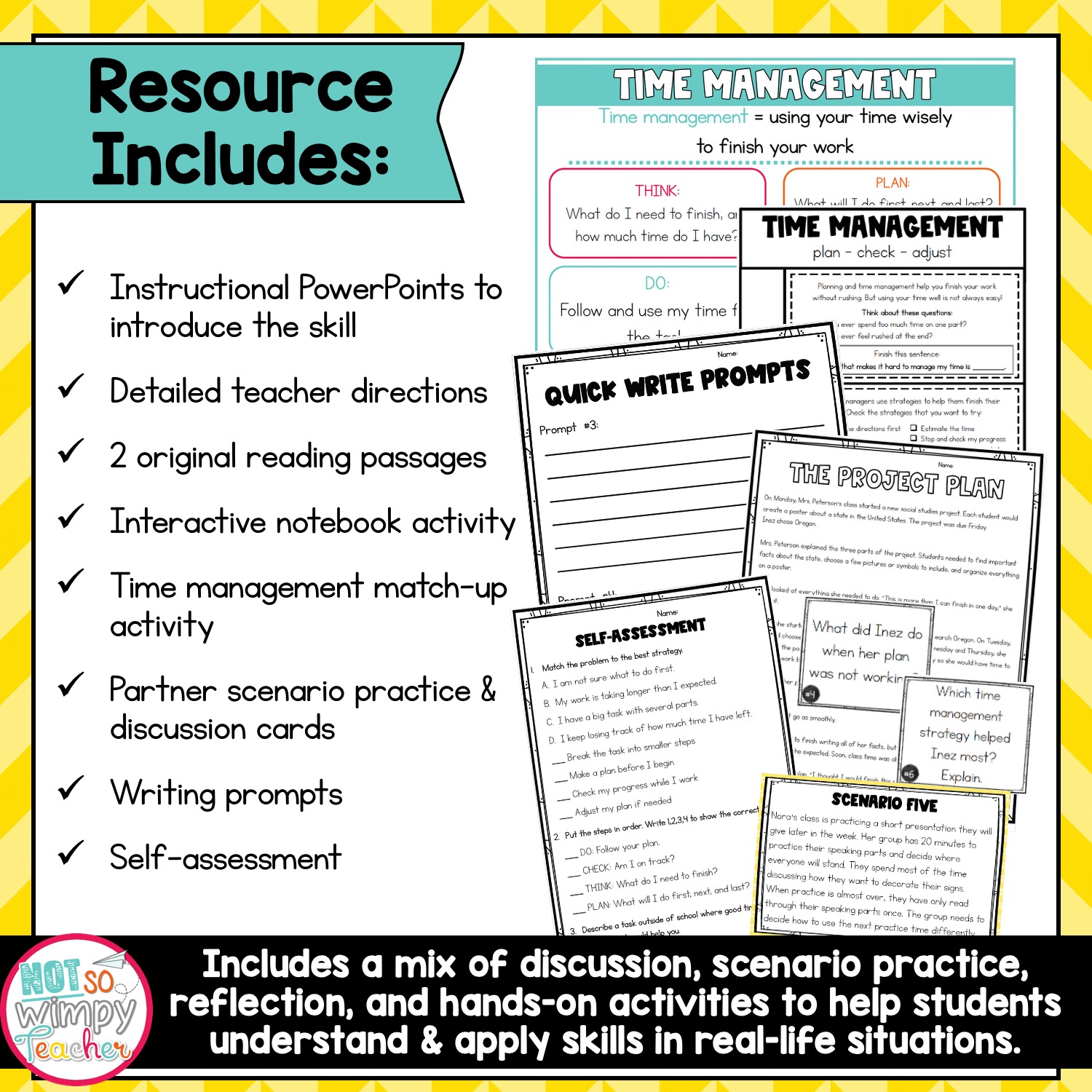
- 10 complete executive functioning lessons focused on time management
- Teacher directions and implementation guide
- 2 instructional PowerPoints (Lesson 1 introduction and Lesson 2 scenarios)
- 2 original reading passages with 6 discussion question cards
- Interactive notebook activity (Time Management: Plan – Check – Adjust)
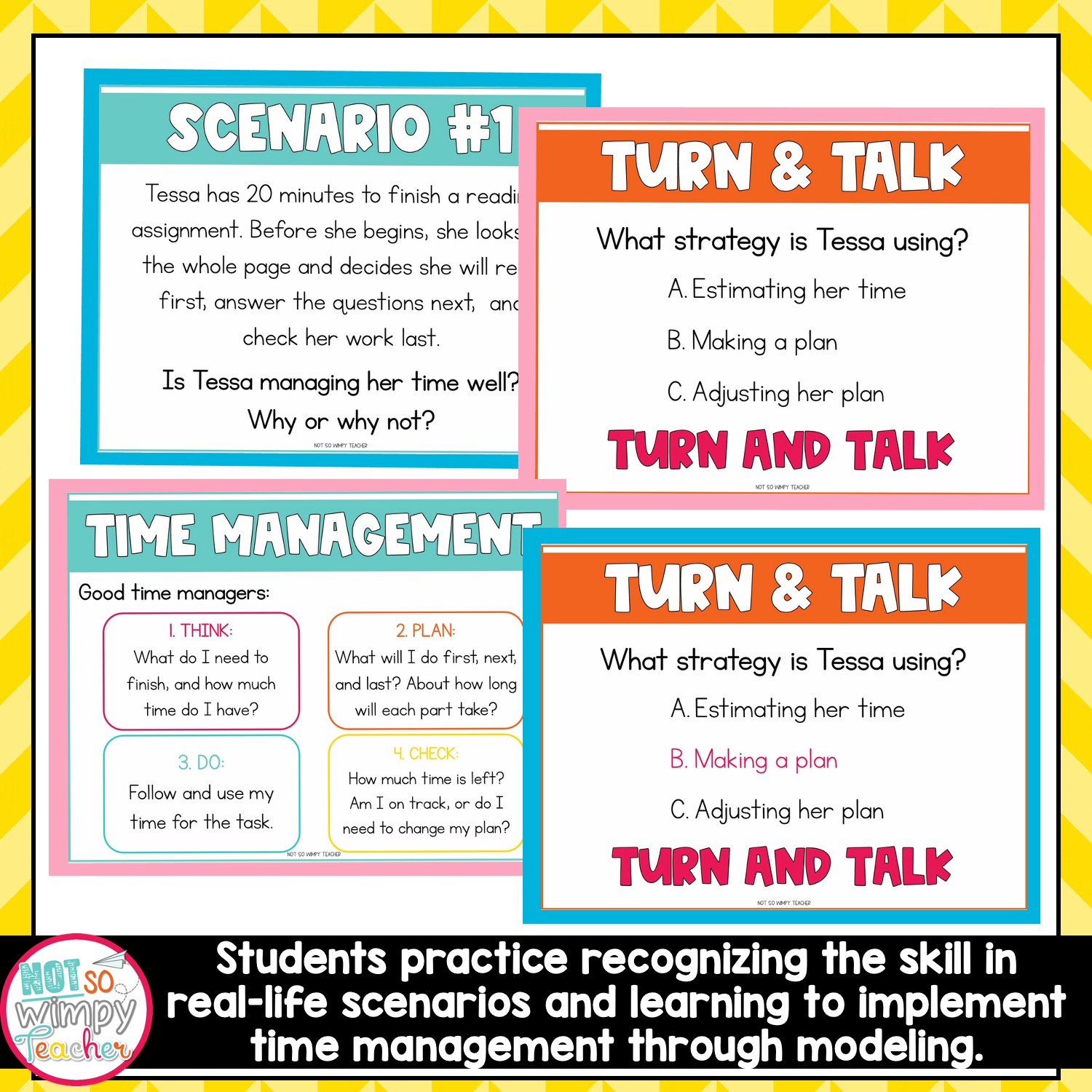
- 6 scenario cards and 6 discussion question cards for small groups or partners, with answer keys
- Estimate vs. Actual Time independent practice task (2 per page)
- Time Management Match-Up puzzle activity with 9 problem-and-solution puzzle pairs
- Quick write reflection activity with 4 guided prompts
- Self-assessment
- Flexible sample schedules
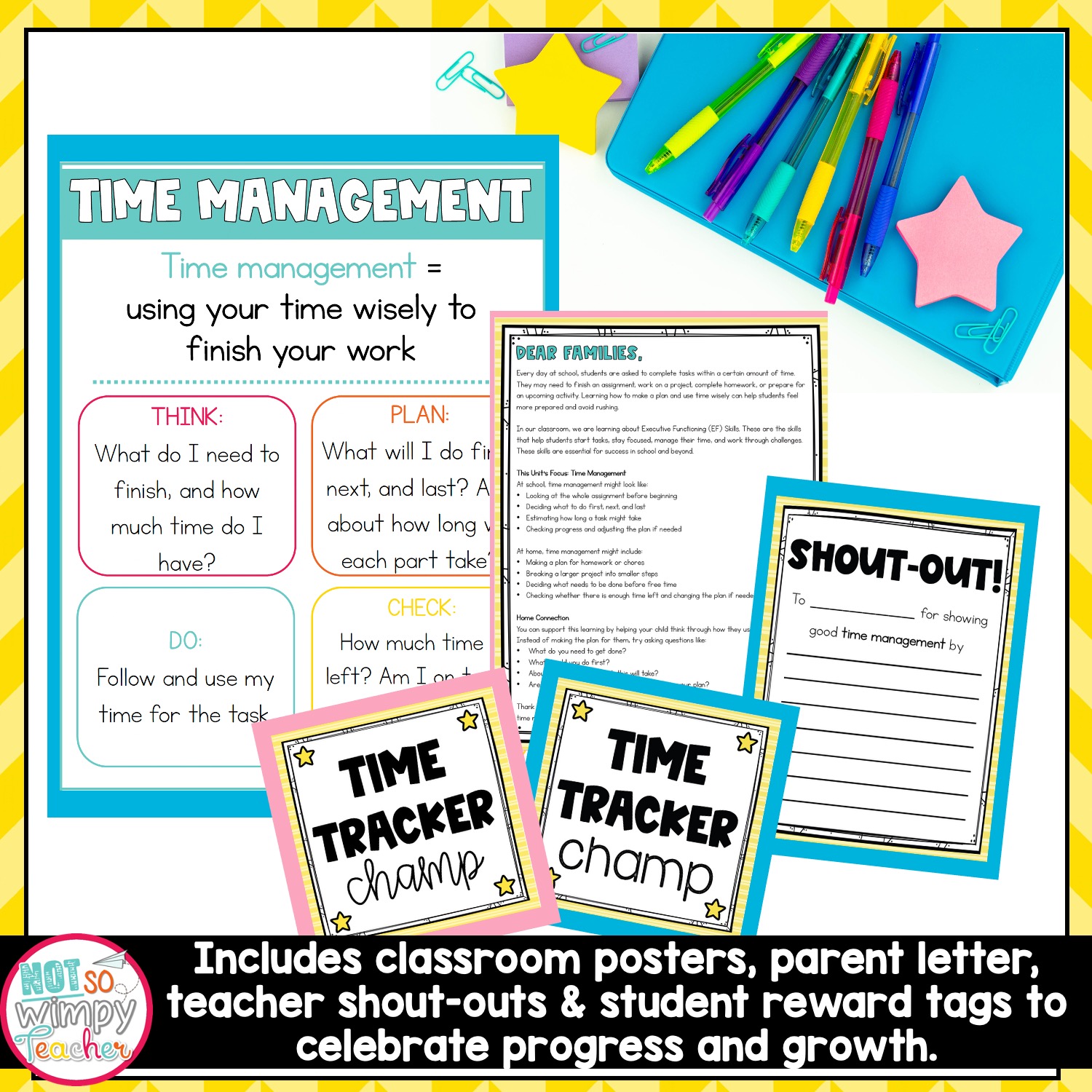
- Family letter and home connection page
- Reward tags
- Teacher shout out cards
- Time management poster
- Binder covers and interactive notebook covers
Skills Included:
- planning before starting a task
- time management
- estimating how long a task will take
- breaking big tasks into smaller steps
- deciding what needs the most time and what to do first
- checking progress (“Am I on track?”)
- adjusting a plan when something takes longer than expected
- saving time to check work
Unit Lessons:
- Lesson 1: Introduce Time Management Students learn what planning and time management mean, practice the Think – Plan – Do – Check routine, and learn to estimate time, break tasks into steps, and adjust a plan.
- Lesson 2: Time Management Scenarios Students look at six classroom scenarios, decide whether each student is managing time well, and name the strategy being used.
- Lesson 3: The Project Plan In this reading passage, Inez splits a week-long poster project across several days. When she falls behind, she notices and adjusts her plan so she can still finish on time.
- Lesson 4: Plan – Check – Adjust Students complete a 3-flap interactive notebook. They think about what makes time management hard for them, choose strategies to try, and decide where they’ll use their plan.
- Lesson 5: Twenty-Five Minutes In this reading passage, Caleb has three tasks and 25 minutes. He decides what to do first, checks the clock, and moves on when math takes too long. He also learns that managing time doesn’t always mean finishing everything.
- Lesson 6: Strategy Challenge In small groups, students use scenario cards to figure out what a student needs to get done, what’s getting in the way, and which strategy would help most.
- Lesson 7: Estimate vs. Actual Time Students estimate how long a real classroom task will take, then compare their estimate to the actual time and reflect on what they’ll do differently next time.
- Lesson 8: Time Management Match-Up Students match time management problems with the strategies that solve them, using 9 puzzle-piece pairs.
- Lesson 9: Growing in Time Management Students complete four 2-minute quick writes and expand one prompt into a deeper reflection about their growth.
- Lesson 10: Time Management Check-In Students reflect on their progress, identify the strategies that help them most, and set a goal for continued growth.
How to Use in the Classroom:
This unit is designed to be flexible and easy to fit into your existing routine. Each lesson takes about 20 minutes and can be taught during morning meeting, an academic block, intervention time, or classroom community time.
All 10 lessons are designed to be completed within one month at a pace that works for your classroom. Three pacing options are included:
- Full Implementation (Recommended): complete all 10 lessons, teaching 2 or 3 per week
- Condensed Schedule: 6 key lessons for teachers with limited time
- Essentials Only: 5 core lessons when time is very limited
Lessons can be taught whole group, small group, with partners, or individually, depending on the activity. The structure follows a predictable rhythm of direct teaching, guided practice, real life application, and reflection, so students always know what to expect.
Differentiation:
This unit includes built in flexibility to support a variety of learners and classroom needs.
- whole group, small group, or partner options
- discussion based and written reflection activities
- hands on game, scenario practice, and role play
- flexible pacing and scheduling options
- sentence stems and guided prompts to support student thinking
- option to laminate cards and reuse them throughout the year
These options make it easy to adjust lessons for your students while fitting naturally into your classroom routine.
❤️❤️ Why You’ll Love It: ❤️❤️
- Low prep and easy to fit into your routine
- Built around real classroom situations students recognize
- Teaches an invisible skill students are often expected to have already mastered
- Includes a hands on game and engaging activities students love
- Helps build independence, confidence, and stronger learning habits
- Focuses on growth, not perfection
- Flexible for busy teachers and varied schedules
What makes this unit special is that students don’t just talk about starting their work. They practice it, reflect on it, and apply it in authentic classroom situations.


