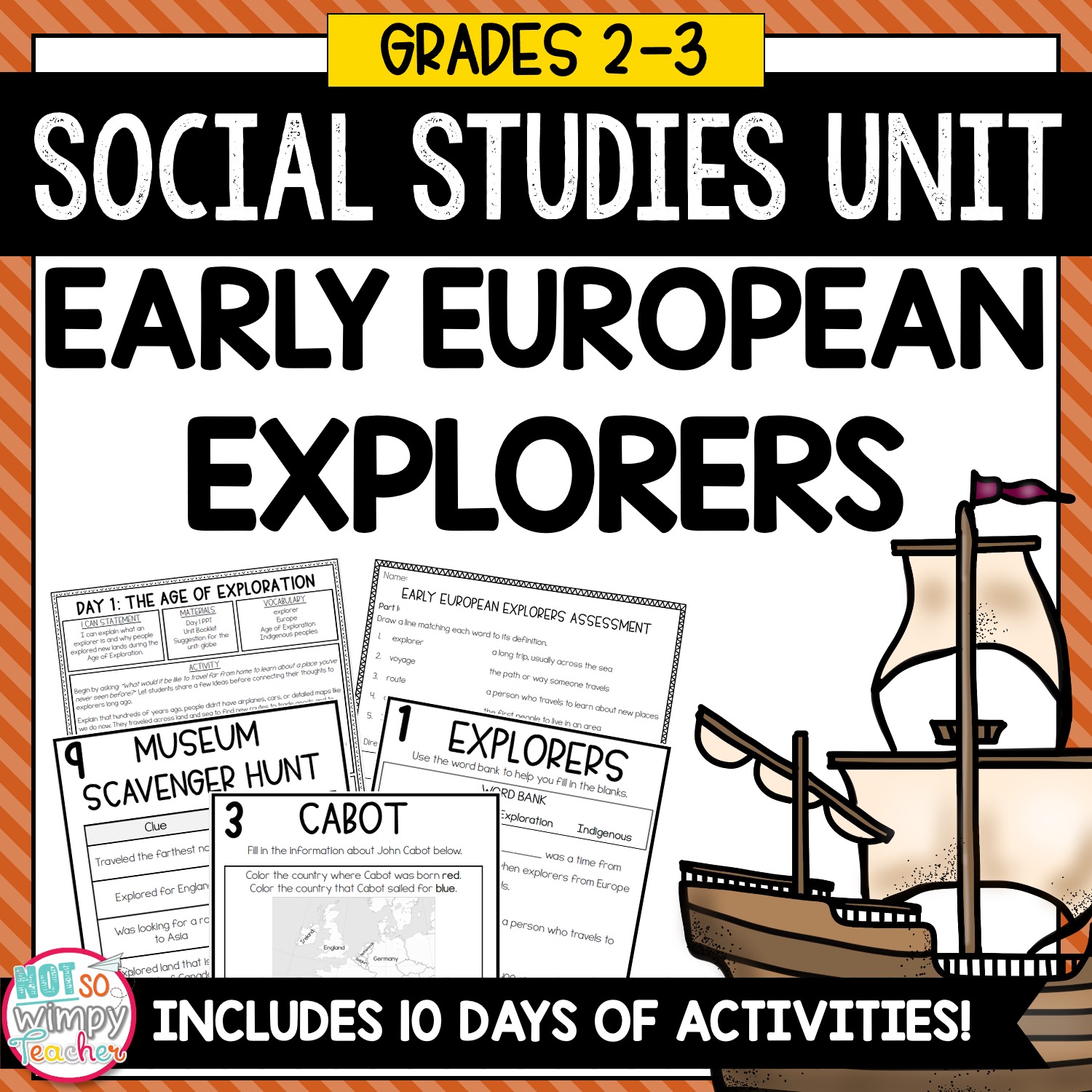
Early European Explorers Social Studies Unit for 2nd and 3rd Grade
Save MORE with Lesson GenieAlso available in the following bundles
More about this resource
Set sail on a journey across the Atlantic with this engaging and comprehensive unit on early European exploration! Through interactive PowerPoint lessons, guided booklet activities, research opportunities, and a creative project, students will uncover the stories of the explorers who changed how people saw the world.
Teachers often struggle to:
- Clearly explain why Europeans began exploring during the 1400s and 1500s
- Teach the goals and outcomes of major explorers — such as Columbus, Cabot, Ponce de León, and Cartier — in a way that feels meaningful to students
- Help students understand how exploration connected different parts of the world through trade, culture, and the exchange of ideas
- Support students in recognizing and discussing how European exploration impacted Indigenous peoples across the Americas
- Guide students in analyzing how maps, routes, and voyages shaped world geography and global history
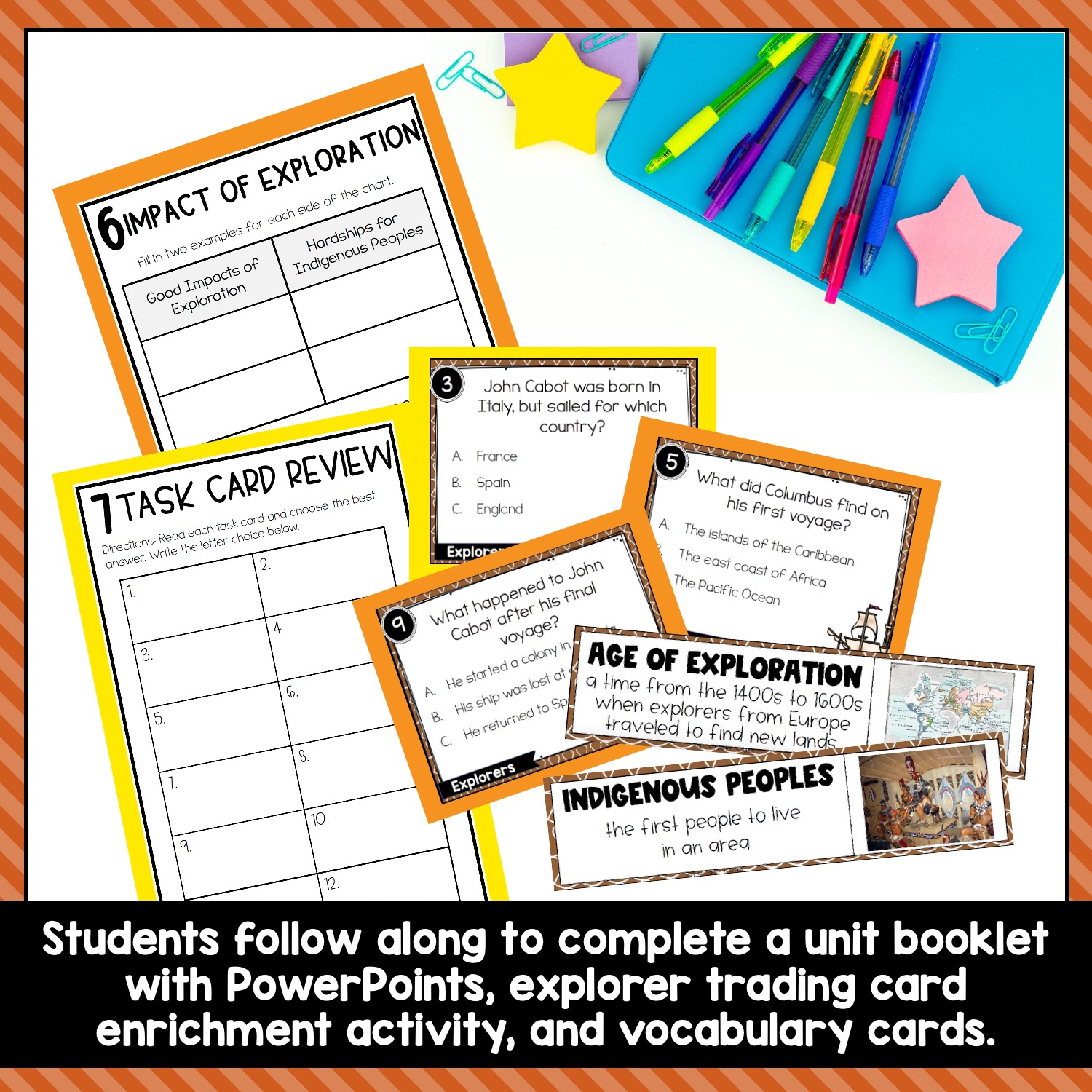
The unit includes interactive PowerPoints, enrichment activities, task cards, a research project, and an assessment. Students also complete a social studies booklet to track their learning each day.
By the end of this unit, Students will learn why Europeans began exploring during the 1400s and 1500s and examine the goals and outcomes of major explorers such as Columbus, Cabot, Ponce de León, and Cartier. They will discover how exploration connected different parts of the world through trade, culture, and ideas, explore how these voyages impacted Indigenous peoples across the Americas, and understand how maps, routes, and journeys helped shape world geography and history.
What’s Included:
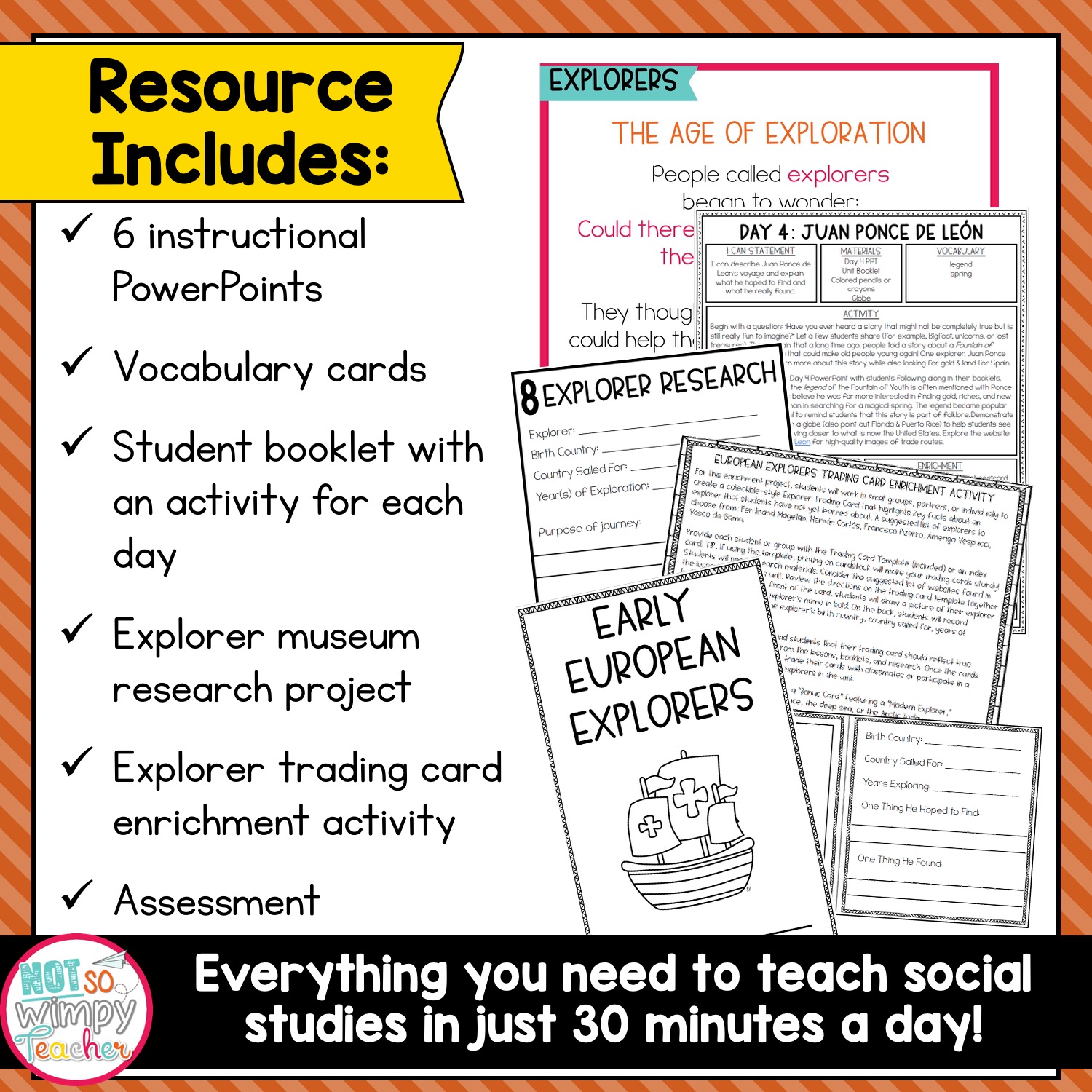
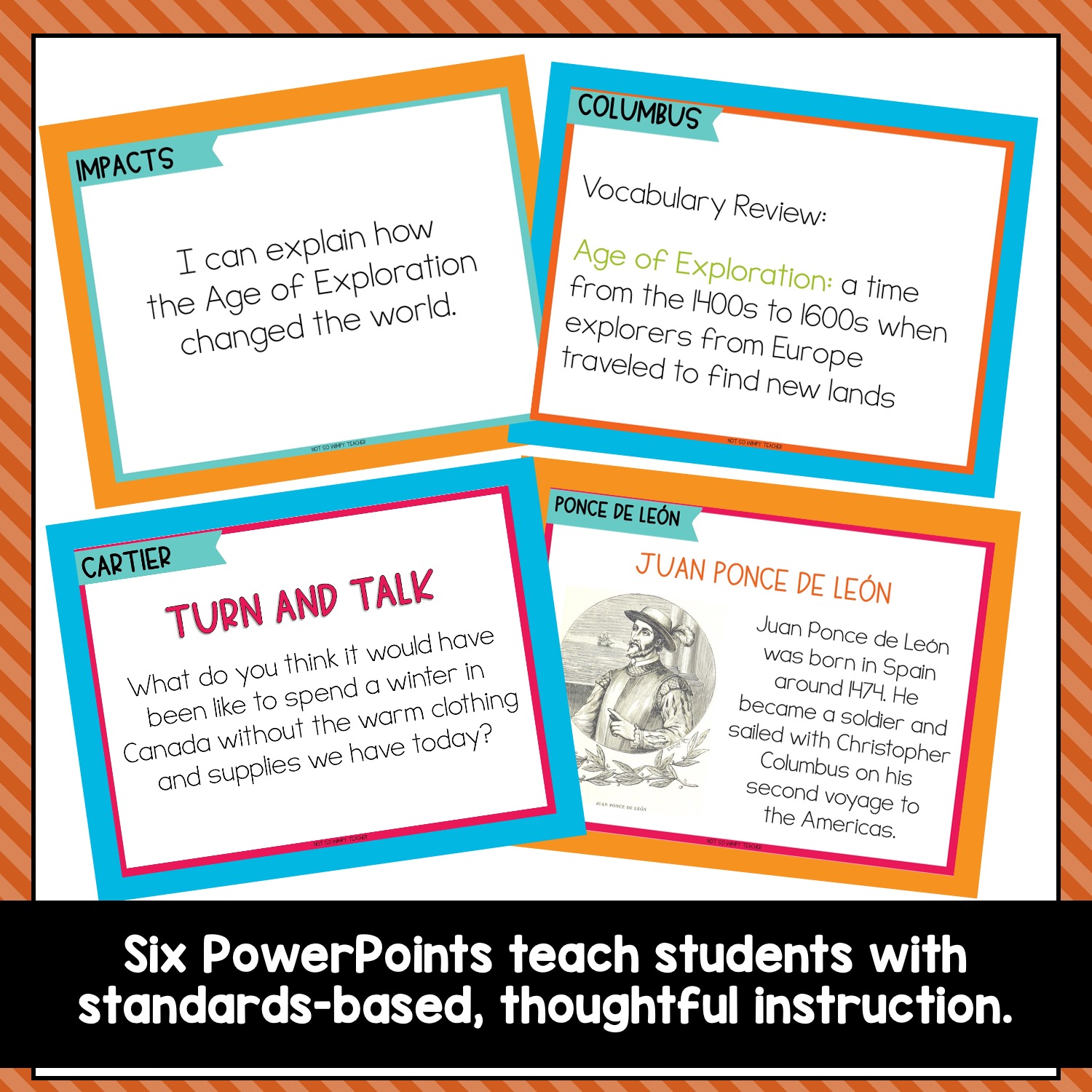
- 6 PowerPoint lessons with detailed teacher notes
- Detailed lesson plans with both intervention and enrichment
- Student workbook with guided notes activities
- Reading passages with response questions
- Explorer research project with museum gallery walk
- Task cards
- Explorer trading card enrichment activity
- Vocabulary cards for key terms
- Comprehensive assessment
- Complete daily lesson plans with social studies standards
Skills Covered:
- Why Europeans began exploring during the 1400s and 1500s
- The goals and outcomes of major explorers such as Columbus, Cabot, Ponce de León, and Cartier
- How exploration connected different parts of the world through trade, culture, and ideas
- How exploration impacted Indigenous peoples across the Americas
- How maps, routes, and voyages shaped world geography and history
How to Use in the Classroom:
Follow our 10-day sequence or adapt it to fit your pacing:
- Day 1: What Is an Explorer? – Introduction to exploration and Indigenous peoples
- Day 2: Christopher Columbus – Goals and outcomes of his voyages
- Day 3: John Cabot – English exploration and northern routes
- Day 4: Juan Ponce de León – Spanish exploration and the legend of the Fountain of Youth
- Day 5: Jacques Cartier – French exploration and mapping of Canada
- Day 6: Impacts of Exploration – Global change
- Day 7: Task Cards – Review of explorers and key concepts
- Day 8: Explorer Research – Students investigate and record details about a new explorer
- Day 9: Museum Walk – Students present as their chosen explorer during a gallery-style activity
- Day 10: Assessment – Vocabulary, comprehension, and written reflection on exploration
Each lesson takes approximately 30 minutes and can be taught in whole group, small group, or paired activities!
❤️❤️ Why You’ll Love This Resource ❤️❤️
- Print-and-go format saves hours of prep time
- Engaging mix of direct instruction and interactive activities
- Thoughtful guidance for teaching sensitive topics with confidence
- Builds critical thinking skills through meaningful discussion
Watch your students develop deeper understanding as they explore the importance of equality and justice through this engaging, comprehensive unit!